Polish Opposition Leader Calls to Block Ukraine’s EU Accession Amid Rising Bilateral Tensions
Jarosław Kaczyński urges Warsaw to halt EU talks with Kyiv, citing escalating conflicts and domestic economic concerns ahead of 2027 elections.
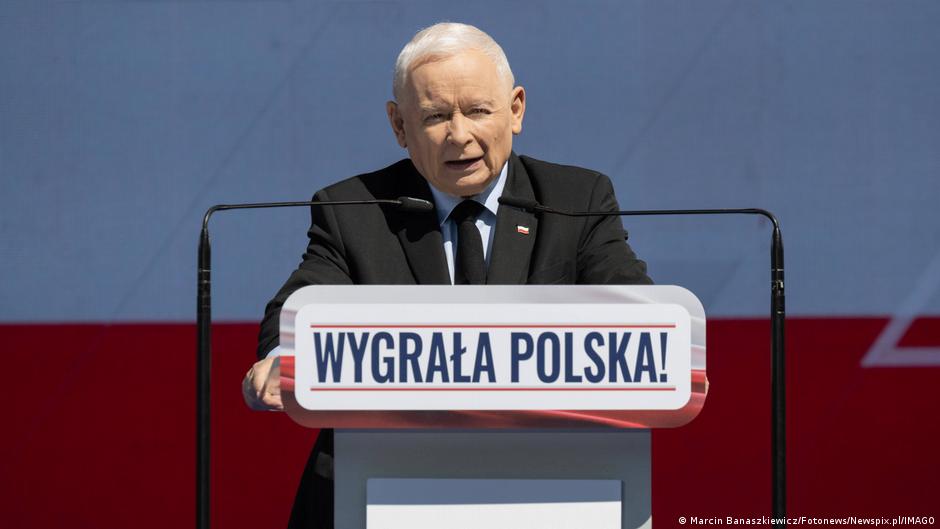
Jarosław Kaczyński, leader of Poland's opposition Law and Justice party (PiS), has called on the Polish government to block Ukraine's ongoing negotiations for European Union membership. His stance reflects a deepening rift not only between Warsaw and Kyiv but also within Poland’s political landscape, underscoring broader economic and geopolitical ramifications for the region.
Context of the Diplomatic Dispute
The call from Kaczyński comes amid heightened tensions triggered by Ukraine’s President Volodymyr Zelensky’s decision to name a Ukrainian Armed Forces unit after the “heroes of UPA” — the Ukrainian Insurgent Army. This move rekindled old historical grievances, especially in Poland, where the UPA is primarily remembered for the Volhynian massacre of 1943–1944.
As a direct consequence, Polish President Karol Nawrocki revoked the Order of the White Eagle, Poland’s highest honor, previously awarded to Zelensky. The symbolic exchange provoked a wave of protests from Ukrainian officials, including the head of the Presidential Office Kyrylo Budanov and Foreign Minister Andrii Sybiha, who renounced their Polish decorations. Zelensky himself abstained from attending the Ukraine Recovery Conference in Gdańsk, a key event aimed at post-war reconstruction and European integration.
This diplomatic standoff is complicated by differing historical narratives. In Ukraine, the UPA fighters are honored as freedom fighters against Soviet and Nazi occupations, while in Poland, the group is viewed through the lens of ethnic violence and suffering during World War II.
Economic and Political Stakes
Kaczyński’s rhetoric sharply contrasts with the policies of Poland’s current Prime Minister Donald Tusk, who recently hosted the Ukraine Recovery Conference (URC 2026) in Gdańsk. The conference concluded with 160 agreements totaling over €10 billion in aid and investment commitments, signaling Poland’s strategic interest in Ukraine’s stabilization and reconstruction.
However, PiS’s opposition leader appears to be positioning himself for the October 2027 parliamentary elections by tapping into domestic anxieties. Many Polish farmers express concern about the impact of Ukrainian agricultural imports on local markets, while broader segments of society question the financial burden of hosting millions of Ukrainian refugees.
"Kaczyński aims to harness nationalist sentiments and economic fears to consolidate support ahead of critical elections."
This internal debate highlights structural challenges for Poland’s economy, caught between supporting Ukraine’s European ambitions and protecting domestic industries. The agricultural sector, a significant employer and voter base in Poland, increasingly views Ukrainian imports as a threat to their livelihoods, fueling political polarization.
Broader Implications for the EU and Regional Stability
Should Poland follow Kaczyński’s advice and block Ukraine’s EU accession talks, the ramifications would extend beyond bilateral relations. It would signal a fracturing consensus within the EU about enlargement policy and raise questions about the bloc’s capacity to integrate countries with unresolved bilateral disputes and divergent historical legacies.
Furthermore, the situation illustrates the complex interplay between historical memory, nationalism, and economic pragmatism in shaping foreign policy in Central and Eastern Europe. The long shadow of World War II continues to influence contemporary geopolitics, complicating efforts to build unified regional frameworks.
In sum, Poland’s internal political dynamics, combined with unresolved historical issues and economic pressures, are driving a reassessment of its position towards Ukraine’s European integration. This juncture poses critical questions about the EU’s enlargement strategy, regional security, and the economic sustainability of supporting post-conflict recovery efforts.