Confirmed Russian Conscript Deaths in Ukraine Reach at Least 350
The documented toll highlights the economic and institutional costs of Russia’s reliance on conscription alongside contract recruitment.
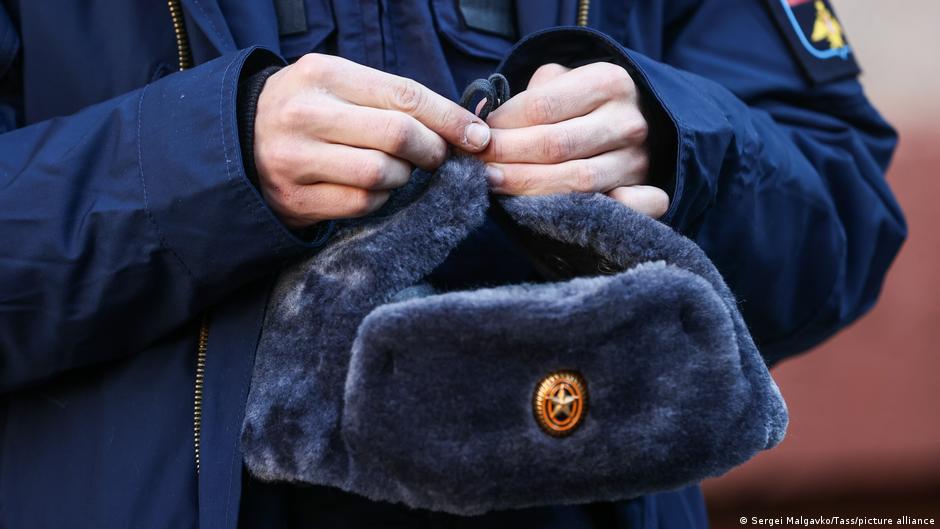
At least 350 Russian soldiers serving as conscripts have been killed during Russia’s full-scale invasion of Ukraine, according to a joint count by Mediazona, the BBC Russian Service and a team of volunteers. The finding conflicts with the Russian authorities’ official position that conscripted personnel are not being sent to fight in the war.
The documented cases include at least 60 conscripts killed during the Ukrainian military’s incursion into Russia’s Kursk region in August 2024. The researchers reported the updated findings on Friday, November 6. The figure covers only service members who still formally held conscript status at the time of death, making it a narrower measure than the total number of young men who entered military service through the draft and subsequently reached a combat zone.
Russia’s Defence Ministry acknowledged several instances involving the presence of conscripts in February and March 2022, during the opening phase of the invasion. The government has nevertheless continued to deny that it deploys conscripts to the war as a matter of policy. The gap between that official position and the independently confirmed deaths raises broader questions about how military personnel are classified, recruited and transferred between forms of service.
Contract conversion complicates the casualty picture
The distinction between a conscript and a contract soldier is central to the accounting. Mediazona said its list of 350 includes people whose status at the moment of death was recorded as conscript. It separately warned that conscripts face pressure to sign military contracts, after which they would no longer appear in the same category even if their entry into the armed forces began through compulsory service.
“The 350 people on our list are those who had ‘conscript’ status at the time of death. A separate risk is pressure to sign a contract. These are often imposed through deception or violence,” Mediazona said.
The journalists identified nearly 700 people who signed contracts with the Russian Defence Ministry while completing compulsory military service. It is not known whether those decisions were voluntary. The researchers currently do not classify these service members as a separate group and count only those who remained conscripts, although they said that methodology could change.
This classification problem has economic as well as statistical consequences. A formal switch to contract status can move a service member from the politically sensitive category of compulsory deployment into the professional military workforce. It also makes it harder to assess how much of Russia’s wartime manpower is supplied by voluntary recruitment and how much originates in the state’s draft system before being converted into contractual service.
The resulting uncertainty affects any analysis of the true labour cost of the war. Conscripts are generally drawn from younger age groups that would otherwise be entering employment, vocational training or higher education. When compulsory service becomes a route into longer military contracts, the consequences can extend beyond the immediate period of the draft, redirecting labour from civilian sectors and transferring future earnings, skills and productive capacity toward the armed forces.
A structural burden extending beyond the battlefield
The confirmed deaths represent only one part of the economic burden associated with military mobilisation. Fatalities permanently reduce the working-age population, while recruitment and contract conversion can tighten labour availability even when service members survive. The impact is likely to be uneven because the casualty list records individuals rather than the regional distribution of lost workers, household income or local skills.
Historically, economies sustaining prolonged wars have had to balance military demand for personnel against civilian production and demographic stability. In Russia’s case, the ambiguity surrounding conscript participation makes that balance more difficult to measure. Official denials may limit public scrutiny of how compulsory service interacts with contract recruitment, while independent counts can establish only cases supported by available evidence.
The Kursk deaths also illustrate how the formal geography of combat can blur the political distinction between deployment to Ukraine and military service inside Russia. At least 60 conscripts were killed during the August 2024 incursion into the border region. Their deaths occurred in the context of the wider war even if their location differed from that of Russian forces operating on Ukrainian territory.
For households, the economic effects go beyond aggregate labour statistics. The death of a young service member can remove expected future income and support, while uncertainty about whether a contract was signed voluntarily may complicate public understanding of the risks families believed conscripts would face. At the institutional level, pressure or deception in contract signing, where documented, would weaken the distinction between mandatory and voluntary military labour.
Overall confirmed Russian military deaths approach 286,000
The updated list assembled by journalists and volunteers places the confirmed number of Russian military personnel killed in Ukraine at 285,881. The conscript total of at least 350 is a small share of that broader count, but its significance lies in the official assurances surrounding compulsory service and in the possibility that some soldiers initially drafted as conscripts were reclassified after signing contracts.
The nearly 700 identified contract signings during compulsory service therefore form an important unresolved category. Without evidence showing whether each decision was voluntary, the available data cannot determine how many should be treated as willing professional recruits. The current methodology avoids making that assumption, but it also means the reported conscript death toll does not capture every fatality involving someone whose path into military service began with the draft.