Deutsche Bahn’s Russia Links Expose the Economics of Sanctions Compliance
DB Cargo’s continuing transit business highlights how legally permitted trade can still generate revenue for Russian state infrastructure.
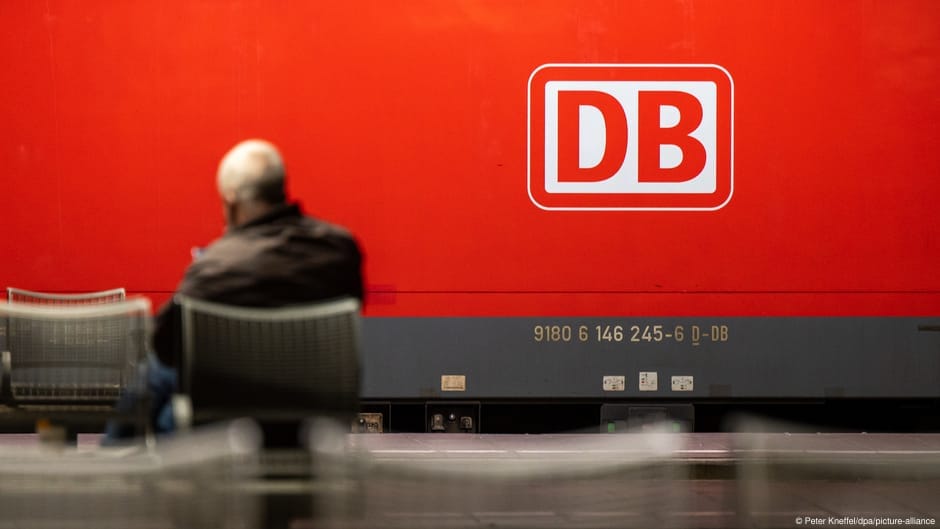
Deutsche Bahn’s continuing commercial links to Russia have reopened a difficult question for European sanctions policy: where does permitted international transit end and economically significant support for Russian state infrastructure begin?
According to the German business newspaper Handelsblatt, nearly €400 million has passed through DB Cargo Russija since 2022. The Moscow-based company is owned by DB Cargo, itself a subsidiary of Germany’s state-owned railway operator Deutsche Bahn. Handelsblatt, citing the company’s annual reports, said most of the money went to railway-network operators and Russian counterparties.
The precise amount ultimately received by Russian Railways, or RZD, cannot be established from the available reporting. Handelsblatt estimated, however, that several hundred million euros may have reached RZD directly or indirectly as payment for access to infrastructure. That distinction matters legally, but its economic significance is less clear: freight moving across Russia must purchase capacity within a railway system dominated by state-controlled operators.
A transport corridor built on interdependence
DB Cargo Russija has not concealed its presence. Its public website says it has operated since 1999, lists a Moscow address and employee information, and describes its business as Europe-China-Europe container transit and transport solutions across the Commonwealth of Independent States, the European Union and Asia.
This model reflects an older phase of European economic strategy, when integration with Russia and the wider Eurasian region was treated as a way to reduce transport friction and connect European industry with Asian markets. The war against Ukraine transformed the political context, but it did not automatically dismantle the commercial structures, contracts and logistics networks created over previous decades.
In May, Russia’s Transport Ministry registered DB Cargo Russija in a newly created state register of freight forwarders, Handelsblatt reported. The registration indicates that the company remains formally embedded in Russia’s transport market even as its German parent says it complies fully with European Union sanctions.
DB Cargo told Handelsblatt that it observes all EU sanctions and does not send its own trains through Russia. According to the newspaper, that statement is technically consistent with the subsidiary’s operating model: DB Cargo Russija does not run trains itself but organizes shipments by purchasing transport capacity from a railway operator.
The central economic issue is not who operates the locomotive, but who receives payment for the infrastructure, capacity and coordination required to move the cargo.
Capacity is most often obtained through UTLC, Handelsblatt reported. UTLC is a joint venture involving the state railway groups RZD, Belarusian Railway and Kazakhstan Temir Zholy. This intermediary structure makes it harder to identify the final distribution of revenue while preserving the commercial function of the Eurasian rail corridor.
Compliance versus economic effect
The controversy exposes a recurring weakness in sanctions regimes. Legal restrictions generally target specified goods, entities, services and financial relationships; they do not necessarily prohibit every transaction connected to a sanctioned economy. Companies can therefore maintain activities that remain formally permissible but still produce payments for state-controlled infrastructure.
DB Cargo has previously defended the trade on that basis. In September 2024, Der Spiegel cited a German Transport Ministry document indicating that Deutsche Bahn continued to route tens of thousands of containers through Russia. DB Cargo responded that transit shipments were not covered by the EU embargo and complied with sanctions conditions.
Handelsblatt said DB Cargo subsequently reorganized its internal structure. Orders for services from DB Cargo Russija are now placed not by Berlin-based DB Cargo Eurasia GmbH but by DB Cargo Transasia in Shanghai, according to the newspaper.
That shift may alter the corporate pathway through which transactions are arranged, but it does not by itself resolve the broader policy question. If the same freight continues to cross Russian territory and requires the purchase of railway capacity, the underlying flow of logistics revenue may remain substantially intact. For policymakers, this creates a gap between sanctions compliance as a legal process and sanctions effectiveness as an economic objective.
Viktor Winkler, a German law professor and prominent sanctions-policy specialist, told Handelsblatt that Deutsche Bahn’s approach could, from a legal perspective, be viewed as sanctions circumvention. He warned that DB Cargo could face “horrendous sanctions risks” because of its activities in Russia.
No finding of a violation was reported, and Deutsche Bahn maintains that its operations comply with EU rules. DW said it had submitted its own questions to the company about its work in Russia.
Structural consequences for European trade
The dispute illustrates the costs of unwinding cross-border infrastructure ties. Rail corridors depend on fixed networks, national operators and long-established intermediaries; unlike many purchases of ordinary goods, they cannot be rapidly redirected without changes in distance, cost, capacity and delivery times. This gives transit countries and infrastructure owners durable economic leverage.
For European companies, the result is a growing conflict among commercial efficiency, legal compliance and reputational exposure. For governments, it raises a more fundamental choice: whether sanctions should merely prohibit clearly defined transactions or also restrict business models that generate substantial revenue for Russian state enterprises while moving otherwise lawful cargo.
The DB Cargo case therefore reaches beyond one subsidiary. It shows how economic relationships can survive geopolitical rupture through intermediaries, corporate reorganization and narrow distinctions between operating transport and arranging it. Unless regulators clarify the treatment of transit payments and indirect infrastructure revenue, similar disputes are likely to remain built into the architecture of Eurasian trade.