Drone and Missile Strikes Put Russia’s Refining and Logistics Strain on Display
Attacks on Syzran, Taganrog and several Russian regions highlight the widening economic costs of strikes on energy, transport and industrial assets.
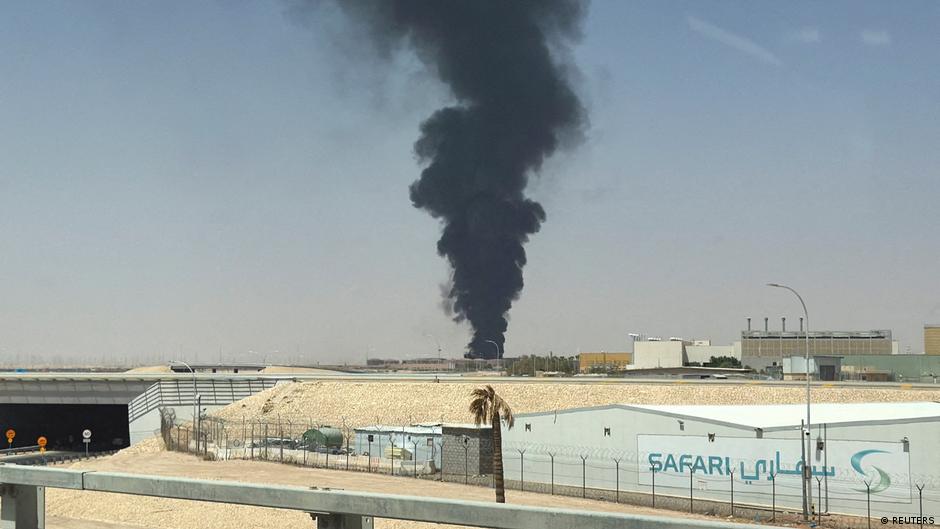
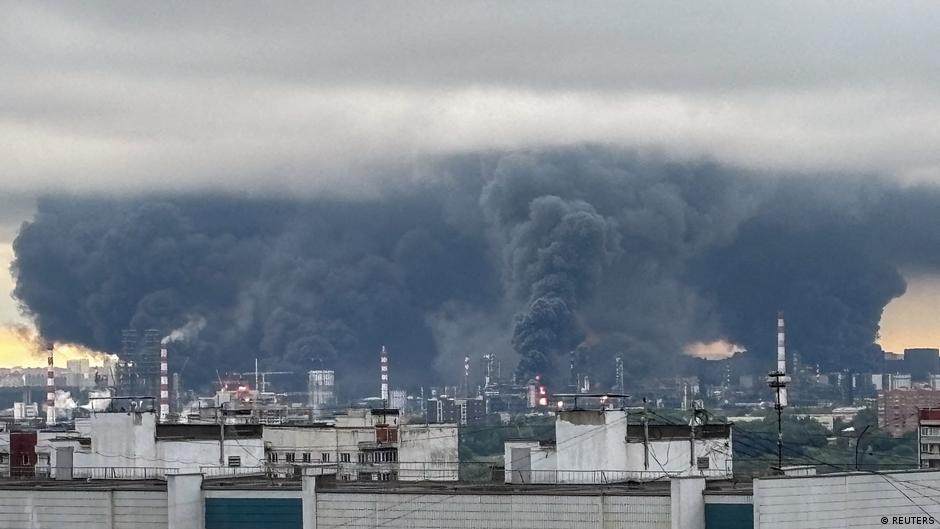
A new wave of Ukrainian drone and missile attacks has again exposed the economic vulnerability of Russia’s industrial rear, with fires reported at the Syzran oil refinery in Samara region and damage across Taganrog in Rostov region. The overnight strikes, reported on Tuesday, September 15, affected energy infrastructure, logistics facilities, residential buildings and, according to Ukrainian monitoring channels, military-linked industrial sites.
The most economically significant reported target was the Syzran oil refinery, part of Rosneft’s structure and one of the largest refining enterprises in Samara region. Regional governor Vyacheslav Fedorishchev confirmed damage at “one of the industrial enterprises” in Samara region after a UAV attack in the morning. He said military units and mobile fire groups had spent the night shooting down Ukrainian drones, with more than 40 unmanned aerial vehicles hit in total. According to the governor, there were no deaths, though windows were blown out in several residential buildings and an operational headquarters was working in the region.
Ukrainian monitoring channel Exilenova+ reported that the attack targeted the Syzran refinery and that an oil tank caught fire. The outlet Astra said its OSINT analysis confirmed that account, noting that at least one of the fire sources was located within the tank farm. The Syzran refinery has already been repeatedly targeted by the Ukrainian Armed Forces, underlining its place in a broader campaign against Russia’s fuel-processing system.
Energy Infrastructure Moves Back to the Center of the War Economy
For an economy fighting a prolonged full-scale war, refinery disruptions are not simply local emergencies. Oil refining connects export revenues, military logistics, domestic fuel prices and regional employment. Even limited damage to storage tanks or processing facilities can force shutdowns, rerouting, repairs and tighter fuel allocation. In Russia’s case, the economic significance is amplified by geography: refineries deep inside the country were once assumed to be insulated from the direct physical risks of the war, but repeated drone strikes have eroded that assumption.
The pattern recalls earlier phases of modern wars in which the battlefield extended into industrial capacity. Attacks on refineries, rail junctions, repair plants and depots are not only designed to cause immediate damage; they also impose costs through air-defense deployment, insurance uncertainty, production interruptions and management attention. The latest Russian reports point to precisely that wider burden: mobile fire groups operating overnight, emergency headquarters activated, and civilian property damaged by debris or blast effects.
Russia’s regional officials reported no fatalities, but described fires, damaged warehouses, broken windows, hit roofs and strained emergency response systems across several regions.
Exilenova+ also wrote that missile danger was declared overnight in Volgograd region and that explosions sounded on the territory of the Sebryakovsky cement plant in the city of Mikhaylovka. At the same time, neither regional authorities nor Russia’s Defense Ministry reported the destruction of drones or missiles over the region. If confirmed, such incidents would further broaden the map of industrial assets exposed to wartime disruption, including construction-materials production that supports both civilian and military demand.
Taganrog Damage Points to the Logistics-Industry Link
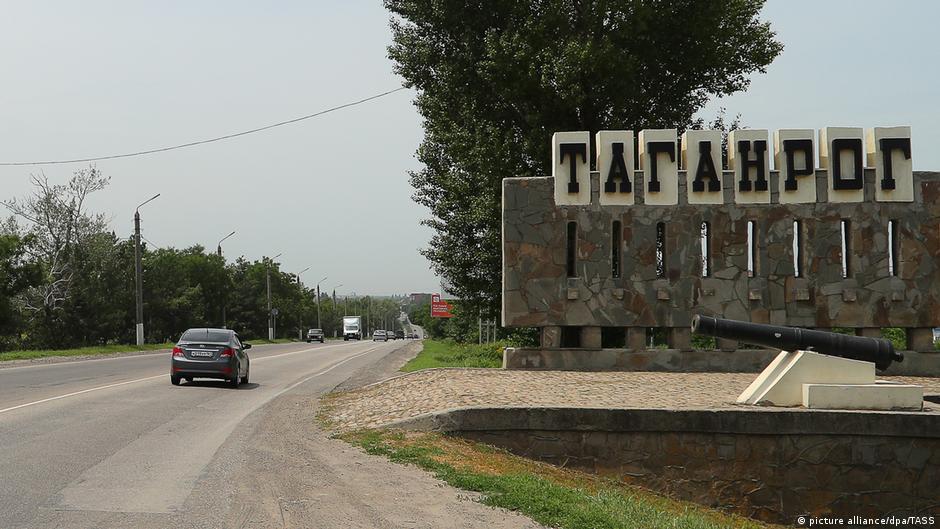
The same night, strikes were recorded in Taganrog. Rostov region governor Yury Slyusar described a massive missile attack that caused “multiple consequences on the ground.” He said several fires broke out and that there were no injured or dead. According to his later statements, the missile attack damaged an Ozon warehouse, warehouses belonging to agricultural enterprises, a grocery store, the glazing of two apartment buildings and three private houses, an educational institution, a commercial building and a gas pipe.
Slyusar later wrote that, during the repelling of the attack on Rostov region, more than 30 UAVs and missiles were destroyed in Taganrog and nine districts of the region. Firefighting in Taganrog was continuing, he added. Ukrainian monitoring channels reported that the main targets were the Beriev Taganrog Aviation Scientific and Technical Complex and the Taganrog Automobile Plant, known as TagAZ, which they said is used for military purposes.
From an economic perspective, the Taganrog reports show how military and civilian infrastructure now overlap in practical risk. Warehouses, retail outlets, gas pipes, apartment buildings and plants all sit inside the same urban-industrial landscape. Damage to an e-commerce warehouse such as Ozon’s does not carry the same strategic weight as damage to an aircraft repair facility, but it illustrates the spillover costs borne by civilian logistics networks. These systems are central to Russia’s internal distribution economy and are vulnerable to both direct strikes and secondary damage from air-defense activity.
In Voronezh region, authorities also announced a UAV threat. Governor Alexander Gusev later said 16 drones had been destroyed “in the sky over Voronezh and seven districts of the region.” He wrote that falling UAV debris damaged glazing, roofs and facades of four private houses in one municipality. According to preliminary data, there were no casualties.
Russia’s Defense Ministry, which has continued its full-scale war against Ukraine for four and a half years, reported the destruction of 222 Ukrainian fixed-wing UAVs over Oryol, Belgorod, Voronezh, Tula, Tambov, Bryansk, Rostov, Kursk, Lipetsk, Ryazan, Saratov, Samara, Kaluga and Ulyanovsk regions, the Republic of Tatarstan, annexed Crimea and the Black Sea. The geographic spread of that statement is itself economically relevant: the cost of defending a dispersed industrial base grows as the threat map expands.
A Fragile Opening on Energy De-escalation
The strikes also came against a diplomatic backdrop. The day before, U.S. President Donald Trump said Ukraine and Russia were ready to stop mutual attacks on energy facilities. Ukrainian President Volodymyr Zelensky later confirmed on Telegram that Kyiv agreed to an energy ceasefire if Russia observed it. Moscow did not comment on Trump’s remarks.
That sequence leaves the economics of escalation unresolved. An energy ceasefire, if implemented and observed, could reduce pressure on refineries, power assets and logistics chains. But the latest attacks show how hard such a bargain would be to verify and sustain. Refineries, aviation repair plants, storage facilities and gas infrastructure all sit at the intersection of civilian economic life and military utility. As long as both sides view those assets as materially important to the war effort, they remain exposed to attack, and Russia’s regions will continue absorbing the financial and operational consequences.
For Russia, the structural issue is no longer only whether individual drones are intercepted. It is whether a large, dispersed industrial economy can maintain normal functioning when strategic depth has become porous. The reported fires in Syzran and Taganrog suggest that the war’s economic geography is shifting further inward, turning repair capacity, fuel processing, warehouses and regional infrastructure into recurring points of pressure.