Drone Strikes Near Moscow Expose Rising Economic Costs of the War
Reported attacks on refineries, logistics sites, housing and airports around Moscow point to widening pressure on Russia’s economic infrastructure.
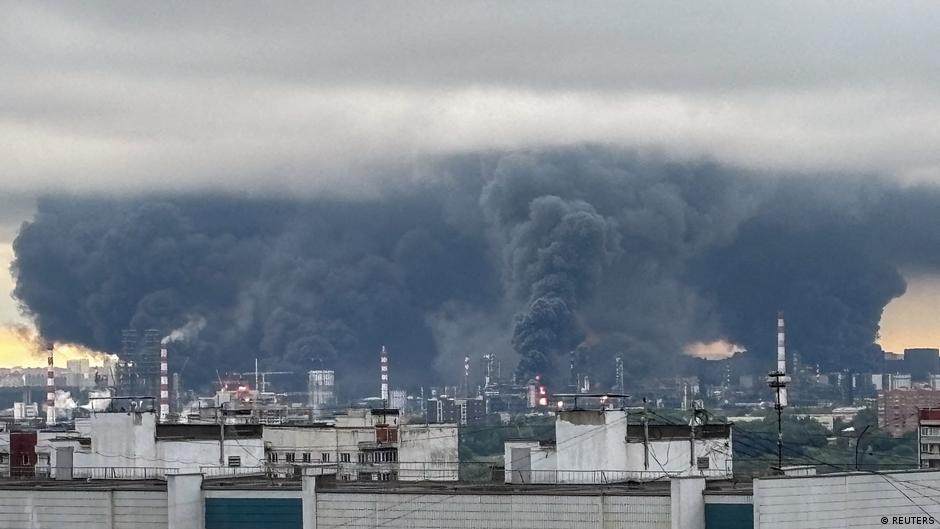
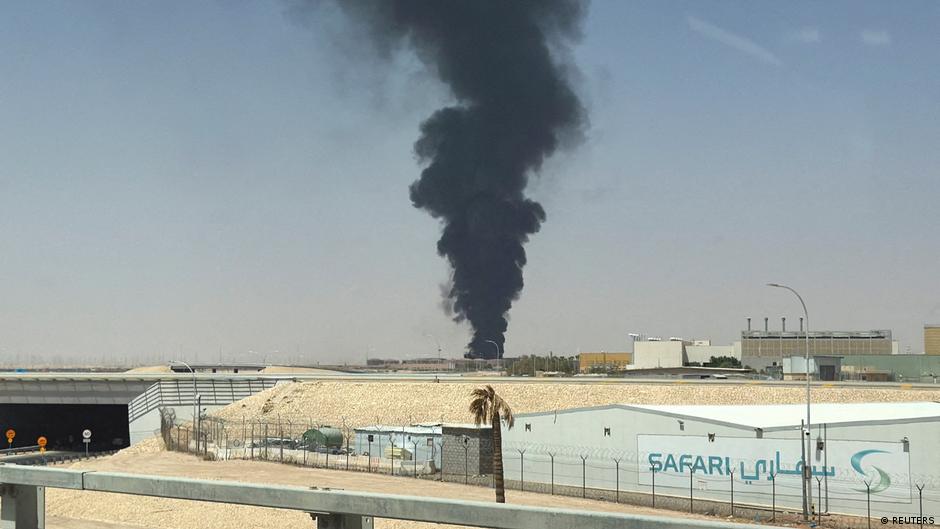
Two people were killed and at least six others were injured after a large-scale Ukrainian drone attack struck Moscow region, according to regional governor Andrei Vorobyov. Writing on Telegram on Sunday morning, September 20, Vorobyov said that 249 Ukrainian drones had been shot down over the region.
The scale of the reported attack, and the mix of targets and damage described by officials and Telegram channels, underlines how the war is increasingly reaching infrastructure that supports Russia’s largest urban economy. Fires were reported at a warehouse complex, at residential buildings and at an oil refining facility in Moscow. Three capital-area airports temporarily suspended operations, adding aviation disruption to the immediate human and material toll.
Vorobyov said that a warehouse complex caught fire in Sofyino after the attack. The anonymous Telegram channel VChK-OGPU claimed that a logistics complex of about 850,000 square meters was fully engulfed in flames. The governor also reported drone impacts and fires in three apartment buildings and one private house.
Moscow Mayor Sergei Sobyanin said 186 drones had been shot down on approach to Moscow. He added that a facility on the territory of the Moscow oil refinery had been damaged, with no casualties there.
“A facility on the territory of the Moscow oil refinery was damaged. There were no casualties,” Sobyanin said, according to the source report.
According to VChK-OGPU, the oil refinery in Moscow’s Kapotnya district was on fire. The same refinery had already been attacked in June. The channel also claimed that drones attacked a thermal power plant in Lyubertsy and that a UAV hit a residential building in Kotelniki. The channel Ostorozhno, Novosti, citing local residents, reported a fire in a residential complex in Kotelniki. In Istra, drone debris damaged an apartment in a residential building, municipal district head Tatyana Vitusheva said. Moscow’s Vnukovo, Domodedovo and Zhukovsky airports suspended operations.
Infrastructure Moves to the Center of the War Economy
For Russia’s economy, the significance of such attacks lies not only in the number of drones reported, but in the type of assets affected. Oil refining, logistics warehousing, power generation, residential property and airports are all part of the infrastructure web that allows the Moscow agglomeration to function as Russia’s administrative, financial and consumption center.
The Moscow region is not simply a population belt around the capital. It is a logistics and industrial platform linking retail distribution, fuel supply, commuting flows and air transport. Damage to warehouses can have effects beyond the structure itself, especially if inventory, vehicles, sorting systems or transport links are affected. Even short disruptions can add costs for insurers, suppliers, retailers and freight operators.
Refinery damage carries a separate economic meaning. Oil and fuel infrastructure has become one of the most sensitive categories of wartime economic risk because it connects military logistics, domestic energy supply and export revenues. The source report does not provide an assessment of operational losses at the Moscow refinery, and officials reported no casualties at the damaged facility. Still, the fact that the refinery had already been attacked in June suggests repeated vulnerability rather than an isolated incident.
Historically, wars that move from front-line attrition into attacks on rear-area infrastructure tend to produce broader economic consequences. The immediate damage may be localized, but the risk premium spreads. Companies begin to price in interruptions, airports build more buffers into scheduling, industrial facilities review security costs, and regional authorities face pressure to harden civilian and commercial sites. These measures do not always appear as dramatic headline losses, but they accumulate as higher operating costs.
The suspension of work at Vnukovo, Domodedovo and Zhukovsky airports is particularly important in that context. Airports are high-frequency economic nodes: delays and closures affect passengers, cargo, crew rotations, aircraft positioning and connected business activity. Even if operations resume quickly, repeated interruptions can impose planning costs on airlines and companies that rely on predictable transport links.
Residential Damage and the Politics of Economic Risk
The reported fires and damage in residential buildings also change the economic and political character of the strikes. When drones or debris affect apartment blocks and private homes, the consequences extend to household balance sheets, municipal repair budgets and public perceptions of security. Insurance, compensation and emergency housing all become part of the fiscal and administrative burden.
Russia’s war economy has so far depended not only on defense spending and industrial mobilization, but also on insulating major urban centers from the full daily experience of conflict. Reports of strikes around Moscow challenge that insulation. The capital region concentrates wealth, state institutions, transport infrastructure and consumer demand. Disruption there carries symbolic weight, but it also has practical economic consequences because of the density of assets and networks located in and around the city.
The claims cited in the source report come from a mix of official statements and anonymous or local Telegram channels. Officials confirmed deaths, injuries, drone interceptions, fires in buildings and damage at the Moscow refinery site. Telegram channels added claims about the scale of the warehouse fire, the refinery fire in Kapotnya, a thermal power plant attack in Lyubertsy and a UAV strike on a residential building in Kotelniki. These distinctions matter for economic assessment because confirmed damage and reported but unverified claims may imply different levels of disruption.
Even with those caveats, the episode fits a broader pattern in which infrastructure risk becomes a structural feature of the conflict. The economic cost is not measured only in destroyed assets. It also appears in defensive spending, interrupted transport, emergency response, repairs, inventory losses, higher uncertainty and the diversion of management attention from productive activity to continuity planning.
For Moscow and its surrounding region, the reported mass drone attack shows how the geography of economic exposure is widening. A war once framed by distance from the capital is increasingly intersecting with the systems that keep the country’s largest metropolitan economy moving: fuel, logistics, housing, power and air travel. That intersection is where the long-term costs may prove most difficult to contain.