Trump Signs Graham Sanctions Law Targeting Russia’s Energy Revenue
The measure gives the U.S. president broad discretion to impose tariffs and sanctions tied to Russian oil, gas and sanctions evasion.
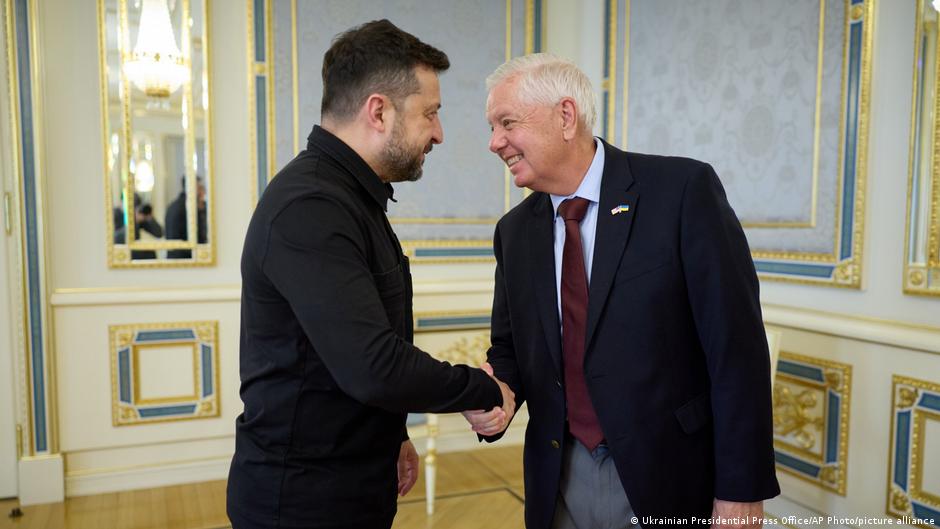
President Donald Trump on Friday, September 18, signed into law a new package of U.S. sanctions against Russia over its continuing war against Ukraine, turning a long-debated congressional proposal into a potentially powerful instrument of economic coercion. The bill, developed and promoted by the late Republican senator Lindsey Graham, had been lobbied for roughly a year and a half before reaching the president’s desk.
The legislation is aimed above all at Russia’s energy revenues, the core financial artery of the wartime economy. It authorizes the U.S. president to impose 100 percent tariffs on the five largest buyers of Russian oil and gas, as well as on five countries that help Moscow circumvent energy sanctions. The law also includes exemptions for countries that receive less than 15 percent of their consumed natural gas from Russia and are taking steps to reduce that import dependence.
In addition to energy-related measures, the bill provides for sanctions against Russian officials, banks, business figures and the so-called shadow fleet used to sustain trade despite restrictions. It also extends U.S. sanctions on Iran through 2031, linking two long-running sanctions regimes inside one broader legislative framework.
From “Hellish” Tariffs to Presidential Discretion
The measure, known in public debate and media coverage as the “Lindsey Graham law,” was introduced in April 2025 by Graham and Democratic senator Richard Blumenthal. Graham’s name became closely attached to the package partly because Trump preferred dealing with a fellow Republican, and the proposed measures were increasingly described as “Graham sanctions.”
In its original form, the bill envisioned customs duties of up to 500 percent on products from Russia while it continued its war against Ukraine and refused peace talks. The president would periodically assess whether Moscow was ready for dialogue and, if not, impose sanctions. Because of the 500 percent tariff ceiling, the measures became known as “hellish” sanctions. The package was also meant to affect goods from countries purchasing Russian oil, though the tariff threshold for importers of Russian oil was later reduced to 100 percent.
Trump’s position on the Graham-Blumenthal initiative shifted during the legislative debate. At times he supported such measures; at other moments he opposed their adoption. The lobbying campaign continued for about 18 months, and Graham did not live to see the bill enacted. The senator died on July 11, 2026.
By the time Trump signed the legislation, the bill had changed substantially. Most importantly, it expanded presidential authority. Trump received the power to decide whether to impose or cancel the measures outlined in the law, a departure from the usual practice under which such actions would require coordination with Congress. In its final form, the law also allows Trump to use its provisions in connection with his continuing trade war against China.
“Life in the United States is too expensive. Why should Congress or the House of Representatives give the president unlimited authority to impose new tariffs around the world that will have negative economic consequences for the American people? I cannot do that,” House Democratic minority leader Hakeem Jeffries said in explaining his opposition.
Economic Pressure With Wider Costs
For Ukraine’s supporters, the law is designed to send a clear signal at a moment when the intensity of fighting is rising. Ukrainian President Volodymyr Zelensky thanked Trump for signing the Graham sanctions law and expressed gratitude to senators and members of the House of Representatives who supported it. He emphasized the importance of increasing pressure on Moscow to end the war.
Zelensky also invoked Graham’s political legacy, writing that the senator “never doubted for a moment” that America had enough strength to fight dictators and achieve results if it acted “correctly.” The statement framed the law not only as a sanctions package but also as a test of U.S. strategic will.
For economic policymakers, however, the bill raises a more complex set of questions. Sanctions on energy trade rarely remain confined to the target economy. Russia’s oil and gas exports are embedded in global supply chains, insurance markets, shipping networks and refining patterns. A 100 percent tariff threat against major buyers of Russian energy could reshape incentives for importers, but it could also raise costs, redirect trade flows and increase volatility in global commodity markets.
The structure of the law reflects a familiar dilemma in sanctions policy: the desire to maximize pressure on the sanctioned state while limiting collateral damage to allies, consumers and domestic industries. The exemption for countries importing less than 15 percent of their natural gas from Russia and actively reducing that dependence is an attempt to distinguish between strategic reliance and transitional exposure. But the practical effect will depend on how aggressively the White House applies the authority it has been given.
The law’s focus on the shadow fleet also points to the evolution of sanctions enforcement. As restrictions multiply, targeted states and commercial intermediaries develop parallel logistics systems, opaque ownership chains and alternative financing routes. Sanctioning ships, banks and business figures can disrupt those networks, but enforcement tends to become a long contest of adaptation rather than a single decisive action.
The broader economic significance lies in the concentration of authority. By giving Trump discretion to impose or withdraw measures, Congress has created a flexible tool that can be used for wartime pressure, diplomatic bargaining or trade leverage. Supporters see that flexibility as necessary in a fast-moving geopolitical environment. Critics warn that it gives the president sweeping tariff powers with potentially direct consequences for American households and firms.
Historically, U.S. sanctions have often expanded from targeted financial penalties into wider instruments of industrial and trade policy. The Graham law follows that trajectory. It begins with Russia’s war against Ukraine, reaches into energy markets, extends Iran sanctions to 2031 and may intersect with U.S.-China trade confrontation. Its long-term effect will depend less on the text alone than on how Trump uses the authority now placed in his hands.