Houthi Missile Attempt on Riyadh Raises Stakes for Saudi Oil Routes
The reported interception over Riyadh highlights how Yemen’s conflict is increasingly entangled with the security of Saudi energy exports.
Saudi Arabia said Yemen’s Iran-aligned Houthi movement attempted to strike Riyadh with a ballistic missile overnight, marking what the Saudi-led coalition described as the first such attempt against the kingdom’s capital. The missile was “intercepted and destroyed,” according to Brigadier General Turki al-Maliki, the official spokesman for the Saudi-led Coalition to Restore Legitimacy in Yemen, in a statement posted on X on Saturday, September 19.
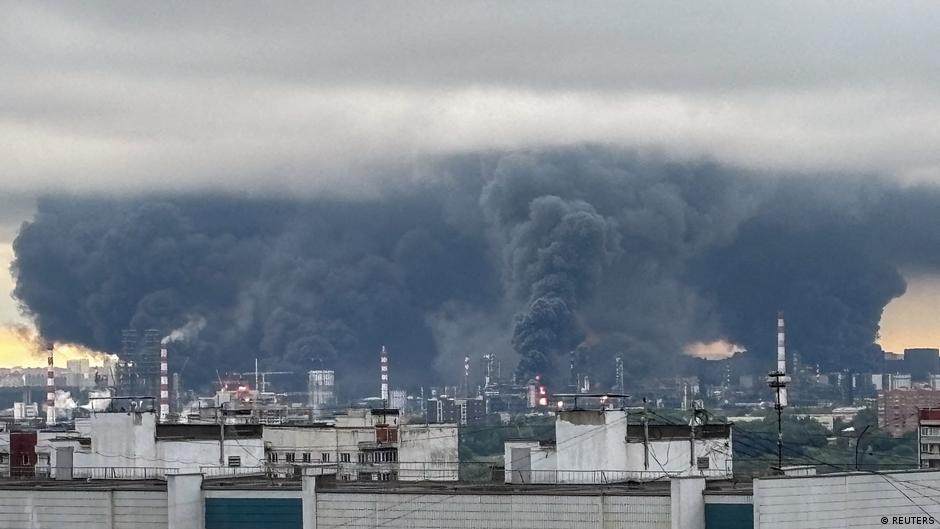
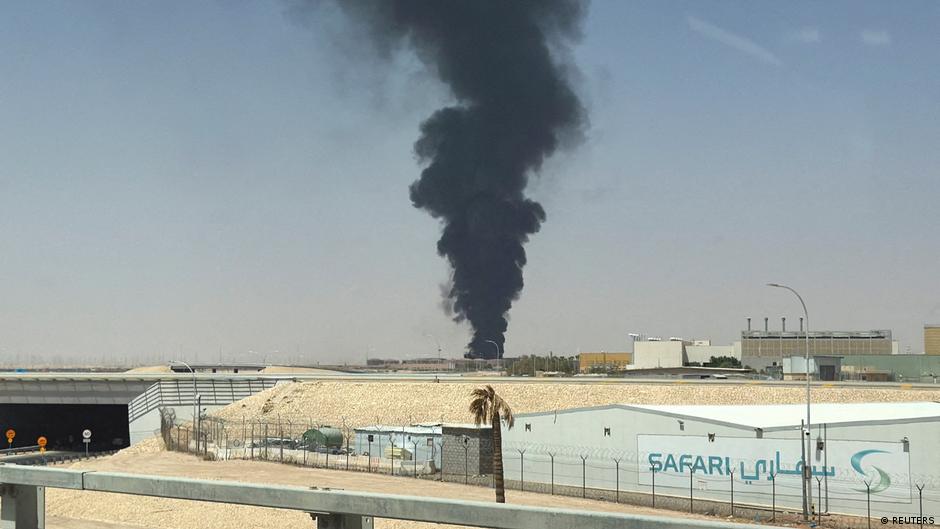
Air raid sirens were sounded in Riyadh during the night, and some residents reported hearing an explosion. There were no immediate reports of casualties or damage. Later, a column of smoke was visible near the airport. AFP, citing its correspondent, reported that a fuel tank belonging to Saudi Aramco, the kingdom’s largest oil company, was on fire and that the blaze had been extinguished. It remained unclear whether the fire was connected to the attempted missile strike. Aramco did not respond to journalists’ requests for comment.
The Saudi authorities also said the Houthis had tried to attack civilian infrastructure, including targets in Yanbu, the Red Sea port city that has become increasingly important to the kingdom’s export strategy. Those attempts were thwarted, according to Riyadh. The Houthis, for their part, claimed they had used drones, cruise missiles and ballistic missiles to strike “important facilities” in Riyadh and Aramco infrastructure in Yanbu.
Energy Security Moves Back to the Center
The immediate military significance of the reported attack lies in its target: Riyadh, the political and administrative core of Saudi Arabia. But the broader economic signal is tied to Yanbu and the East-West pipeline, the infrastructure that allows Saudi crude to move from the Gulf side of the country to the Red Sea while avoiding the Strait of Hormuz.
That alternative route has become more consequential since the outbreak of the war involving the United States and Israel against Iran, which has substantially complicated tanker passage through Hormuz. In response, Saudi Arabia increased exports through the East-West pipeline. The pipeline terminates at Yanbu, giving the kingdom a route to global markets that does not rely on the Gulf chokepoint.
On September 11, the Financial Times reported that Saudi Arabia had halted operations on the East-West pipeline after a drone attack launched from Iraqi territory. On September 18, Saudi Aramco notified at least two European refineries that it would not supply them with oil in October, Bloomberg reported. According to Bloomberg, the pipeline was expected to be partially restarted within days, with full restoration planned within a month and a half.
Those details frame the Riyadh and Yanbu incidents as more than another episode in the long Yemen war. They point to a widening contest over the redundancy of Saudi export logistics. If Hormuz is difficult and the Red Sea route becomes vulnerable, the kingdom’s long-standing strategy of geographic diversification in oil transport faces a sharper stress test.
Saudi officials said the missile targeting Riyadh was intercepted and destroyed, while the Houthis claimed strikes on important sites in the capital and Aramco infrastructure in Yanbu.
Chokepoints and Historical Echoes
The economic geography is familiar. Gulf producers have for decades sought to reduce dependence on narrow maritime passages, most notably the Strait of Hormuz. The logic is simple: oil markets price not only supply, but also the probability that supply can physically reach buyers. Pipelines, ports and storage facilities are therefore strategic assets, not merely logistics infrastructure.
The East-West pipeline fits that historical pattern. It gives Saudi Arabia a land-based bypass to the Red Sea, and Yanbu provides access toward the Suez route and European markets. But the latest sequence of attacks shows that bypasses can generate their own vulnerabilities. Once the Red Sea route becomes central, ports, tankers and nearby maritime chokepoints become higher-value targets.
In recent weeks, the capacity of the route has fallen because of Houthi attacks on Saudi tankers in the Red Sea. In August, about 2.5 million barrels per day were shipped through Yanbu, the lowest level since 2013, according to the International Energy Agency. For oil markets, such figures matter because they indicate not only current flows but also the narrowing margin for rerouting if additional infrastructure is disrupted.
The Bab el-Mandeb Strait has become another point of pressure. On September 11, Reuters and AFP reported that the Houthis had captured strategically important islands in the strait, which links the Red Sea with the Arabian Sea. Around 12% of global cargo traffic passes through Bab el-Mandeb, including oil trade. Its importance to Saudi Arabia has increased since the closure of Hormuz. The Houthis said shipping through Bab el-Mandeb was “safe for all commercial vessels except Saudi ones.”
The previous day, it also emerged that the Houthis had taken control of the port of Mokha on Yemen’s coast along the Bab el-Mandeb Strait. Reuters reported that the Houthi advance was being directed by Iran’s Islamic Revolutionary Guard Corps. Sources in Tehran said Iran was seeking in this way to open a new front in its confrontation with the United States.
A Conflict With Wider Economic Consequences
The confrontation now has several overlapping layers. There is the Yemen war itself, in which the Saudi-led coalition has fought the Houthis for years. There is the regional struggle involving Iran, the United States and Israel. And there is the global energy-security dimension, in which ports, pipelines and maritime passages become instruments of pressure on trade flows.
For Saudi Arabia, the reported attempt to hit Riyadh carries political symbolism, but the associated pressure on Yanbu and the East-West pipeline may be the more important economic development. A capital can be defended by air defenses; a sprawling export system requires continuity across land routes, ports, tankers and sea lanes. Each disruption compounds uncertainty for buyers, insurers and refiners.
The risks extend beyond Saudi Arabia. European refineries were already affected by Aramco’s October supply notifications, according to Bloomberg. If alternative Saudi export channels remain under pressure, the effects can travel through crude allocation decisions, freight rates, insurance costs and refinery planning. Oil markets are especially sensitive to chokepoint risk because even limited physical interruptions can reshape expectations about future availability.
On September 16, the Saudi-led coalition also said the Houthis had attacked Mecca, the holy city for Muslims, with a drone that was shot down on approach. The Yemeni rebels denied the accusation. That claim, like the Riyadh incident, adds a symbolic dimension to the conflict. But the economic pattern is increasingly concrete: attacks and territorial advances are converging around the routes Saudi Arabia needs most when Hormuz is constrained.
The result is a conflict that is no longer contained by its original geography. The front line runs through Yemen, but its consequences now pass through Riyadh, Yanbu, Bab el-Mandeb and the balance sheets of refiners far beyond the region.