EU Bars Russia-Based Students and Groups From Erasmus+ Through 2027
The restrictions sever a longstanding channel of academic exchange while reinforcing the economic and institutional separation between Russia and Europe.
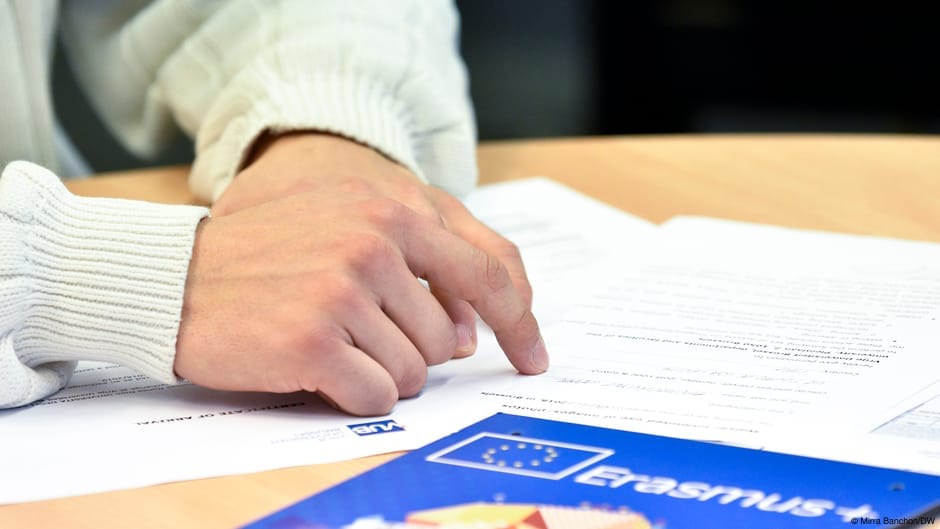
The European Union has closed its Erasmus+ education program to organizations based in Russia and individuals residing there, extending the economic and institutional consequences of the war in Ukraine into academic mobility. Under program guidance covering the period through the end of 2027, Russian-based entities and residents may not participate in Erasmus+ activities in any capacity.
The European Commission presented the guidance on Thursday, November 19. Its language is comprehensive: organizations based in Russia and people living in the country are excluded from all activities under the program. The restriction is based on location rather than citizenship alone, broadening its reach beyond Russian nationals.
Residents of Russia are also no longer eligible for scholarships supporting Erasmus Mundus Joint Master programs at European universities, irrespective of their nationality. A foreign citizen living in Russia would therefore face the same exclusion as a Russian citizen residing there.
Organizations and individuals in Russia may not participate “in any capacity” in “any activities” under Erasmus+.
The document does not specify whether the restrictions apply to scholarships and projects whose financing had already been approved. That omission creates uncertainty for students, researchers and institutions with existing commitments, particularly where study plans, contracts or cross-border partnerships may already be underway.
From academic exchange to economic separation
Erasmus has operated for more than 30 years, making it one of Europe’s most durable instruments of cross-border integration. Although primarily an education initiative, its economic function is broader: mobility programs help universities exchange knowledge, allow employers to recruit graduates with international experience and build professional networks that can outlast periods of political tension.
Between 2014 and 2021, approximately 13,200 students and researchers from Russia participated in the program. Their exclusion now removes a formal route through which Russian residents could gain access to European university networks and jointly organized academic programs.
The change also illustrates how sanctions and related restrictions can affect the formation of human capital, not merely trade, finance or industrial production. The immediate impact is concentrated among prospective students, scholars and educational organizations. Over time, however, reduced mobility can weaken research links and narrow the circulation of skills between Russia and the EU.
Historically, academic exchanges have sometimes survived periods of geopolitical confrontation because governments viewed scientific and educational contact as a limited bridge between rival systems. The latest Erasmus+ rules point in the opposite direction. They treat participation in publicly funded education programs as part of the EU’s wider financial relationship with Russia, rather than as a protected sphere insulated from political conflict.
A widening divide in publicly funded cooperation
The policy follows measures adopted after Russia’s full-scale invasion of Ukraine in 2022. The Council of the European Union prohibited financial and other support for Russian state organizations under programs financed from the EU budget. The new Erasmus+ guidance establishes a broader practical exclusion encompassing organizations based in Russia and all people residing there.
For the European university sector, the restrictions may require institutions to reassess recruitment pipelines, partnership arrangements and scholarship administration connected to Russia. The unresolved status of previously approved financing is especially significant because multi-year academic projects often depend on predictable funding and coordinated participation across several institutions.
For Russia, the structural consequence is a further contraction of access to European educational infrastructure. International study does not only deliver degrees; it transfers professional practices, language skills, research methods and contacts. Restricting that movement may deepen Russia’s academic reorientation away from Europe and encourage students and institutions to seek partnerships elsewhere.
The decision arrives as the EU considers a substantial expansion of Erasmus funding. On October 22, the European Parliament backed a budget of €47.4 billion for the program for 2028-2034. The final amount must still be agreed with EU member states. The contrast is economically and politically notable: Brussels is preparing to enlarge one of its principal investments in European skills and mobility while drawing a firm boundary around participation from Russia.
Long-term costs are harder to measure
The direct fiscal effect of excluding Russia-based applicants is unlikely to capture the policy’s full importance. The larger consequences concern networks and future capacity: which institutions cooperate, where talented students study and which labor markets ultimately benefit from their training.
Such effects accumulate gradually and are difficult to reverse quickly. University partnerships take years to establish, while interrupted mobility can influence career choices and research agendas long after a program cycle ends. Even if political relations later improve, rebuilding institutional trust and restoring exchange channels may require more than simply reopening scholarship applications.
Through the end of 2027, the immediate rule is unambiguous for new participation: Russia-based organizations and residents are outside Erasmus+. What remains unclear is how the European Commission will handle previously approved projects and awards. That distinction will determine whether the transition is limited to future opportunities or also disrupts commitments already made.