EU Considers Withholding €2 Million Funding from Venice Biennale over Russian Participation
The European Commission recommends cutting subsidies to Venice Biennale due to Russia’s involvement, citing democratic values and EU sanctions concerns.
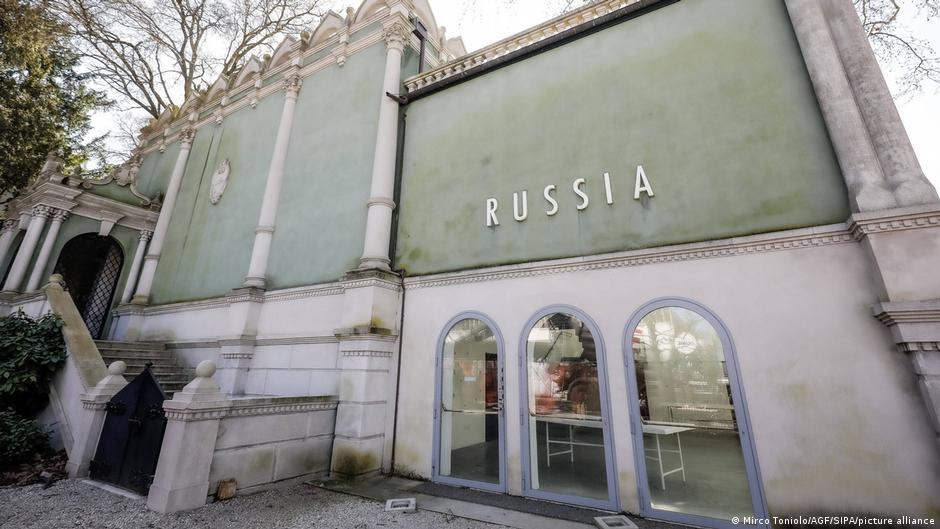
The European Commission has officially recommended that the European Education and Culture Executive Agency (EACEA) withdraw €2 million in funding from the Venice Biennale. The decision follows the controversial participation of Russia in the prestigious cultural forum amid ongoing geopolitical tensions and Russia’s full-scale invasion of Ukraine.
Funding, Values, and Geopolitics Collide
Henna Virkkunen, the European Commission’s Executive Vice-President for Technology Sovereignty, Security, and Democracy, announced the recommendation on July 11. She emphasized that culture financed by European taxpayers should reinforce and protect democratic values. "In modern Russia, these values are not respected," Virkkunen wrote on social media.
The involvement of Russia in the 2026 Venice Biennale marked its first appearance since the conflict intensified, prompting sharp criticism from Brussels and Kyiv. The Russian pavilion’s presence sparked protests, including demonstrations by activist groups such as Femen and Pussy Riot, highlighting the contentious nature of Russia’s cultural diplomacy during wartime.
"Culture funded by European taxpayers must strengthen democratic values, which are currently undermined in Russia," stated Henna Virkkunen.
Earlier, on April 21, EU foreign affairs chief Kaja Kallas publicly declared intentions to reduce the Biennale’s funding due to Russia's return. In May, the European Commission formally warned the Italian government and Biennale organizers that Russia’s participation violated EU sanctions. The Commission’s letter underscored that the Russian pavilion is state-run, equating its funding to indirect economic support of the Kremlin.
Pietrangelo Buttafuoco, President of the Venice Biennale, defended the decision to allow Russia’s participation on the grounds of upholding freedom of expression. This stance raises critical questions about the intersection of cultural autonomy and political accountability within European arts funding frameworks.
Economic and Structural Implications for European Cultural Institutions
This dispute exemplifies the broader challenge of balancing cultural openness with political principles and economic sanctions. The Venice Biennale, as a flagship European cultural event, relies heavily on EU subsidies to sustain its programming and international reach. The potential suspension of €2 million from EU coffers could disrupt the institution’s operational stability and signal a shift toward politicizing arts funding in response to geopolitical conflicts.
Historically, European cultural institutions have navigated complex relationships with state actors and political pressures. The current episode echoes Cold War-era debates over cultural exchanges with adversarial states, reflecting enduring dilemmas in managing the fine line between artistic freedom and diplomatic repercussions.
Financially, withholding subsidies risks compelling the Biennale to seek alternative funding sources, potentially including private donors or non-EU entities, which could influence its programming and independence. Moreover, it sets a precedent for the EU’s cultural funding policies to incorporate stricter compliance with foreign policy objectives, reinforcing a paradigm where cultural initiatives are instruments of broader geopolitical strategy.
As the situation develops, the Venice Biennale’s case will be closely watched by European cultural and political stakeholders as a barometer of how economic support for the arts intertwines with compliance to democratic norms and sanction regimes.