US Military Strikes Iran Again as Strait of Hormuz Closes Amid Rising Tensions
Renewed US-Iran confrontations disrupt vital oil shipping lanes, signaling deeper economic and geopolitical instability in the Gulf region.
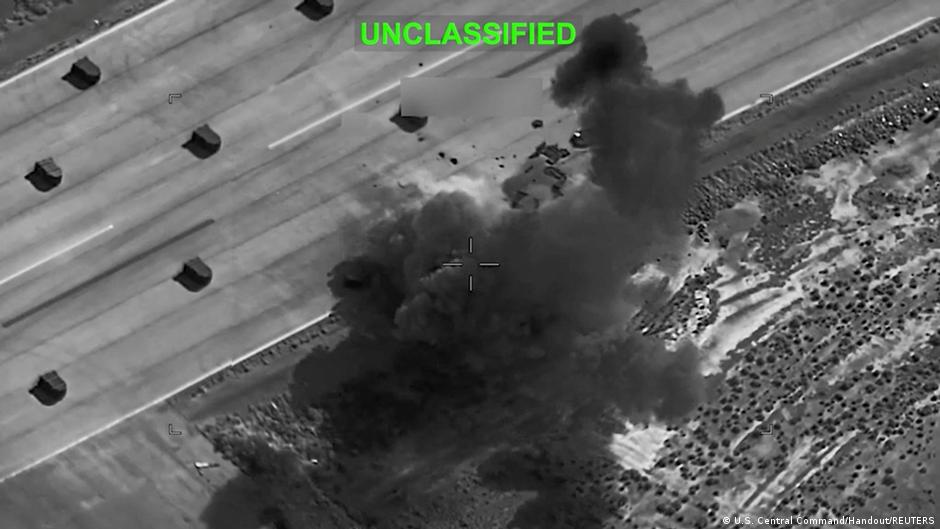
The United States military launched a third series of strikes against Iran within a single week in response to an attack by Iran's Islamic Revolutionary Guard Corps (IRGC) on a civilian container ship in the Strait of Hormuz. The strategically critical waterway, essential for global oil exports, has been closed again, intensifying concerns about regional economic disruption and the wider geopolitical balance.
Escalation and Strategic Implications
In the early hours of Sunday, July 12, US Central Command (CENTCOM) announced the latest wave of military action targeting Iranian assets following an assault on the GFS Galaxy, a Cyprus-flagged container vessel navigating the Strait of Hormuz. Iranian media reported air defense activity and explosions in several cities including Sirik, Konarak, Chabahar, Jask, and Bandar Abbas, signaling a broad military engagement across southern Iran.
The container ship sustained significant damage to its engine room and suffered a fire onboard, resulting in one crew member listed as missing. US military officials characterized the strikes as a direct response aimed at degrading Iran's capability to threaten commercial shipping and emphasized that Iran had failed to demonstrate compliance with a previously agreed Memorandum of Understanding intended to safeguard maritime navigation.
"Iran was given another opportunity to abide by the Memorandum of Understanding after being held accountable for previous attacks on commercial vessels, but again failed to meet this obligation," said CENTCOM in a public statement. "In response, the United States is imposing significant damage to weaken Iran’s ability to attack civilian mariners and merchant ships passing freely through the Strait."
US Secretary of Defense Pete Hegseth succinctly summarized the US stance: "Iran made the wrong choice. Now they are paying the price."
Conversely, the IRGC stated that it fired warning shots at the ship due to its deviation from an Iran-approved route and accused the vessel of disabling its tracking systems, impairing maritime safety. Iran also asserted that the Strait of Hormuz will remain closed until US interventions in the region cease, with additional threats issued against US military bases in the Middle East should American strikes continue.
Historical Context and Economic Consequences
The Strait of Hormuz has long been a flashpoint in the complex geopolitical contest over energy security. Prior to the outbreak of open hostilities, approximately 20% of the world’s oil trade passed through this narrow maritime corridor, underscoring its critical importance to the global economy.
On June 17, amid mounting tensions, the US and Iran had reportedly reached a framework agreement aimed at halting hostilities and reopening the strait to commercial traffic. However, this fragile accord unraveled when Iranian forces attacked a civilian tanker with a kamikaze drone on June 25. US retaliatory strikes followed immediately, initiating a pattern of reciprocal military actions that have since extended to collateral attacks affecting neighboring Bahrain and Kuwait.
The US military has consistently targeted Iranian military infrastructure—including radars, missile storage facilities, and drone bases—to degrade Iran’s offensive capabilities. Concurrently, US President Donald Trump publicly declared on July 8 at the NATO summit in Ankara that the Memorandum of Understanding with Iran was effectively void, labeling Iranian leadership as "evil, sick people" and dismissing direct negotiations as fruitless. Yet he indicated that US negotiators might continue dialogue if desired. The US has reinstated oil sanctions against Iran, further complicating the economic landscape.
Significantly, reports on July 11 from Reuters revealed that during confidential discussions, Iranian officials attributed the recent attacks on maritime traffic to "uncontrollable elements within the system," acknowledging errors and expressing a willingness to engage in dialogue. This admission points to internal divisions within Iran's power structure and highlights the precariousness of the current standoff.
Broader Structural Economic Impacts
The closure of the Strait of Hormuz disrupts not only immediate oil shipments but also reverberates through global markets, exacerbating volatility in energy prices and supply chains. Persistent instability risks diverting trade routes, increasing transportation costs, and undermining investor confidence in regional economic stability.
Moreover, the escalation highlights the fragility of international frameworks designed to manage conflict in geopolitically sensitive areas. Repeated breaches of the Memorandum of Understanding and retaliatory military actions reflect a breakdown in diplomatic mechanisms, suggesting a longer-term recalibration of power dynamics in the Gulf.
As the conflict persists, the economic consequences could deepen, affecting not only energy markets but also the broader stability of international trade and investment in the Middle East. Policymakers and market participants must consider historical precedents of regional conflict translating into global economic shocks and prepare for extended uncertainty.