EU Shelves Defence Panel After German and Italian Resistance
Kaja Kallas’s cancelled initiative exposes the institutional and economic frictions behind Europe’s drive to close military capability gaps.
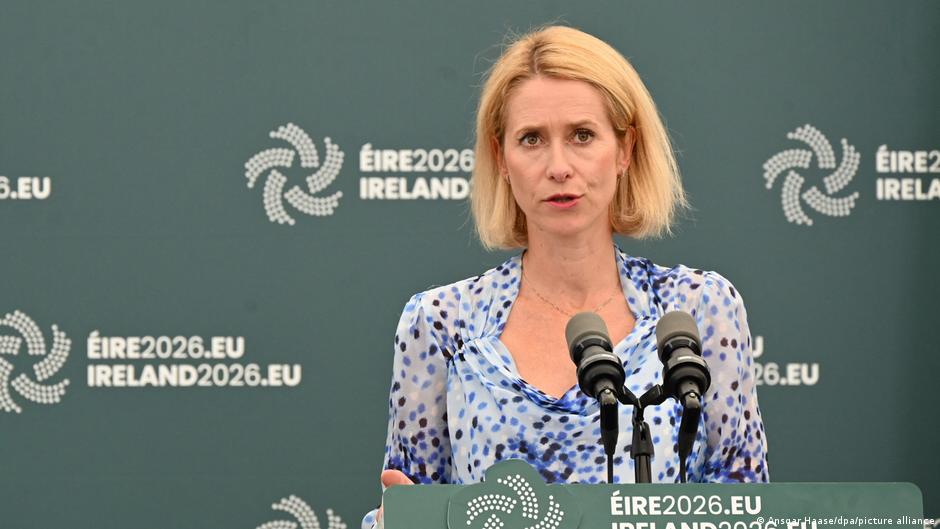
European Union foreign policy chief Kaja Kallas cancelled at the last minute a planned presentation of a high-level expert group on defence, according to dpa, after resistance from several governments, including Germany and Italy. The group had been due to be unveiled on Monday, September 7, and was intended to strengthen European defence policy by producing recommendations on how to close Europe’s military capability gaps more quickly and effectively.
An EU official in Brussels told dpa late on September 6 that “some member states considered that this was not the right step at the moment.” After talks with EU defence ministers, the official said, the decision was taken not to proceed with this specific initiative. The reversal is more than a procedural delay. It points to a larger dispute over how Europe should organise, finance and govern its defence build-up at a time when security policy is increasingly inseparable from industrial policy, fiscal planning and long-term economic strategy.
The cancelled panel was expected to operate under Kallas’s leadership and to include senior political and military figures from several EU countries, as well as the United Kingdom and Ukraine. Its mandate was to prepare concrete proposals for accelerating the repair of gaps in Europe’s military capabilities. Those gaps have become a central economic question for the bloc because defence readiness now depends on production capacity, procurement coordination, labour supply, research pipelines and budgetary trade-offs across national governments.
Institutional Rivalry Behind a Strategic Delay
According to dpa, Germany and Italy were among the governments that opposed the creation of the expert group. One possible reason cited for Germany’s refusal was Berlin’s critical view of Kallas personally as head of the EU’s foreign policy service. In defence policy, the German authorities are inclined to rely on NATO planning processes. They are also currently advocating the merger of a significant part of the European External Action Service, which Kallas oversees, with the European Commission.
That institutional preference matters economically. NATO planning and EU planning imply different channels of coordination, different procurement incentives and different centres of authority over investment priorities. A NATO-centred approach tends to preserve the primacy of alliance capability targets, while a more autonomous EU process could push the bloc toward deeper joint procurement, common industrial priorities and more centralised political steering. The disagreement therefore concerns not only who chairs a working group, but how future defence spending may be structured and who will shape the market signals sent to Europe’s defence industry.
The episode recalls earlier moments in European integration when crises created pressure for common action, while national governments resisted new mechanisms that might dilute their control. Monetary union, banking supervision and energy policy all developed through similar tensions between urgency and sovereignty. Defence is now moving into that category. The war in Ukraine and the rise in perceived threats have made military capacity a macroeconomic issue, but the EU still lacks a settled model for converting that urgency into coordinated production and investment.
“The diagnosis remains the same: Europe must move faster in defence,” the EU source told dpa.
The same source warned against a strategic time lag: “We do not want to look back in a few years and conclude that Europe was so focused on where it should be in 2035 that it missed the opportunity to do what was necessary in 2027.” The remark captures the economic tension at the centre of the debate. Long-term defence strategies can set targets for the next decade, but factories, supply chains and budget commitments must be mobilised much earlier if Europe is to alter its capabilities in practice.
Ukraine’s Role and Europe’s Capability Gap
Kallas had announced on September 1, after an informal meeting of EU defence ministers in Wicklow, Ireland, that Ukraine would be involved in the search for solutions to strengthen Europe’s defence capabilities. Kyiv was expected to join the “new high-level group” alongside senior political and military figures from EU countries and the United Kingdom.
At that meeting, a DW correspondent asked Kallas who would represent Ukraine in the new group, noting that former Ukrainian defence minister Mykhailo Fedorov had been brought in by Italy as a defence adviser. Kallas did not name the Ukrainian representative or representatives. Instead, she said the full composition of the group would be presented on September 7, the date now associated with the cancelled launch.
Kallas also noted that most EU countries are simultaneously members of NATO, but that gaps remain in the alliance’s defence capabilities and that European countries must fill them. She argued that Europe had so far acted too slowly despite a growing level of threats. Ukraine, she said, was being included because it had extensive experience, calling Kyiv a “world leader in battlefield innovation.”
The proposed Ukrainian role underlined an important structural shift. Europe’s defence economy has traditionally relied on large, planned procurement cycles, heavy platforms and national industrial champions. Ukraine’s wartime experience has placed greater emphasis on rapid adaptation, battlefield feedback, drones, digital systems and accelerated innovation. Bringing Kyiv into an EU-level process would have signalled that Europe wanted to import not only military lessons, but also a different tempo of industrial learning.
The cancellation does not remove the underlying pressures. Europe still faces the problem identified by Kallas and by the EU source cited by dpa: its defence capacity must increase faster. The question is whether that increase will be managed through NATO’s established planning framework, through EU-led mechanisms, through national programmes, or through some combination of all three. Each route carries different economic consequences for public budgets, cross-border procurement, industrial consolidation and technological dependence.
For the European economy, the stakes extend beyond defence ministries. A faster build-up could redirect capital toward arms production, electronics, cybersecurity, logistics and dual-use technologies. It could also intensify competition for skilled labour and public funds at a time when governments are already balancing energy transition costs, ageing populations and fiscal constraints. Conversely, a fragmented approach risks duplicating systems, slowing scale economies and leaving European producers without stable demand signals.
The immediate political story is that Kallas’s expert group was stopped before it began. The deeper economic story is that Europe has still not resolved how to turn strategic alarm into coordinated investment. The postponed initiative shows that even when the diagnosis is shared, the institutional route to action remains contested.