EU Signals Potential Suspension of €1.5 Billion Funding to Serbia Amid Democratic Concerns
The European Commission warns that Serbia risks losing crucial reform support funds due to democratic backsliding and judicial independence issues.
The European Commission has issued a stern warning to Serbia, indicating that the country could forfeit approximately €1.5 billion in financial aid aimed at supporting reforms and its path toward European Union (EU) integration. This development stems from growing concerns over Serbia's democratic institutions and governance standards.
Democratic Regression Jeopardizes EU Support
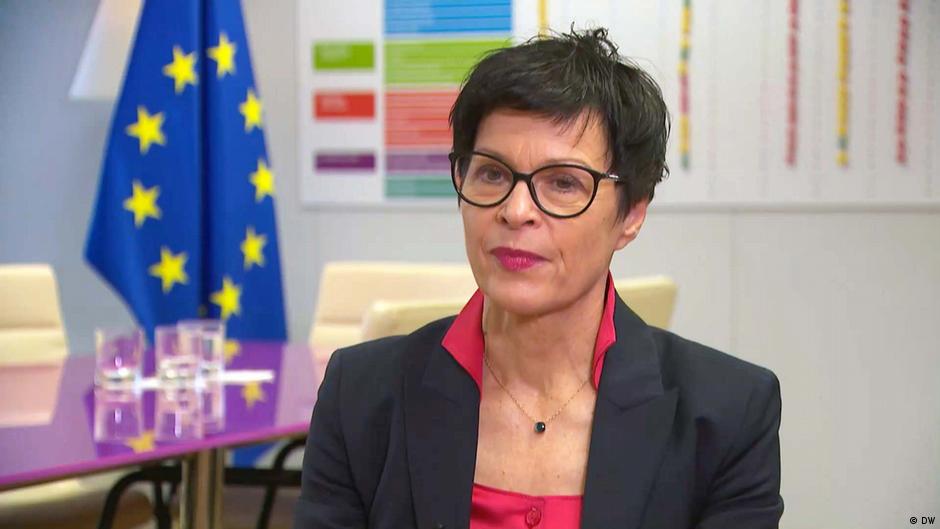
Marta Kos, the EU Commissioner for Enlargement, highlighted the risks during her address to Members of the European Parliament on April 20. She underscored that the Commission is increasingly alarmed by the state of democracy in Serbia, which threatens to derail the EU’s financial support programs.
"We are increasingly concerned about developments in Serbia," Kos stated, emphasizing the Commission’s evaluation of the country’s compliance with conditions necessary for receiving reform payments as an EU accession candidate.
The Commissioner pointed to multiple indicators of democratic backsliding, including documented violations observed by election monitors during Serbia's March municipal elections. Other red flags include legislative measures undermining judicial independence, suppression of protests, and systematic interference with independent media outlets.
So far, Serbia has received around €100 million from the EU, but the substantial remaining funds—estimated at €1.5 billion—are now uncertain. The Commission expects to release its formal assessment of Serbia's situation in the coming weeks.
Judicial and Media Independence: Core EU Concerns
One of the key demands from the European Commission is for Serbia to align its judicial legislation with the recommendations of the Venice Commission, an EU advisory body specializing in democracy and constitutional law. Additionally, restoring independence to the media landscape is seen as critical to meeting accession criteria.
These standards are not only procedural formalities but are viewed by the EU as fundamental pillars underpinning the rule of law and democratic governance. Failure to meet these benchmarks risks undermining Serbia's accession prospects and destabilizing the broader region.
Geopolitical Context and Serbia’s Position
The EU has intensified efforts to integrate Serbia and other Western Balkan countries especially since Russia’s full-scale invasion of Ukraine in 2022, which heightened fears of Kremlin-induced regional instability. Serbia’s strategic positioning and political choices are now under sharper scrutiny against this backdrop.
Serbian President Aleksandar Vučić officially pursues a European integration agenda but simultaneously maintains close ties with Russia. Notably, in 2023, despite EU warnings, Vučić participated in Moscow’s Victory Day celebrations alongside Russian President Vladimir Putin. Serbia has also refrained from imposing sanctions on Russia, further complicating relations with the EU.
Structural Economic Implications
The potential suspension of €1.5 billion in EU funding could have significant consequences for Serbia’s economic reforms and infrastructure projects, many of which rely heavily on EU financial assistance. The funds are designed to support institutional reforms, strengthen governance frameworks, and foster economic convergence with EU standards.
Historically, conditional financial aid has served as a key leverage mechanism in the EU enlargement process, aiming to foster sustainable reforms in candidate countries. Serbia’s current predicament highlights the delicate balance between geopolitical strategy, economic dependency, and the imperative of democratic consolidation.
Failure to comply with EU requirements not only stalls Serbia’s accession bid but may also reverberate through the Western Balkans, potentially emboldening authoritarian tendencies and obstructing regional stability and economic development.
As the EU prepares its forthcoming evaluation, all eyes remain on Belgrade’s next moves—whether it will recommit to the democratic and rule-of-law standards that underpin the union it aspires to join or continue on a path that risks deeper isolation from European structures.