US Tightens Economic Sanctions on Cuba’s Leadership Amid Deepening Bilateral Tensions
Washington expands financial restrictions targeting Cuban President Díaz-Canel and family of former leader Raúl Castro.
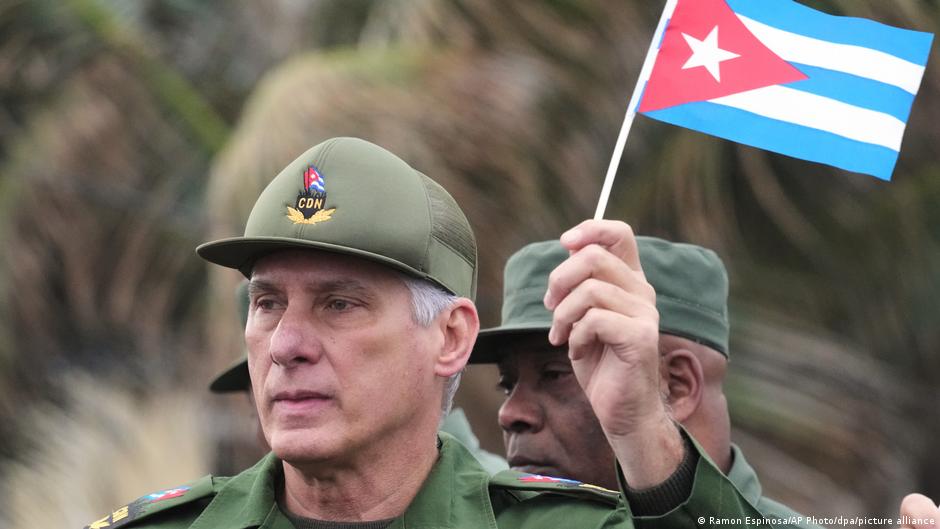
The United States has escalated economic pressure on Cuba by imposing new sanctions on its current president, Miguel Díaz-Canel, and members of the family of Raúl Castro, the island's former leader. This move marks a continuation of Washington's efforts to influence Havana amid several months of deteriorating diplomatic relations.
Expanded Sanctions Deepen Economic Strain
On June 4, the US Treasury Department announced a set of comprehensive sanctions extending beyond Díaz-Canel himself to include his wife and stepson, as well as Raúl Castro’s son and a grandson. These measures follow earlier sanctions imposed by the US State Department against Díaz-Canel in July 2019.
"The new sanctions not only aim to isolate Cuba’s top political figures but also to disrupt the generational continuity within the ruling elite," said an analyst specializing in Latin American geopolitics.
Raúl Castro, brother of revolutionary leader Fidel Castro, though retired from official posts, remains a pivotal figure influencing Cuba’s political decisions. Last month, US authorities accused Raúl Castro of involvement in the 1996 destruction of two civilian aircraft, which resulted in four fatalities.
Historical Context and Economic Implications
The current sanctions regime is part of the longstanding US embargo on Cuba, which has been in effect since 1962. Historically, this economic blockade has aimed to isolate Cuba’s communist government and provoke political change. However, decades of sanctions have contributed to persistent economic challenges for the island nation.
Today, Cuba is experiencing the most severe economic crisis since the collapse of the Soviet Union, characterized by widespread electricity shortages and fuel scarcities. The crisis has been exacerbated by recent geopolitical developments, notably the US military’s January 2020 extraction of Venezuelan President Nicolás Maduro and subsequent US diplomatic efforts that led Venezuela, Cuba’s primary oil supplier, to halt shipments.
This disruption has significantly undermined Cuba’s energy security, deepening the economic hardships faced by its population. Given Cuba’s proximity—approximately 145 kilometers—from Florida, the US government continues to perceive the island as a strategic geopolitical concern.
Implications for US-Cuba Relations and Regional Stability
The intensification of sanctions comes amid heightened rhetoric from the Trump administration, which has repeatedly threatened to impose stricter control over Cuba. Cuban officials have denounced these actions as provocations and have accused the US of attempting to manufacture a pretext for military intervention.
The evolving dynamic reflects a broader US strategy to exert pressure on leftist governments in the Western Hemisphere, aiming to curtail the influence of regimes it considers hostile. However, experts caution that increased sanctions without complementary diplomatic engagement may deepen Cuba's economic woes without achieving political objectives.
As economic hardships grow, the Cuban government faces the challenge of managing domestic discontent while navigating an increasingly constrained international environment. The sanctions’ structural impact on Cuba’s economy underscores the complex interplay between geopolitical strategy and economic resilience in the region.