US House Passes Resolution Restricting Presidential War Powers Against Iran
For the first time, the US House of Representatives votes to limit the president's unilateral military action against Iran without Congressional approval.
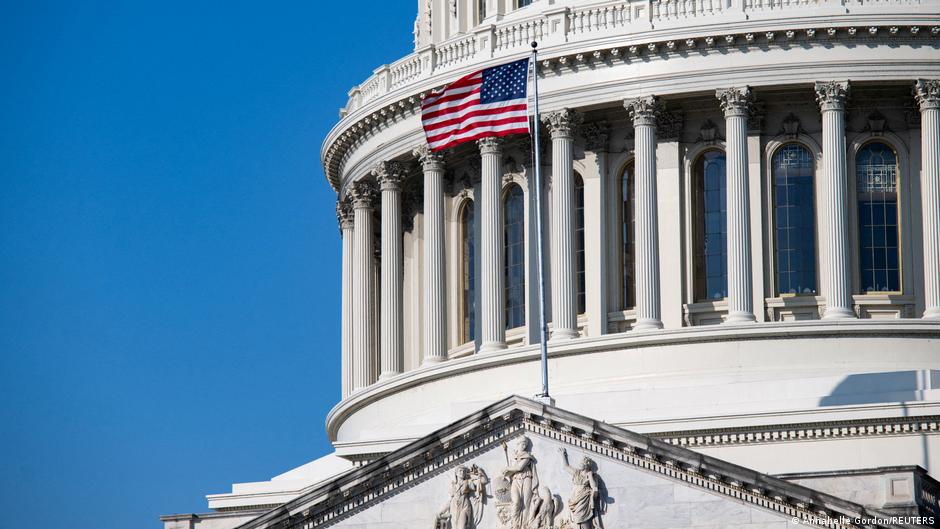
In a landmark decision, the US House of Representatives approved a resolution that restricts President Donald Trump from continuing military operations against Iran without explicit Congressional authorization. This marks the first occasion the lower chamber has formally opposed the executive branch’s stance on the Iran conflict, signaling a shift in legislative-executive relations over war powers.
Historical Context and Legislative Dynamics
The resolution passed with 215 votes in favor and 208 against, reflecting a rare bipartisan effort as several Republicans joined Democrats to secure its passage. The Republican Party holds a numerical majority in the House, making the support of these few Republicans crucial. Observers interpret this as a sign of waning support for military engagement with Iran even among Trump’s own party.
Earlier, on May 19, the US Senate — the upper chamber — voted on a similar resolution mandating the president to cease hostilities with the Islamic Republic absent Congressional approval. The Senate vote was narrowly divided, 50 to 47, with three Republican senators absent due to campaign commitments. The slim margin and absences cast doubt on the resolution’s prospects for full Senate approval.
Historically, Republican senators have blocked multiple attempts to advance such resolutions; this year alone, seven efforts were halted in the Senate, and three were blocked in the House before the recent vote. The initial resolution was introduced in March following the escalation of US and Israeli military operations in Iran.
"Even if passed by both houses, the resolution is almost certain to face a presidential veto," analysts warn, underscoring the deep executive-legislative divide over war powers.
Legal Framework and Ongoing Conflict
The legal underpinning for Congressional involvement in military action stems from the War Powers Act of 1973. This legislation restricts the president to conducting armed conflict without Congressional consent for no more than 60 days. After this period, the president must either halt military operations or seek formal Congressional authorization.
President Trump notified Congress on May 1, 2026, that hostilities with Iran had concluded after the 60-day window. Nonetheless, military engagements continue on the ground. For instance, on the night of May 3, Iran’s Islamic Revolutionary Guard Corps launched missile and drone strikes targeting US bases in Kuwait and Bahrain. In response, US forces struck an Iranian military installation on Iran’s Qeshm Island in the Strait of Hormuz.
Despite continued conflict, the Trump administration maintains it is negotiating with Iranian leadership to resolve the war. This ongoing tension illustrates the complexities of modern warfare oversight, where official declarations may not align with operational realities.
Structural Economic and Geopolitical Consequences
The House resolution reflects broader concerns about the economic and geopolitical risks of prolonged conflict with Iran. Military engagements in the Middle East have historically strained US federal budgets, impacted global oil markets, and increased geopolitical instability. Congressional insistence on reasserting control over war powers signals a cautious approach to avoid open-ended military commitments.
The Iran conflict’s uncertainty affects global economic stability, particularly energy prices. The Strait of Hormuz is a critical chokepoint for global oil shipments, and military escalations there tend to trigger market volatility. Thus, legislative efforts to limit the president’s war authority also resonate with economic interests seeking to mitigate risk.
Moreover, the bipartisan nature of the House vote suggests that economic and national security considerations are prompting a re-evaluation of executive military prerogatives. The evolving stance could mark a precedent for future Congressional oversight in foreign military operations, emphasizing the balance of power and democratic accountability in wartime decisions.