European Allies and Ukraine Discuss Revitalizing Diplomacy to End Russian War
Ukraine’s key European partners explore ways to activate peace diplomacy amid stalled negotiations with Russia.
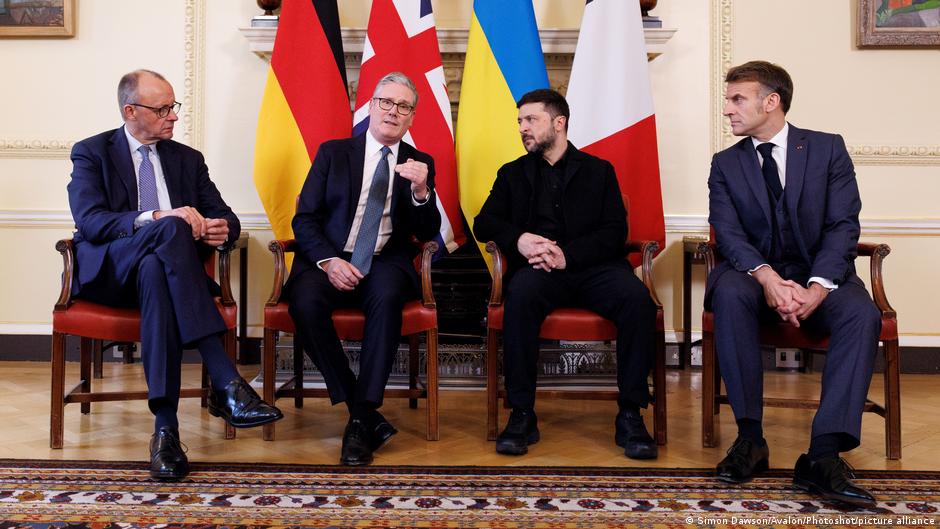
On May 22, a high-level video conference brought together the Chancellor of Germany, the President of France, the Prime Minister of the United Kingdom, and Ukraine’s President Volodymyr Zelenskyy to discuss strategies for reinvigorating stalled diplomatic efforts aimed at ending Russia’s ongoing war against Ukraine. The meeting marked a significant diplomatic engagement by Kyiv’s main European allies focused on achieving peace through renewed dialogue and participation of Europe in the mediation process.
Shifting Dynamics and Diplomatic Challenges
During the videoconference, Chancellor Friedrich Merz, President Emmanuel Macron, Prime Minister Keir Starmer, and President Zelenskyy concentrated on how to "activate diplomacy for peace" and ensure Europe’s active involvement in resolving the conflict. Zelenskyy highlighted in his Telegram message that while the details remain confidential, European partners recognize that Ukraine’s strategic position—both militarily and diplomatically—has strengthened considerably in recent months following a series of Ukrainian strikes on key Russian targets.
"Our partners note that Ukraine’s position is significantly stronger—both on the battlefield and in foresight. This pressure can drive effective diplomacy," Zelenskyy said after the talks.
Starmer’s office confirmed strong European support for Ukraine’s defensive efforts, emphasizing plans to reinforce aid in the coming months. The allied leaders unanimously agreed that countering Russian aggression remains critical for European and global security.
This meeting represents the first top-level tripartite engagement between Kyiv and its European allies in a considerable time, as the United States, traditionally acting as a mediator, has recently been preoccupied with escalating tensions and conflict involving Iran, diverting its diplomatic resources.
Limitations of Current Negotiation Formats
Ukraine’s Foreign Minister Andriy Sybiha expressed growing skepticism about the viability of the existing trilateral negotiation format involving Ukraine, Russia, and the U.S. He noted that discussions often circle over the same points without progress, signaling the format’s diminishing returns. Sybiha suggested that incorporating European Union representatives could inject new momentum into talks, or alternatively, that a summit involving the heads of state of Ukraine, Russia, and the United States might be necessary to break the deadlock—a proposal Kyiv has consistently advocated.
These views were echoed by U.S. Secretary of State Marco Rubio, who acknowledged that ceasefire negotiations have yet to yield tangible outcomes and cautioned against endless rounds of unproductive meetings. The last trilateral talks took place in Geneva in February 2026, shortly before the U.S. and Israel’s military confrontation with Iran shifted Washington’s strategic focus away from the Ukraine conflict.
Strategic Context and Future Prospects
President Zelenskyy also briefed his European counterparts about intelligence concerning Russian plans related not only to Ukraine but also to Belarus and other European theaters. While specifics were withheld, Zelenskyy indicated that intelligence sharing among their security agencies would be enhanced to better prepare for emerging threats. He concluded by emphasizing efforts toward achieving "a real and lasting peace."
The renewed engagement of Germany, France, and the UK in Ukraine’s diplomatic efforts signals a potential turning point in the conflict’s geopolitical dynamics. European countries are stepping forward to assume a more proactive role as the U.S. recalibrates its priorities. This shift could reshape mediation strategies and influence the structural economic consequences for the region, including reconstruction planning, energy security, and economic integration post-conflict.
As the war endures, the interplay between military developments and diplomatic initiatives underscores the complexities of aligning political will among international actors. The evolving negotiation frameworks and expanded European involvement may offer pathways to break the current impasse, but much depends on balancing power realities on the ground with long-term strategic interests of all parties involved.