EU's Unity Under Pressure: Kalas Highlights Russia, China, and US Strategies to Undermine the Bloc
EU foreign policy chief warns that external powers pursue divide-and-rule tactics to weaken European Union cohesion and influence.
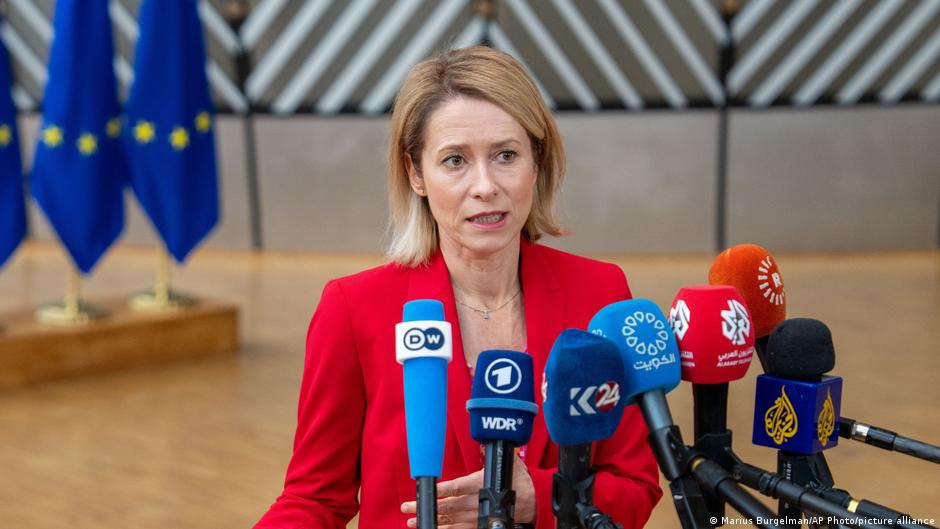
European Union foreign policy chief Kaja Kallas issued a stark warning regarding the geopolitical strategies employed by Russia, China, and the United States toward the EU. Speaking at the Lennart Meri Conference in Tallinn, Kallas underscored that these major powers are deliberately seeking to fracture the EU to undermine its collective strength.
Geopolitical Rivalries and Their Economic Implications for the EU
Kallas emphasized that the EU's greatest strength lies in its unity. "If we hold together, if we act collectively, then... we are strong," she stated, highlighting that the shared economic and political weight of EU member states presents a significant counterbalance on the global stage. This unity is a threat to external powers, who prefer dealing with smaller, individual nations rather than a consolidated bloc.
"They do not like the European Union, that is clear," said Kallas. "We must understand why — because united, we are equal forces; we are strong."
The underlying issue, according to Kallas, is that Russia, China, and the US adopt "divide and rule" tactics aimed at weakening the EU's ability to act as a united geopolitical and economic actor. Such fragmentation could lead to diminished bargaining power in trade, diplomacy, and security, undermining decades of European integration efforts.
Historically, the EU has leveraged its single market and political cohesion to negotiate trade agreements and strategic partnerships that no single member state could achieve independently. External powers’ attempts to disrupt this unity threaten to destabilize this advantage, potentially fracturing the bloc’s capacity to project influence.
Bilateral Deals and the Risk of Fragmentation
Kallas expressed concern about EU member states pursuing bilateral agreements with Washington, cautioning that this trend risks undermining the bloc’s solidarity. She noted, "I am very worried because I sometimes see certain countries going down that path. Division really works."
This observation ties into broader structural economic concerns. Bilateral deals can create asymmetries among EU members, weakening the bloc’s internal cohesion and negotiating leverage. Such fragmentation could lead to economic disparities and policy incoherence, ultimately threatening the EU’s internal market and global standing.
The dynamics became particularly visible during the second term of former U.S. President Donald Trump, when some EU countries sought to maintain direct communication channels with Washington, bypassing EU institutions. For instance, Italy’s Prime Minister Giorgia Meloni attempted to act as a mediator between Europe and the US, but the approach faltered amid political tensions.
Challenges in Diplomatic Representation and Peace Negotiations
In addition to highlighting geopolitical challenges, Kallas addressed issues surrounding diplomatic representation. She firmly rejected Russian President Vladimir Putin’s proposal to appoint former German Chancellor Gerhard Schröder as an EU representative for peace negotiations with Russia. "If we give Russia the right to appoint a negotiator on our behalf, that would not be very wise," Kallas remarked ahead of a meeting of EU foreign ministers in Brussels.
This stance reinforces the EU’s cautious approach to maintaining an independent and unified foreign policy apparatus amid competing interests from external powers. Ensuring a coherent and credible European voice in international diplomacy is critical to safeguarding EU interests and maintaining stability in a turbulent geopolitical environment.
Structural Economic Consequences and Historical Context
The EU’s ability to resist divide-and-rule tactics has profound implications beyond geopolitics. Economically, fragmentation risks weakening the single market, which is the backbone of Europe's prosperity and global economic influence.
Historically, Europe’s integration project emerged as a response to the devastation of two world wars and the need for economic recovery and political stability. The EU’s development into a supranational entity has fostered economic interdependence and political cooperation unprecedented in the region’s history.
The current pressures from external powers echo earlier challenges faced by the Union, where internal divisions were exploited during Cold War rivalries and economic crises. The renewed attempts to destabilize the EU must be viewed in this historical context, emphasizing the strategic importance of maintaining unity to preserve Europe’s economic resilience and geopolitical autonomy.
Kallas’ comments serve as a reminder that the EU’s future hinges on its ability to act decisively and collectively in the face of external pressures that seek to dilute its influence and fracture its internal cohesion.