Flavio Bolsonaro Leads Brazil Vote as Runoff Sets Up High-Stakes Economic Test
The first-round result puts Lula da Silva on the defensive and extends Brazil’s cycle of polarized runoffs with major market and institutional stakes.
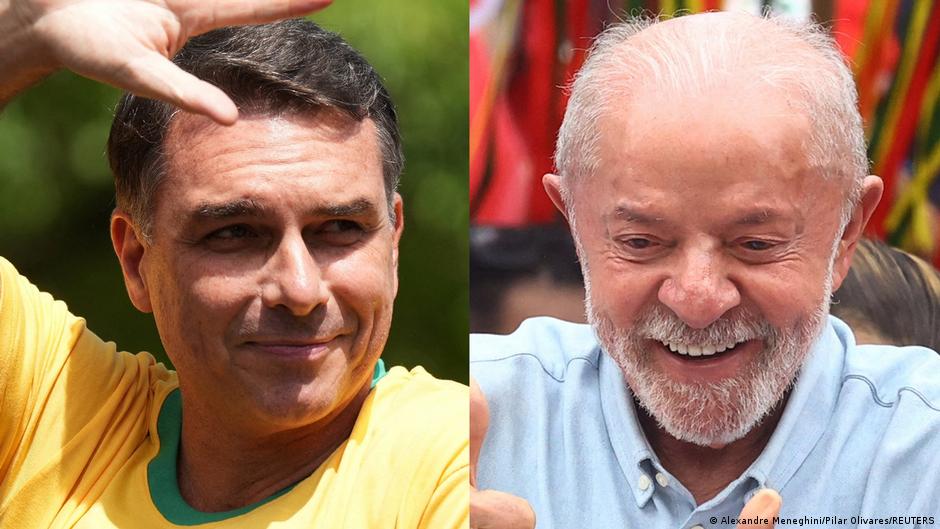
Brazil’s presidential election is headed to a second round after neither leading candidate cleared the 50 percent threshold, setting up a contest with unusually sharp implications for the country’s political economy, institutions and investment climate. With 99.99 percent of first-round ballots counted, Flavio Bolsonaro, a senator from Rio de Janeiro state and the eldest son of former President Jair Bolsonaro, led the field with 47.03 percent of the vote, according to data from Brazil’s electoral authorities published overnight on Monday, October 5.
President Luiz Inacio Lula da Silva, the left-wing incumbent, followed closely with 45.16 percent. Turnout stood at 78.92 percent, underscoring the continuing mobilization of voters in a country where presidential contests have become referendums not only on leadership but also on the direction of the state, the courts and the economy.
The runoff is scheduled for October 25. Its outcome will determine whether Brazil extends Lula’s current governing project or returns executive power to the Bolsonaro political family, this time through Flavio rather than his father. The margin in the first round gives Bolsonaro the formal lead, but the small gap also points to a second round shaped by coalition-building, turnout discipline and the response of financial markets to a renewed confrontation between left and right.
A runoff tradition with deeper consequences
Second-round presidential votes have become a recurring feature of Brazilian democracy. Since the early 2000s, every presidential election in the country has required a repeat ballot. That pattern reflects the fragmentation of Brazil’s party system, but it also mirrors a deeper structural fact: no major candidate has been able to command a sufficiently broad first-round consensus in a society divided by region, income, ideology and attitudes toward the role of the state.
For Econpress readers, the economic significance lies less in the mechanics of the ballot than in the uncertainty the runoff creates. Brazil is one of the world’s largest emerging markets, and its policy direction matters for commodity flows, fiscal expectations, public investment, monetary credibility and private capital formation. A close second round can delay investment decisions, harden risk premiums and intensify scrutiny of the next administration’s fiscal and regulatory posture.
Lula entered the campaign as the sitting president, but the first-round result shows that the Bolsonaro brand remains electorally powerful despite the legal and political crises surrounding the former president and his family. In 2022, Lula defeated Jair Bolsonaro in a second-round vote. The elder Bolsonaro refused to recognize the result, and his supporters took to the streets in protest. He was later sentenced to a long prison term for an attempted coup.
Brazil’s new runoff is therefore not only a contest between two candidates, but a stress test for the durability of electoral legitimacy after the upheavals that followed the 2022 vote.
The presence of Flavio Bolsonaro at the top of the first-round results gives the contest a dynastic character. It also revives the policy and institutional debates associated with his father’s movement, including law-and-order politics, hostility toward parts of the judicial establishment and the claim that past elections were improperly handled. For investors, the central question is whether a Bolsonaro victory would bring policy continuity within the family’s political project or a distinct program shaped by Flavio’s own Senate background and campaign priorities.
Legal clouds and institutional risk
The campaign is unfolding against a dense backdrop of legal controversies involving members of the Bolsonaro family. In June 2026, Brazil’s Supreme Court sentenced Eduardo Bolsonaro, another son of the former president and also a political figure, to four years and two months in prison. The criminal case stemmed from Eduardo’s calls for the United States to impose sanctions on Brazil because of the sentence handed down to his father. Eduardo lives in the United States, and the case against him was heard in absentia.
Flavio Bolsonaro, now the frontrunner heading into the runoff, has campaigned in part on promises to fight crime. Yet he has also faced past suspicions of corruption and illegal appropriation of funds. In 2019, cases were opened against him involving alleged payments to people listed among his subordinates who did not actually perform work, as well as suspicious transfers into his bank account.
Those allegations matter economically because governance risk is not an abstract variable in Brazil. It can shape the cost of capital, the predictability of public contracts, the perception of regulatory capture and the willingness of domestic and foreign investors to take long-term positions. Brazil has repeatedly shown that corruption inquiries, judicial interventions and political scandals can move markets and alter fiscal strategy.
Another live investigation adds to that sense of risk. Brazilian authorities continue to investigate Banco Master and its largest shareholder, Daniel Vorcaro, over the alleged fraudulent attraction of investments worth tens of millions of dollars from public and private funds through promises of high returns that could not be fulfilled. In practical terms, the case concerns the possible creation of a financial pyramid scheme.
Vorcaro is also known as one of the producers of “Dark Horse,” a complimentary biographical film about Jair Bolsonaro. The film’s plot develops the former president’s claims about “stolen elections.” Media outlets have previously published correspondence between Vorcaro and Flavio Bolsonaro that may indicate the politician knew about the existence of the alleged fraudulent scheme and may have helped facilitate it, including through alleged “cover” in the form of supposedly costly film production.
Markets face a familiar Brazilian dilemma
The October 25 runoff will force economic actors to evaluate two competing forms of uncertainty. A Lula victory would preserve the current left-wing presidency but would follow a first round in which the incumbent failed to finish ahead of his main challenger. That could weaken the political mandate of the government even if it wins. A Flavio Bolsonaro victory would represent a change in control of the executive and could reopen debates over institutions, fiscal management and the relationship between elected power and the courts.
Historically, Brazil has often combined strong democratic participation with volatile institutional politics. High turnout can coexist with polarization; competitive elections can coexist with deep doubts among voters about legitimacy. That mix matters for the economy because long-term development depends not only on growth figures but also on credible rules, functioning oversight and political acceptance of electoral outcomes.
The first-round numbers show a country almost evenly divided between two political camps. Flavio Bolsonaro leads with 47.03 percent, Lula follows with 45.16 percent, and the final decision now moves to a compressed runoff campaign. For Brazil, the vote will decide the presidency. For markets, it will test whether the country can absorb another Bolsonaro-Lula confrontation without repeating the institutional shock that followed the last one.