Former Head of Uzbekistan Metallurgical Combine Faces International Manhunt Over Embezzlement Allegations
Dilshod Ahmedov, ex-chairman of O‘zmetkombinat, is internationally sought for suspected large-scale state asset misappropriation amid ongoing investigations.
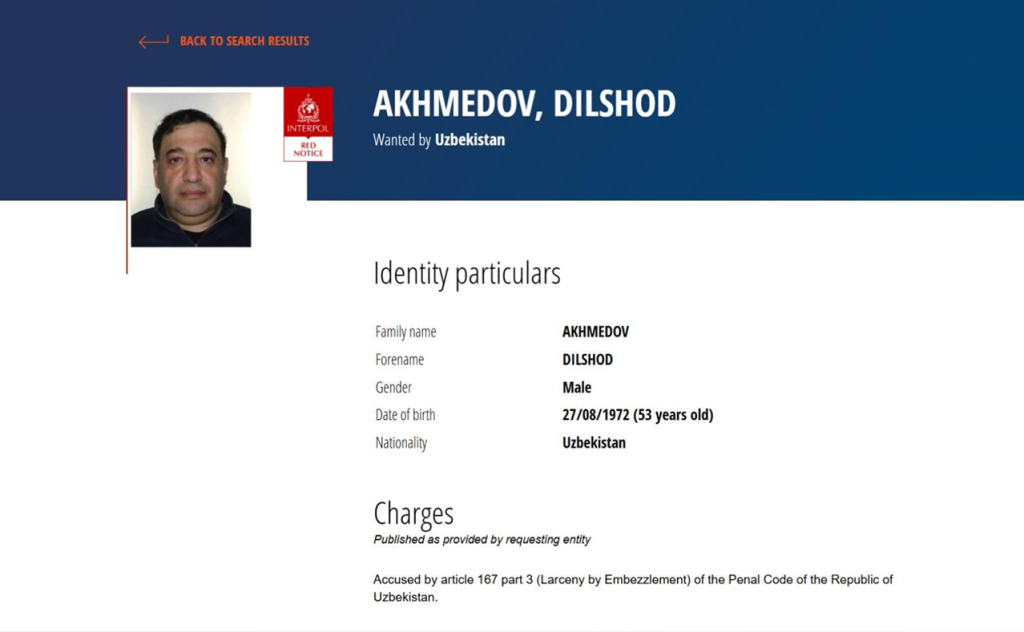
Dilshod Tursunqulovich Ahmedov, the former chairman of O‘zmetkombinat Joint Stock Company, has been placed on an international wanted list amid allegations of large-scale embezzlement involving state property. This measure, announced by INTERPOL, marks a significant escalation in Uzbekistan's crackdown on corruption within its industrial sector.
Context and Allegations
Ahmedov is suspected under Article 167, Part 3 of the Criminal Code of the Republic of Uzbekistan, which pertains to the misappropriation or embezzlement of property through malfeasance. The ongoing investigation by Uzbek authorities is reportedly a comprehensive financial and operational audit of O‘zmetkombinat, examining potential irregularities under Ahmedov's tenure.
"The comprehensive investigation into O‘zmetkombinat's financial activity underscores Uzbekistan's intensified efforts to root out corruption in major state enterprises," an expert on Central Asian economies commented.
O‘zmetkombinat, one of the country's key metallurgical enterprises, plays a critical role in Uzbekistan's industrial output and export economy. The corruption scandal raises concerns about systemic vulnerabilities in governance and oversight within state-owned enterprises (SOEs), which are pivotal to Uzbekistan’s broader economic strategy.
Leadership and Structural Implications
Ahmedov was appointed chairman of O‘zmetkombinat as recently as October 2024, having served previously as first deputy chairman since January 2021 and concurrently as deputy minister of Investments, Industry, and Trade from January 2024. His rapid ascent reflects the intertwining of political and industrial leadership in Uzbekistan's economic management.
Following Ahmedov's removal and international search, Bahodir Abdullayev, a businessman, was appointed to lead O‘zmetkombinat until August 2025. This leadership change suggests an attempt by the government to stabilize the enterprise and restore investor confidence amidst uncertainty.
Broader Economic and Historical Context
Uzbekistan’s metallurgical industry is a cornerstone of its industrialization policy, which seeks to diversify away from traditional sectors like agriculture and raw cotton export. However, the sector’s historical susceptibility to corruption and mismanagement has periodically undermined efficiency and growth prospects.
Ahmedov's case is emblematic of the challenges faced by post-Soviet transitional economies where entrenched networks and opaque governance structures can facilitate large-scale asset misappropriation. Such incidents often prompt reform initiatives aimed at improving transparency, regulatory oversight, and corporate governance standards.
Economically, the scandal may disrupt supply chains and investor perceptions, particularly if investigations reveal systemic issues beyond individual culpability. The Uzbek government’s handling of the case will be critical in signaling its commitment to economic reform and anti-corruption enforcement, factors that are closely monitored by international investors and development agencies.
Looking Ahead
The international community's involvement via INTERPOL highlights the transnational dimension of white-collar crime in an increasingly interconnected world. For Uzbekistan, this case could serve as a catalyst for deeper institutional reforms and tighter controls over SOEs, aligning with President Shavkat Mirziyoyev’s broader modernization agenda.
Nevertheless, the persistence of such cases underscores the structural challenges remaining in Uzbekistan’s economic governance. Strengthening legal frameworks, enhancing transparency, and fostering independent oversight will be essential to mitigating future risks and promoting sustainable economic development.
Based on reporting by Deutsche Welle.