Germany and Austria Probe Alleged Russia Car Exports via Third Countries
Investigators say two businessmen used routes through Belarus, Kyrgyzstan and Georgia to move cars and trucks to Russia despite EU sanctions.
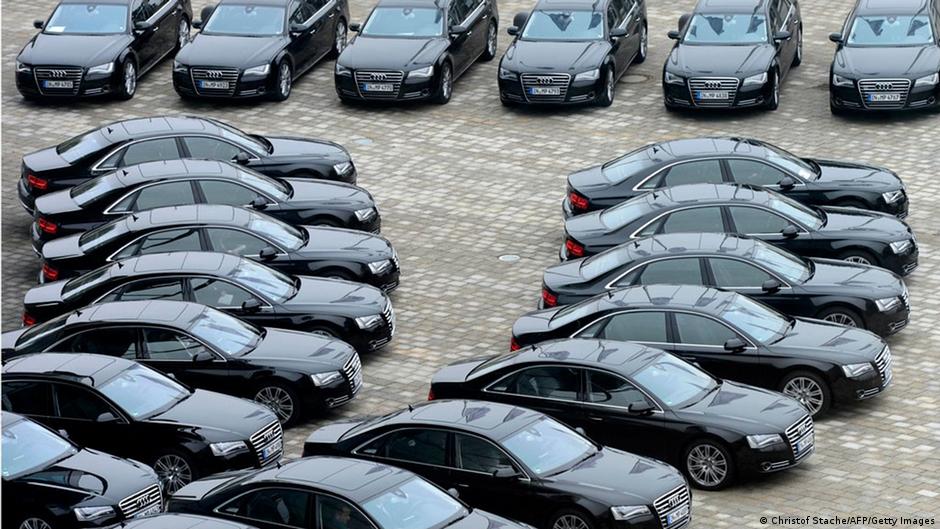
German and Austrian authorities have searched properties linked to two businessmen suspected of exporting vehicles to Russia through third countries in breach of European Union sanctions, in a case that underscores both the profitability and the persistence of circumvention networks around high-value goods.
The public prosecutor’s office in Kaiserslautern said on Tuesday, September 29, that the suspects allegedly sent 53 passenger cars and six semi-trailer tractors to Russia between autumn 2022 and the end of 2024. Investigators believe the deliveries were routed through third countries, including Belarus, Kyrgyzstan and Georgia, in an effort to conceal their final destination.
Assets worth around 7 million euros have been frozen or seized, an amount prosecutors describe as the alleged proceeds from the unlawful exports. The figure is economically significant because sanctions cases involving consumer-facing goods often hinge not only on the prohibited transaction itself, but also on whether authorities can trace and recover the profits generated by the trade.
Both suspects have so far exercised their right to remain silent, according to prosecutors. The investigation is continuing.
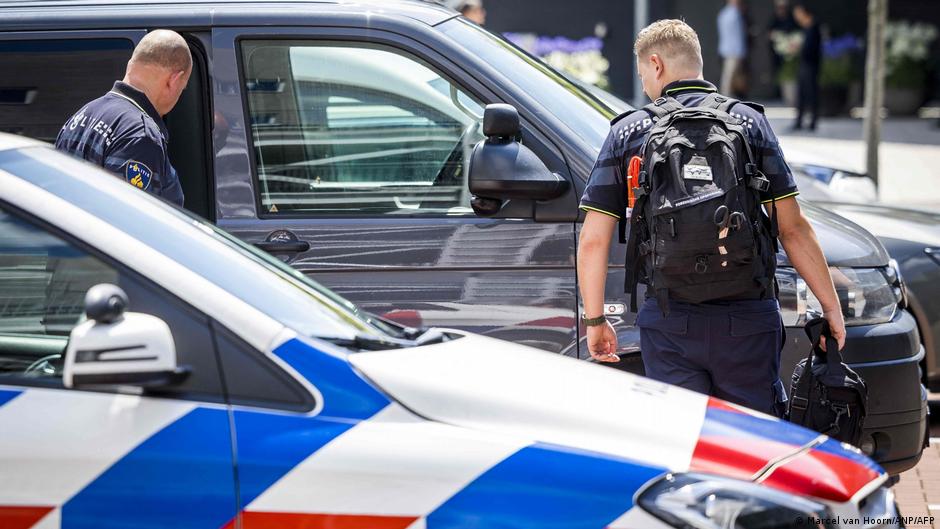
The searches took place on September 8 at residential and commercial premises in Neustadt an der Weinstrasse, in the German state of Rhineland-Palatinate, and in Vienna. Law enforcement agencies from Germany, Austria and Belgium took part in the operation. At the request of prosecutors, the Kaiserslautern local court authorized the seizure of assets connected to the case.
During the searches in Germany, officers seized two vehicles, a Porsche and a Mercedes-Benz. In Austria, they confiscated 85,000 euros in cash. A further 278,000 euros was blocked in bank accounts in Germany, Austria and Belgium. Investigators also found three hunting rifles and ammunition at the Neustadt premises of one of the businessmen, prompting a separate investigation into a possible violation of weapons laws.
Luxury Cars as a Sanctions Stress Test
The case fits a broader pattern that has emerged since the EU tightened trade restrictions after Russia’s full-scale invasion of Ukraine. Cars, especially luxury models and heavy vehicles, have become a revealing test of how sanctions work in practice. They are visible, valuable, logistically traceable goods, yet they can still move across borders through layered resale chains, transit countries and documentation that obscures the end buyer.
The alleged use of Belarus, Kyrgyzstan and Georgia reflects one of the central enforcement challenges facing European governments. Sanctions are written by the EU, but commercial routes are not confined to EU territory. Once goods leave the bloc for a jurisdiction that is not formally the final destination, authorities must prove knowledge, intent and the true endpoint of the transaction. That makes export controls not only a legal regime but also a data problem, requiring customs records, banking information, transport documents and cross-border cooperation.
The economics are equally important. A 7 million euro asset arrest suggests that prosecutors are pursuing the financial architecture of the alleged scheme, not merely the shipment of vehicles. That approach matters because sanctions evasion can become attractive when margins are widened by scarcity. If Russian buyers are willing to pay a premium for restricted European cars, intermediaries may see the risks as a cost of doing business unless enforcement threatens both liberty and accumulated proceeds.
German courts have already handed down substantial sentences in related cases. In March, a court in Wuerzburg sentenced a car dealer from Bavaria to six years in prison for supplying 111 luxury cars to Russia in violation of sanctions. According to investigators in that case, the vehicles reached employees of the FSB, the Federal Protective Service, Rosneft and the Russian presidential administration. In July 2025, an employee of a car dealership in Hesse received a five-year prison sentence for selling 71 luxury cars to Russia, also through sanctions circumvention.
Those earlier rulings provide a historical reference point for the current investigation. Before 2022, Russia was a profitable market for premium European carmakers and dealers. The sanctions regime did not erase that demand; it displaced parts of it into less transparent channels. The result is a familiar pattern in economic history: when formal trade is restricted but purchasing power and demand remain, intermediaries emerge to arbitrage the gap between law, logistics and enforcement capacity.
Enforcement and the Shadow Trade
The latest searches also come against a backdrop of wider German scrutiny. In May 2025, it was reported that German prosecutors were investigating more than 40 cases involving the supply of expensive cars to Russia. Media accounts described a hunt by German justice authorities for dishonest car dealers, while experts cautioned that only a small share of shadow deliveries was being stopped.
That warning points to the structural limits of national enforcement. Individual raids can disrupt specific networks and send a deterrent signal, but the underlying trade adapts. Dealers, brokers and logistics companies can change routes, reclassify goods or use jurisdictions where compliance monitoring is weaker. For EU policymakers, the problem is not simply whether sanctions exist on paper, but whether private-sector incentives and customs controls are aligned strongly enough to prevent leakage.
Reuters reported in February that tens of thousands of cars, including German luxury vehicles, were being exported to Russia in circumvention of sanctions through China. Some of those cars are produced by foreign companies inside China, while others are imported into China from abroad. New cars are then documented as used vehicles, a practice that allows sellers to avoid obtaining manufacturers’ permission for resale to Russia.
That mechanism highlights a crucial distinction in sanctions economics: restrictions on direct exports can be undermined by parallel markets if ownership, classification and destination are easy to alter. The conversion of new cars into nominally used cars is not just a paperwork detail. It changes the compliance burden and can move transactions outside the control systems that manufacturers rely on to protect their distribution networks.
For European authorities, the current German-Austrian case is therefore more than a criminal inquiry into two businessmen. It is part of a larger contest over whether sanctions can meaningfully constrain access to Western goods when global trade routes remain dense and commercially flexible. The answer will depend less on headline bans than on the capacity to follow money, identify repeat intermediaries, cooperate across borders and impose penalties large enough to outweigh the profits of circumvention.