New York Mayor Mamdani Expands Hate-Crime Budget in Antisemitism Plan
The city’s strategy raises annual hate-crime funding to $29 million and directs new money toward Jewish security, education and culture.
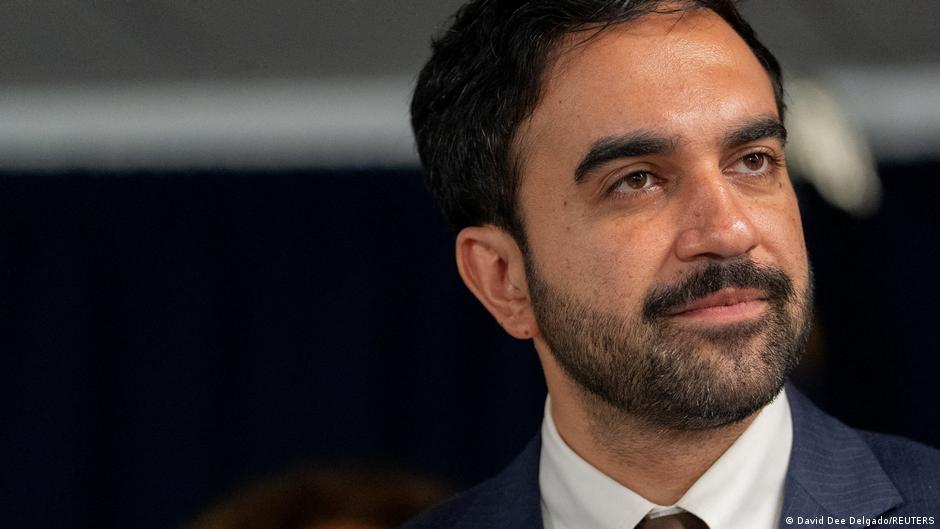
New York Mayor Zohran Mamdani on Tuesday, September 29, presented a comprehensive city strategy to counter antisemitism and hate crimes targeting Jews, framing the initiative as both a public-safety response and a broader civic investment in institutions that have come under pressure.
The plan would increase the city’s annual budget for combating hate crimes from $3 million to $29 million. It also calls for additional funding to protect synagogues and for the restoration of a working group focused on the security of Jewish houses of worship. The measures are aimed at a problem that, according to police statistics cited by Mamdani, has become disproportionately concentrated on Jewish New Yorkers.
“Although our Jewish neighbors make up only 12% of New York’s population, police statistics show that antisemitic crimes account for more than half of all registered hate crimes. This is not only unacceptable, it is something we are obliged to change, and city authorities will take the lead,” Mamdani said in a video address posted on X.
The initiative also includes citywide information campaigns against antisemitism and an expansion of educational programs about the Holocaust. Millions of dollars are planned for Jewish cultural centers and nonprofit organizations, including a Holocaust memorial being created in Queens and a new Jewish culture center in Brooklyn.
A Public-Safety Budget With Cultural and Political Weight
For an economics-focused audience, the most significant feature of the announcement is not only the moral and political message but the scale and direction of public spending. A nearly tenfold increase in annual hate-crime funding signals that the city is treating antisemitism as a structural civic risk rather than an episodic policing matter. The allocation brings together security, education, cultural infrastructure and nonprofit support, turning a hate-crime response into a wider municipal investment program.
That structure matters. Funding for synagogue protection addresses immediate risk and visible vulnerability. Restoring a working group on the security of Jewish religious facilities creates an institutional channel for coordination between city agencies and community organizations. Meanwhile, money for cultural centers and memorial projects moves beyond deterrence and response, using public expenditure to reinforce communal institutions and historical memory.
Such spending has economic consequences that extend beyond the headline figure. Jewish cultural centers, houses of worship and nonprofit organizations operate as employers, service providers and anchors of neighborhood activity. Investment in their security and programming can affect staffing, insurance costs, event activity and the willingness of residents to participate in public life. In a city where community institutions often carry social-service and educational functions, the fiscal line between security policy and social infrastructure is thin.
Mamdani’s Israel Criticism Shapes the Political Context
The plan also arrives against a politically charged backdrop. Mamdani, the first Muslim mayor of New York, is known for his pro-Palestinian position and criticism of Israel. Those views have drawn opposition from part of the city’s Jewish community, even as he also has supporters among New York Jews.
That dual reality gives the announcement unusual significance. For critics, the plan may be read as an attempt to respond to concerns that his political stance toward Israel has alienated Jewish residents. For supporters, it can be presented as evidence that criticism of the Israeli government and protection of Jewish communities in New York are not mutually exclusive. The budgetary details therefore carry a burden that ordinary municipal spending announcements rarely do: they must demonstrate seriousness to communities that may disagree sharply over foreign policy but share direct exposure to local hate crimes.
The tension was sharpened by Israeli Prime Minister Benjamin Netanyahu, who, speaking at the United Nations General Assembly in New York, called the city’s mayor an antisemite. During the 2026 election campaign, Mamdani said that if Netanyahu visited New York he would seek his arrest on the basis of a warrant issued by the International Criminal Court in 2024. After taking office as mayor, however, he acknowledged that he did not have such authority.
That sequence illustrates the gap between campaign rhetoric and the operational limits of city government. A mayor may shape policing priorities, public budgets, education campaigns and local institutional support. But the city’s capacity to act on international criminal matters is constrained. The new antisemitism plan is therefore rooted in the powers New York City does control: spending, coordination, public messaging and local security.
Historical Memory as Municipal Policy
The inclusion of Holocaust education and support for a Holocaust memorial in Queens places historical memory within the city’s practical anti-hate strategy. This is more than symbolic politics. In diverse urban economies, civic cohesion is a form of public capital. When hate crimes rise, the costs are not limited to victims and law enforcement. They can reduce trust in public spaces, discourage participation in cultural life, and deepen fragmentation among communities that share the same schools, transit systems, workplaces and neighborhoods.
New York’s response therefore follows a familiar historical pattern in urban governance: moments of social strain often produce new layers of public administration and targeted investment. Working groups, education campaigns and nonprofit grants can appear modest next to infrastructure spending or housing budgets, but they shape the institutional architecture through which cities manage pluralism.
The risk for City Hall is execution. A higher budget does not automatically translate into safer institutions, better reporting, or stronger trust between communities and authorities. The effectiveness of the plan will depend on how funds are distributed, whether Jewish organizations see the support as responsive to real needs, and whether the broader public accepts the distinction Mamdani is seeking to draw between his criticism of Israel and his obligations toward Jewish New Yorkers.
For now, the plan marks a decisive increase in municipal resources devoted to combating antisemitism. It also places Mamdani at the center of a test that is political, fiscal and institutional at once: whether a mayor known for pro-Palestinian views can build a durable city policy against antisemitic hate while navigating one of the most sensitive divides in New York’s public life.