Zelensky Says North Korea Plans to Send 10,000 More Troops to Russia
Ukraine’s president says Pyongyang is preparing a further deployment as Moscow deepens its reliance on foreign manpower for the war.
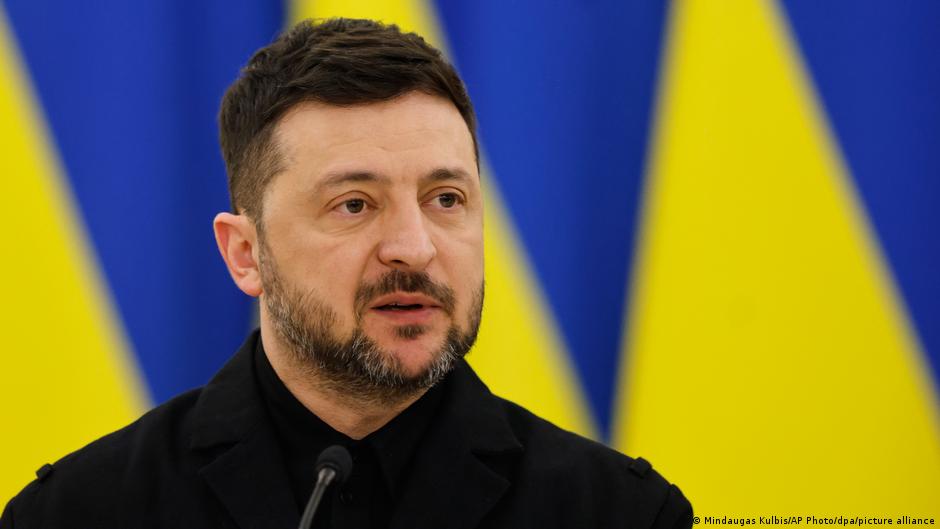
Ukrainian President Volodymyr Zelensky said North Korea is preparing to transfer about 10,000 additional troops to Russia, citing what he described as new intelligence from Ukraine’s military intelligence agency. According to Zelensky, more than 8,000 North Korean soldiers are already on Russian territory.
The statement, made in his evening address on Monday, September 28, adds another layer to the economic and strategic implications of the war against Ukraine. If confirmed, the reported deployment would point not only to a military arrangement between Moscow and Pyongyang, but also to an expanding market for wartime labor, military services and security guarantees among states facing international isolation.
Zelensky said North Korean personnel are now being selected for training and subsequent transfer to Russia. He also argued that Russian authorities plan to increase the recruitment of foreigners for participation in the war against Ukraine.
“It is important that the governments of the countries from which Russia attracts people into its army counteract this. We will inform every government,” Zelensky said.
A Wartime Manpower Economy
The reported North Korean role underscores a structural pressure facing Russia: the need to sustain a large, prolonged war effort without relying solely on domestic mobilization. In conventional economic terms, manpower has become one of the critical inputs of the conflict, alongside ammunition, drones, logistics, financing and industrial capacity. The search for foreign recruits suggests that the battlefield is increasingly tied to labor allocation, fiscal incentives and the political costs of mobilization.
Ukraine has repeatedly accused Russia of drawing on foreign personnel to supplement its forces. Zelensky’s latest comments frame that process as something governments abroad should actively resist. The economic logic is clear: where domestic recruitment is politically costly, states may seek alternatives through allied governments, private intermediaries or vulnerable foreign populations. For countries supplying personnel, the transaction may be linked to cash, technology, diplomatic backing or security assurances.
South Korean intelligence estimates that North Korea has already sent about 15,000 troops to support Russia in the war. In return, Pyongyang is believed to receive money, military technology and security guarantees from Moscow. Zelensky said in August that North Korea intended to place between 30,000 and 50,000 fighters on Russian territory.
Those figures, if borne out, would mark a significant deepening of North Korea’s participation. They would also suggest a relationship that is broader than an ad hoc military exchange. For Pyongyang, participation could provide hard currency, access to military technology and closer alignment with a permanent member of the UN Security Council. For Moscow, North Korean personnel could help relieve pressure on domestic manpower needs while reinforcing a coalition of states willing to operate outside Western sanctions pressure.
Historical Parallels and Sanctions-Era Trade
The use of foreign fighters and allied manpower has historical precedents, but the current case has a distinctive economic character. Wars have often drawn in expeditionary forces, volunteers, mercenaries or allied units. What is notable here is the reported linkage between troop deployments and transfers of money, technology and security commitments between two heavily sanctioned states.
That makes the alleged Russia-North Korea arrangement part of a wider sanctions-era economy. When access to conventional markets, finance and technology is constrained, isolated governments may turn to barter-like exchanges: weapons for fuel, labor for currency, military support for technology, or battlefield assistance for diplomatic protection. Such arrangements can be difficult to price, hard to monitor and resistant to traditional financial sanctions because value is exchanged through state channels rather than open markets.
For the global economy, the consequences are indirect but important. A more durable Russia-North Korea military partnership could complicate sanctions enforcement, alter defense procurement patterns and raise the long-term cost of containment for Western and Asian governments. It could also intensify pressure on South Korea and its allies to reassess military assistance, intelligence sharing and export controls.
The issue has already produced diplomatic strain. Zelensky’s remarks about Russia’s plans to involve additional North Korean troops came against the background of a dispute between Kyiv and Seoul that erupted several days earlier. South Korean President Lee Jae Myung sharply criticized Ukrainian authorities after Zelensky publicly disclosed the transfer to Seoul of two North Korean soldiers captured during fighting by Ukraine’s armed forces in Russia’s Kursk region.
Lee accused Zelensky of violating an agreement on confidentiality. Zelensky’s office responded that no agreement existed between the countries not to disclose the information. Seoul called that claim false.
On September 28, South Korea’s foreign ministry summoned Ukraine’s acting ambassador. According to Yonhap, South Korea’s deputy foreign minister conveyed Seoul’s firm position on the matter to the Ukrainian diplomat.
Diplomacy Meets the Economics of Security
The dispute between Kyiv and Seoul illustrates a broader tension in wartime diplomacy. Ukraine has an interest in publicizing evidence of North Korean involvement to mobilize international pressure on Moscow and Pyongyang. South Korea, by contrast, must manage sensitive intelligence, prisoner-related issues and its own security calculations on the Korean Peninsula.
For Seoul, North Korean military experience gained in a European war could have future security implications closer to home. If North Korean troops acquire combat experience, if Pyongyang receives Russian military technology, or if Moscow extends security guarantees, the balance of risk in Northeast Asia could shift. That would carry economic consequences for defense spending, regional investment sentiment and supply chains tied to South Korea’s advanced manufacturing base.
For Ukraine, the reported deployments reinforce the argument that the war is no longer only a bilateral conflict with Russia, but a node in a wider network of authoritarian military cooperation. That framing matters economically because it shapes the policy response: sanctions, military aid, export controls, defense production and diplomatic pressure all depend on how governments interpret the structure of the conflict.
Zelensky’s central claim is that Russia is planning to expand the use of foreign manpower, with North Korea playing a growing role. The numbers cited by Ukraine and South Korean intelligence remain politically charged, and the related dispute between Kyiv and Seoul shows how sensitive the evidence has become. But the underlying economic signal is difficult to ignore: as the war continues, manpower, technology and security guarantees are being traded as strategic assets, and the costs are spreading well beyond the front line.