Iran Implements New Vessel Information Declaration for Strait of Hormuz Transit
Tehran introduces detailed reporting requirements for tankers navigating the strategic Strait of Hormuz amid rising geopolitical tensions.
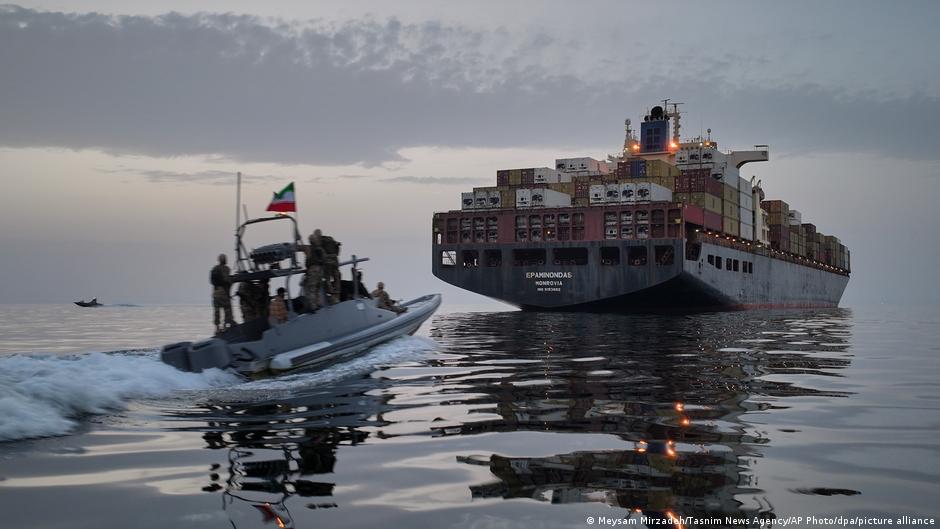
The Iranian government has introduced a new regulatory framework requiring shipping companies to submit a comprehensive "Declaration of Vessel Information" prior to navigating their tankers through the Strait of Hormuz. This critical waterway connects the Persian Gulf with the Gulf of Oman and is a vital conduit for global oil shipments.
On May 5, Iran’s Persian Gulf Strait Administration (PGSA) unveiled a declaration form containing over 40 detailed questions designed to gather extensive data on vessels planning to transit the strait. According to the document, shipowners must provide specifics including the vessel’s name and identification number, previous names, country of origin, and intended destination. Additionally, detailed information on the nationality of owners, operators, and crew members is required, alongside comprehensive data about the cargo transported.
Strategic and Economic Implications of Iran's New Reporting Mandate
This move appears to be part of Tehran’s broader strategy to exercise greater control over maritime traffic in the Strait of Hormuz, a chokepoint through which an estimated 20% of global petroleum passes. Historically, Iran has leveraged its geographical position to influence energy markets and regional security dynamics, particularly when confronted with international sanctions and geopolitical pressure.
While the declaration form does not explicitly mention transit fees, past Iranian statements have hinted at the possibility of monetizing passage through the strait. Reports indicate that Iran could charge up to $2 million per vessel, with revenues potentially redirected towards reconstruction efforts following damage sustained from past conflicts and airstrikes involving the United States and Israel.
"The responsibility for providing accurate and complete information rests solely with the applicant, who will bear all consequences arising from any inaccuracies," the PGSA emphasized in an email accompanying the declaration form.
However, the U.S. Treasury has clarified that any payments made to the Iranian government or the Islamic Revolutionary Guard Corps (IRGC) in connection with safe passage fees would be prohibited for U.S. persons, financial institutions, and entities controlled by Americans. This restriction seeks to prevent indirect financial support to Iranian entities amid ongoing sanctions enforcement.
Amid these developments, the geopolitical context is further complicated by the recent launch of the United States’ "Operation Sentinel," a military initiative started on May 4 aimed at escorting commercial vessels through the Strait of Hormuz to ensure freedom of navigation. This operation is described by U.S. officials, including Secretary of State Marco Rubio, as a defensive rather than offensive measure, with President Donald Trump warning of retaliatory responses against any attacks on U.S. vessels.
Nevertheless, Trump announced a temporary pause to Operation Sentinel on May 6, citing diplomatic efforts facilitated by Pakistan and other countries to negotiate a settlement with Iran. This pause underscores the delicate balance between military readiness and diplomatic engagement in managing one of the world's most strategically sensitive maritime corridors.
Historical Parallels and Structural Economic Consequences
Iran’s tightening control over the Strait of Hormuz echoes historical precedents where dominant regional powers regulated access to critical maritime passages to assert sovereignty and generate revenue. The strait’s geopolitical volatility has long influenced global energy security, with disruptions often triggering spikes in oil prices and uncertainty in international markets.
The imposition of stringent data reporting requirements may serve multiple functions: enhancing Iran's surveillance capabilities over vessel movements, deterring sanction-evading or hostile actors, and strengthening Iran’s negotiating position in global energy and security dialogues. However, these measures also risk increasing operational costs for shipping companies and heightening tensions with Western powers, particularly the United States.
Should Iran move forward with transit fees, the additional financial burden could reshape regional trade flows and supply chain calculations, potentially encouraging alternative routes or accelerating diversification away from Gulf oil supplies. Furthermore, the explicit prohibition on U.S. entities paying transit fees highlights the intersection of maritime regulation and sanctions policy, complicating compliance and commercial decision-making.
In sum, Iran’s introduction of the "Declaration of Vessel Information" represents a significant evolution in the governance of a critical economic artery. It underscores the interplay between national sovereignty, regional security, and global economic interdependence that defines the Strait of Hormuz.