Iran’s Supreme Leader Ali Khamenei Buried Amid Regional Tensions and Leadership Uncertainty
The closed funeral of Ali Khamenei marks a critical moment in Iran’s political landscape amid ongoing conflict with the US and Israel.
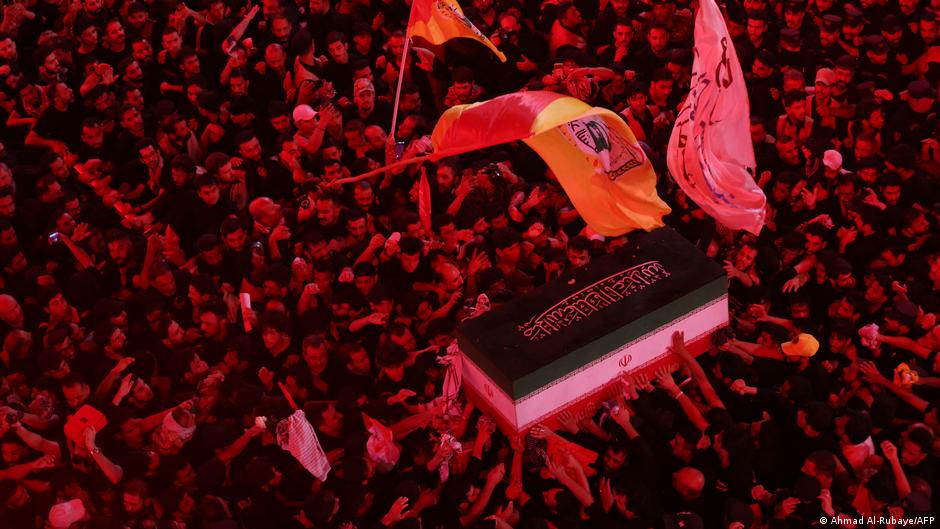
After six days of mourning, the former Supreme Leader of Iran, Ayatollah Ali Khamenei, was buried in a closed ceremony in the city of Mashhad. The ceremony took place amid heightened regional tensions following his death in a targeted attack by US and Israeli forces in late February.
Context and Significance of the Burial Site
Khamenei was interred in the Imam Reza shrine complex, one of the largest and most revered Shiite Muslim sanctuaries globally, attracting up to 20 million pilgrims annually. The selection of this site for his burial highlights the regime's portrayal of Khamenei as a martyr who fell battling militarily superior adversaries.
Also buried in the complex were members of Khamenei’s family who perished alongside him in the airstrikes on the Supreme Leader’s residence. Notably, the shrine also houses the remains of Ibrahim Raisi, the Iranian president who died in a helicopter crash earlier this year. These burials reinforce the shrine’s symbolic role as a national locus for honoring Iran’s political and religious elite.
Political Implications and Leadership Uncertainty
The funeral occurred more than four months after Khamenei’s death was officially confirmed. Iran announced the funeral date in mid-June during a fragile ceasefire between Tehran and its adversaries. Mourning events started on July 4 in Tehran, followed by ceremonies in the Shiite pilgrimage cities of Qom and across Iraq in Najaf and Karbala. Iranian authorities claimed that up to 20 million people participated in Tehran alone.
Despite the extensive public mourning, Khamenei’s son, Mojtaba, who officially succeeded him as Supreme Leader, remained absent from public view. Since the February attack, Mojtaba has not appeared publicly, fueling speculation about his health and the regime’s stability.
"The absence of Mojtaba Khamenei from public ceremonies has deepened concerns about the continuity of Iran’s leadership during a critical period of conflict and internal consolidation."
Reports suggest Mojtaba sustained serious injuries during the attack yet remains capable of fulfilling his duties. However, fears of further targeted attacks, particularly by Israeli forces, have led Tehran to restrict his public appearances. Iranian state media announced that Mojtaba would appear publicly on July 19 during another memorial in Qom, where he is expected to address the nation.
Broader Regional and Economic Consequences
The death of Iran’s Supreme Leader and the subsequent leadership transition have come amid escalated hostilities in the Persian Gulf region. Shortly after the funerary events began, Iranian forces attacked tankers in the strategically vital Strait of Hormuz, citing unauthorized transit through Iranian waters. The US responded with strikes against Iranian Revolutionary Guard Corps positions, followed by Iranian attacks on US bases in Bahrain and Kuwait.
Former US President Donald Trump acknowledged the funeral prompted a temporary pause in negotiations with Iran but warned that the ceasefire was fragile and ultimately collapsed. The renewed confrontation threatens to exacerbate regional instability and disrupt oil supplies through the Strait of Hormuz, a critical artery for global energy markets.
These developments underscore the structural economic challenges Iran faces amid ongoing conflict. The sanctions regime, military confrontations, and political uncertainty complicate Tehran's ability to stabilize its economy and engage in meaningful international diplomacy.
Analysts draw historical parallels to previous leadership transitions in politically volatile environments, where uncertain successions can trigger internal power struggles and exacerbate external conflicts. Iran’s current trajectory reflects a complex interplay between domestic consolidation efforts and external pressures, with significant implications for regional security and global economic stability.