Kallas Says Russia Gave No Sign of Readiness for Ukraine Peace Talks
The EU foreign policy chief said Moscow’s conduct contradicted its rhetoric, sharpening calls for pressure as the war’s economic costs deepen.
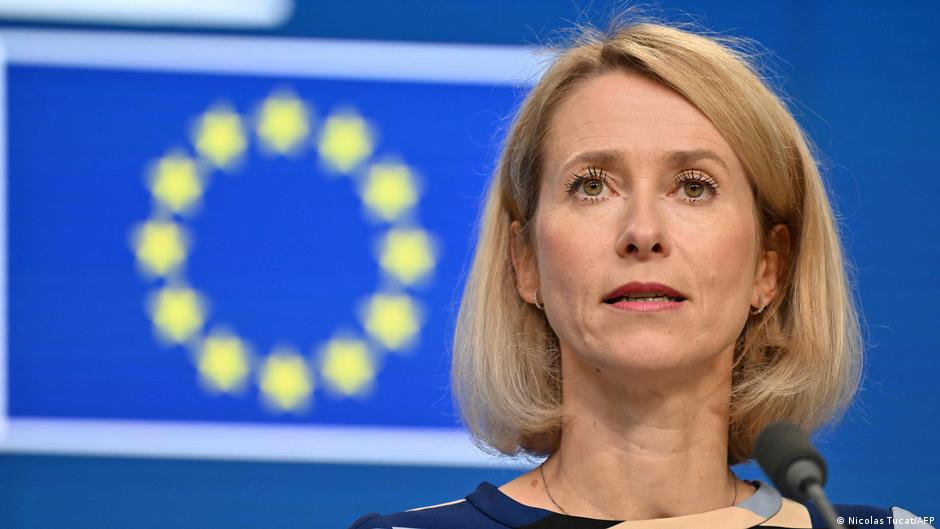
Russia offered no indication that it was prepared to enter meaningful peace negotiations over Ukraine during a meeting of Group of 20 foreign ministers in Atlanta, according to Kaja Kallas, the European Union’s high representative for foreign affairs and security policy.
Speaking on Friday, October 30, Kallas said Russian Foreign Minister Sergei Lavrov had not demonstrated that Moscow was ready to compromise in order to end the war. Asked whether Lavrov had signaled any willingness to make concessions, she replied in the negative and argued that Russia’s conduct carried more weight than its public statements.
“Even if they claimed otherwise in words, their actions say something else,” Kallas said.
She said Russia must prove through concrete action that it is prepared to negotiate. Kallas also pointed to the human cost of the conflict, saying July, August and September had been the deadliest months for Ukrainian civilians. She accused Lavrov of presenting “many lies” and distorted facts that European representatives were subsequently able to rebut, and called for stronger pressure on Moscow.
Diplomatic signals carry economic consequences
The exchange matters beyond the immediate question of whether formal negotiations are possible. For governments, companies and investors, evidence that the conflict may persist affects decisions about defense expenditure, energy security, trade routes, sanctions compliance and the timing of reconstruction. The absence of a credible negotiating signal therefore reinforces expectations of a prolonged period of economic separation between Russia and much of Europe.
That separation has structural consequences. European governments must continue balancing military and financial support for Ukraine against domestic budget constraints. Businesses exposed to the region face continuing uncertainty over transport, insurance, regulation and access to markets. Ukraine, meanwhile, must finance essential public services and maintain economic activity while confronting wartime destruction and civilian casualties.
Russia also faces the costs of a relationship with Europe that German Foreign Minister Johann Wadephul described as anything but normal. European participants at the G20 foreign ministers’ meeting declined to join a group photograph with Lavrov because of the continuing war in Ukraine. Wadephul said contacts with Russia remained necessary for discussing disagreements, but stressed that such engagement should not imply a return to ordinary relations.
The distinction between contact and normalization is economically significant. Diplomatic meetings can preserve channels needed to manage risks without necessarily producing an easing of sanctions, a restoration of trade or renewed investment. A photograph would not itself change policy, but refusing one functions as a signal that participation in a multilateral forum should not be interpreted as rehabilitation.
Pressure, credibility and the limits of dialogue
Kallas’s call for greater pressure reflects a familiar strategic calculation: negotiations are more likely to produce results when the parties believe that continuing the conflict will be more costly than compromise. In economic terms, pressure can seek to restrict resources available for the war and alter expectations about its sustainability. Yet pressure also carries spillover risks, including higher compliance costs, further fragmentation of trade and continued uncertainty for economies connected to Russian commodities or regional supply chains.
History offers numerous examples of adversaries maintaining diplomatic contact during extended conflicts without achieving rapid settlement. Such exchanges can reduce the danger of miscalculation and clarify opposing positions, but they do not automatically establish the trust required for an agreement. Wadephul’s position reflects that tension: communication is necessary, while visible gestures of normality may weaken the political message that the war continues to prevent ordinary cooperation.
For any negotiation to change the economic outlook, governments and markets would require more than rhetorical openness. They would look for observable steps indicating that military escalation was slowing and that commitments could be implemented. Kallas’s emphasis on actions rather than words is therefore also a test of credibility. Without such evidence, governments are likely to plan on the assumption that current security and fiscal pressures will endure.
The G20 setting underscores the broader stakes. The forum brings together economies with differing positions on the war, while its agenda is shaped by global growth, financial stability and international economic coordination. Continued confrontation over Ukraine complicates that work by deepening geopolitical divisions and narrowing the space for collective action.
The Atlanta meeting consequently highlighted two parallel realities. European officials consider dialogue with Russia unavoidable, particularly when discussing fundamental disagreements. At the same time, they are unwilling to treat participation in those discussions as evidence that relations are returning to normal. Until Moscow demonstrates a substantive readiness to negotiate, that combination of limited contact and sustained pressure is likely to remain the defining feature of Europe’s approach—and a continuing source of uncertainty for the regional and global economy.