Kosovo’s Self-Determination Party Wins Parliamentary Elections Amidst Political Instability
Albin Kurti’s party secures 43% of votes but requires coalition partners to form a stable government.
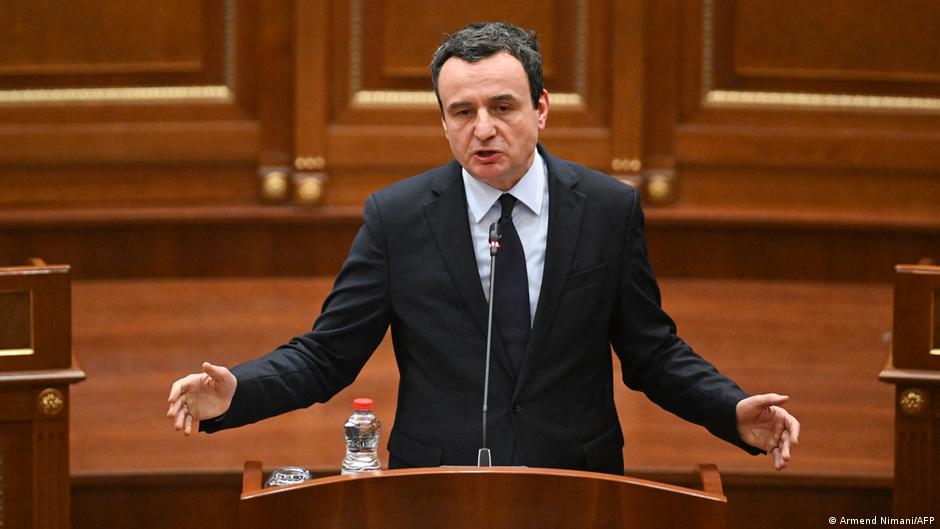
The ruling Self-Determination party in Kosovo, led by Prime Minister Albin Kurti, has claimed victory in the recent early parliamentary elections, garnering 43% of the votes according to official results processed from 99.4% of ballots on June 7. This marks the third parliamentary election within just 18 months in the politically turbulent Balkan state.
The party’s nearest competitor, the Democratic Party of Kosovo, received 21% of the vote, followed by the Democratic League of Kosovo with 18%, and the Alliance for the Future of Kosovo securing about 7%. Voter turnout remained low at just under 37%, reflecting public fatigue amid ongoing political uncertainty.
Coalition Challenges Amid Recurring Political Crises
Despite its relative victory, the Self-Determination party falls short of an outright majority, necessitating coalition partners to establish a functioning government. This is a continuation of a protracted political crisis: in December 2025, the party had won 51.1% of the vote, but the parliament was dissolved in April after the parties failed to agree on a presidential candidate, a largely ceremonial role in Kosovo’s political framework.
“The inability to agree on basic institutional appointments underscores the fragility of Kosovo’s political system and the challenges ahead for governance and reform.”
Albin Kurti, aged 51, leads a pro-Western political agenda aiming to integrate Kosovo into the European Union. The EU has repeatedly emphasized the importance of forming stable state institutions as a precondition for implementing reforms necessary for accession. However, Kurti’s firm stance on the Serbian minority concentrated in northern Kosovo creates internal tensions, as he seeks to extend government control over this region, which remains a flashpoint for ethnic and political conflict.
Historical Context and Structural Economic Implications
Kosovo declared independence from Serbia in 2008 after years of conflict and international administration. However, full recognition remains elusive: Serbia, Russia, and five EU countries—including Spain, Cyprus, Greece, Slovakia, and Romania—do not recognize Kosovo’s statehood, complicating its international relations and economic development prospects.
This geopolitical limbo impacts Kosovo’s structural economic landscape. The need for political stability is acute, as the country seeks to attract foreign investment and secure EU financial assistance vital for infrastructure and governance reforms. Recurring elections and fragile coalition governments undermine policy continuity and delay critical reforms.
Kosovo’s economy, heavily reliant on remittances, foreign aid, and a limited industrial base, is vulnerable to political setbacks. Persistent ethnic divisions and unresolved status issues with Serbia contribute to investor uncertainty. The new parliament and government will need to prioritize institutional consolidation and inclusive governance to advance Kosovo’s economic integration with European markets.
The 37% voter turnout further illustrates a broader issue of political disengagement and skepticism among Kosovars, which could hinder reform momentum. The international community’s role remains crucial in supporting democratic processes and encouraging dialogue between ethnic groups.
In sum, Kosovo stands at a crossroads where political stability, inclusive governance, and EU integration efforts converge. How Kurti’s Self-Determination party navigates coalition-building and addresses internal divisions will shape the country’s economic trajectory and international standing in the years ahead.