Lithuania and Latvia Block Slovak PM’s Flight to Moscow for May 9 Commemoration
Baltic states refuse airspace access to Slovak Prime Minister Robert Fico en route to Moscow, reflecting ongoing geopolitical tensions within the EU.
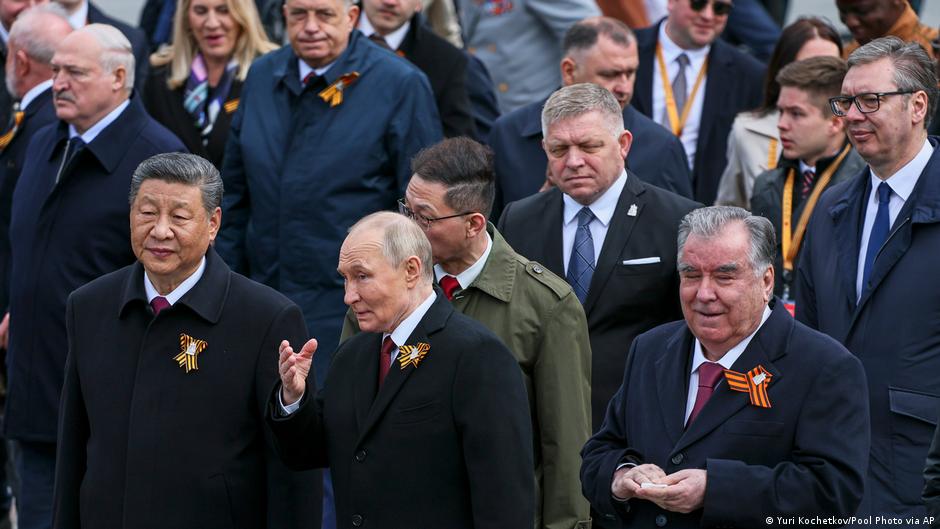
On April 18, Slovak Prime Minister Robert Fico announced that Lithuania and Latvia have once again denied overflight rights for his aircraft on its way to Moscow to attend the May 9 Victory Day celebrations. This move highlights the increasing geopolitical rifts within the European Union, especially concerning engagements with Russia.
Geopolitical Context and Historical Parallels
Fico stated in a video message that both Lithuania and Latvia had informed Bratislava they would not permit his flight to pass through their airspace en route to Moscow. "Well, what can you do? EU member countries are not allowing the Prime Minister of another EU country to fly over their territories," he remarked. He also assured that an alternative route would be found, as had been done in the previous year.
The May 9 commemorations mark the anniversary of the Soviet victory over Nazi Germany, a symbol that continues to have divergent interpretations across Europe. For many Eastern European countries, especially those in the Baltic region that experienced Soviet occupation, the event carries complex historical legacies and contemporary political sensitivities.
"EU member states are not permitting the Prime Minister of another member state to fly over their territories," Fico commented on the airspace denial.
In 2023, a similar situation unfolded when Lithuania and Latvia also blocked flights carrying Fico and Serbian President Aleksandar Vučić to Moscow. At that time, Riga cited the "political sensitivity of the flight’s purpose," while Vilnius pointed to "technical and diplomatic sensitivities." Poland also denied overflight rights for Fico’s plane. These airspace restrictions reflect broader EU efforts to distance itself from Moscow amid ongoing conflicts and sanctions.
Structural Consequences for EU-Russia Relations and Regional Economies
The Baltic states’ decisions underscore persistent fractures within the EU regarding policy toward Russia. While some member states maintain relatively pragmatic or even friendly ties with Moscow, others, particularly those with historical grievances, adopt a hardline stance. These divides complicate unified EU foreign policy and have economic repercussions.
Trade, energy transit, and diplomatic engagement routes are all affected by such geopolitical tensions. Restrictive measures, including airspace bans, contribute to logistical challenges and increased costs for states seeking to maintain bilateral relations with Russia. For countries like Slovakia, which have fluctuated in their approach to Moscow, these restrictions limit diplomatic flexibility.
Furthermore, the repetition of airspace denials during symbolic occasions like May 9 highlights the enduring legacy of historical narratives in shaping contemporary international relations. The Baltic states’ firm stance can be interpreted as both a security precaution and a political signal to reinforce their alignment with EU and NATO policies.
Looking Ahead: The Complexity of EU Unity
As global tensions persist, the EU faces the challenge of reconciling divergent national interests and historical experiences among its members. The airspace denials to Slovak PM Robert Fico exemplify how historical memory, security concerns, and diplomatic protocols intersect to influence state behavior.
For Slovakia and other countries maintaining nuanced positions on Russia, these developments necessitate strategic recalibrations. Alternative flight routes, diversified diplomatic engagements, and broader discussion within EU frameworks will be essential to managing such challenges.
Ultimately, the Baltic states’ actions signal a broader trend toward hardened postures in Eastern Europe, with significant implications for the EU's internal cohesion, external relations, and economic integration.