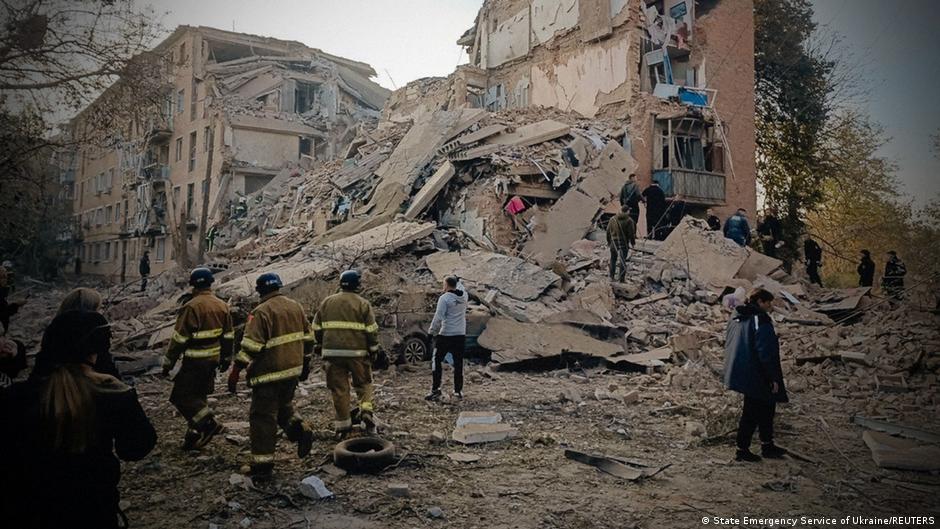
Massive Russian Missile and Drone Attack on Kyiv Sparks Fires and Civilian Casualties
Russia’s large-scale assault on Kyiv and other Ukrainian cities causes extensive damage, casualties, and raises concerns about escalating conflict dynamics.
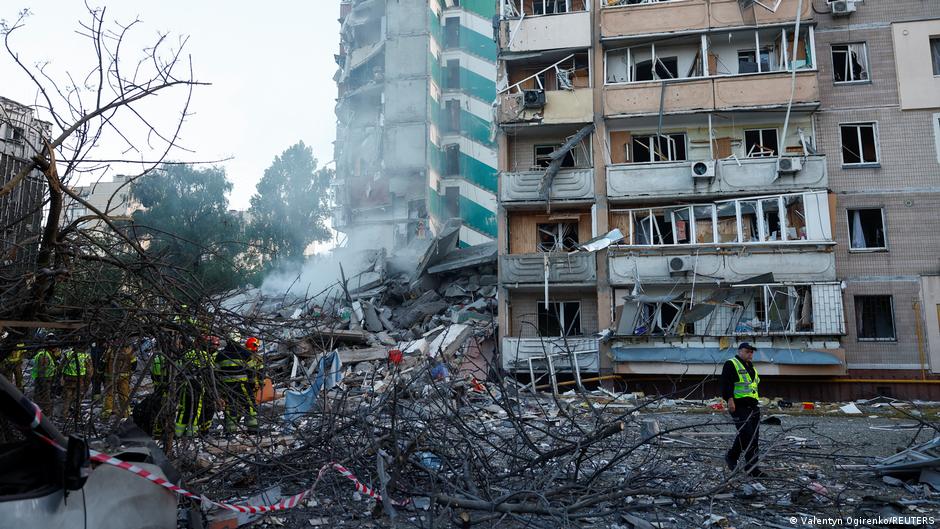
On the night of May 14, Russian forces launched a concentrated missile and drone strike against Kyiv, Ukraine's capital, resulting in multiple fires, structural collapses, and civilian casualties. The attack marks a significant escalation in Russia's ongoing military campaign, with broader implications for Ukraine’s urban infrastructure resilience and civilian safety.
Scope and Impact of the Attack
Timur Tkachenko, head of Kyiv’s military administration, reported at least one confirmed death and 16 injuries from the assault. Notably, in Kyiv’s Darnytskyi district, a residential high-rise partially collapsed, prompting emergency responders to rescue ten individuals trapped under rubble. Rescue operations were ongoing early Thursday morning.
The assault was not limited to a single area: fires erupted in multiple districts as debris from downed unmanned aerial vehicles (UAVs) and missiles struck residential and commercial properties. In the Dniprovskiy district, a drone fragment ignited a fire on the roof of a five-story residential building, while another UAV caused damage to a private home.
In northern Kyiv, wreckage penetrated an apartment on the 12th floor of a residential building, sparking another blaze. Meanwhile, non-residential facilities suffered damage across the Shevchenkivskyi, Solomianskyi, and Obolonskyi districts. In Solomianskyi, a car parked near a business center caught fire, and in Darnytskyi, small architectural forms used for commercial activity and a gas station were damaged by fires. The Holosiivskyi district in southern Kyiv also experienced debris impacts on a business center and roadway.
By 5:40 AM local time, nine injured persons were hospitalized, with two others receiving outpatient treatment, according to Kyiv’s Mayor Vitali Klitschko.
Broader Regional Threats and Ukraine’s Air Defense Response
Ukraine’s Air Force reported simultaneous missile, drone, and guided aerial bomb attacks on several other regions, including Kharkiv, Poltava, Sumy, Donetsk, Odesa, Mykolaiv, Dnipropetrovsk, and Cherkasy oblasts. This indicates a coordinated multi-front offensive aimed at overstretching Ukraine’s air defenses and inflicting widespread damage across the country.
On May 13 alone, Russian forces launched 892 drones against Ukraine, of which Ukrainian air defenses intercepted 710, showcasing the sustained intensity of aerial bombardments and the strain placed on defensive infrastructure. Notably, Uzhhorod in Zakarpattia Oblast was hit by explosions for the first time since the war began, suggesting an expansion of the conflict’s geographic scope.
“The scale and diversity of targets in this attack reflect a strategic attempt to degrade both civilian infrastructure and military capabilities, raising serious concerns about urban vulnerability in protracted conflicts.”
Economic and Structural Consequences
The concentrated attacks on residential buildings, commercial hubs, and critical infrastructure exacerbate the ongoing humanitarian crisis and threaten Kyiv’s economic stability. Urban destruction disrupts housing, transportation, and commercial activities, complicating relief efforts and undermining investor confidence. The damage to gas stations and business centers also poses risks to energy supply chains and local economies, highlighting the war’s ripple effects beyond immediate casualties.
Historically, urban bombardments with widespread civilian impact have often led to protracted recovery trajectories, requiring immense reconstruction costs and impeding economic growth. Kyiv’s current situation similarly portends long-term structural economic challenges, necessitating international support and strategic planning to restore urban functionality and mitigate displacement.
Conclusion
This latest Russian offensive against Kyiv and other Ukrainian cities underscores the evolving nature of modern conflict, where drone warfare and precision-guided munitions intensify urban vulnerabilities. The extensive damage and civilian harm emphasize the urgent need for enhanced protective measures and resilient infrastructure development. Furthermore, the multi-regional scale of attacks signals a protracted conflict phase, with significant implications for Ukraine’s economy and societal fabric.