Melania Trump to Discuss Oleshky Ceasefire With Russian, Ukrainian Delegates
The White House meeting will examine a temporary truce that enabled civilian evacuations and humanitarian deliveries in occupied Oleshky.
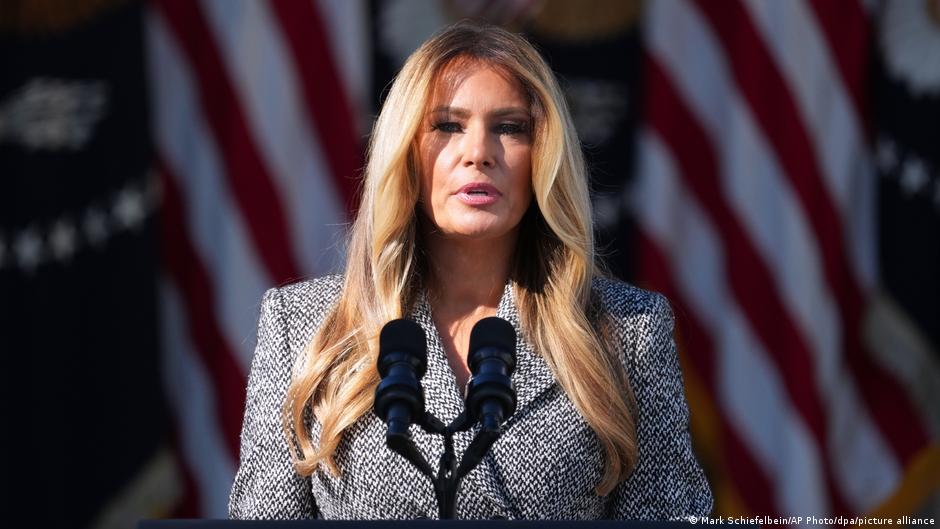
US first lady Melania Trump is expected to meet representatives of Ukraine and Russia at the White House to discuss the temporary ceasefire in Oleshky, a Russian-occupied city in Ukraine’s Kherson region, and the results of a humanitarian mission conducted there.
The planned discussions mark an unusual diplomatic role for a US first lady in a conflict where localized humanitarian arrangements have become increasingly important. Although the talks concern a geographically limited ceasefire rather than a broader settlement, their economic significance extends beyond the immediate delivery of aid. Temporary pauses can create narrow openings for civilian movement, reduce short-term pressure on local supply systems and test whether the parties can implement practical agreements despite the wider war.
An announcement published on the White House’s official website on Tuesday, November 3, said Trump would deliver a formal statement on the humanitarian mission’s results at 11 a.m. Eastern Time on Thursday, November 5. It did not clarify whether her meeting with the Ukrainian and Russian representatives would take place on the same day.
According to RBC-Ukraine, the Ukrainian delegation will include Davyd Arakhamia, head of the Servant of the People parliamentary faction, and Dmytro Lubinets, the Ukrainian parliament’s human rights commissioner. Russia will be represented by Kirill Dmitriev, a special representative of President Vladimir Putin, and ombudsman Yana Lantratova.
A Limited Truce With Wider Economic Implications
The ceasefire in Oleshky and nearby areas began early on October 27 and ended at 10:59 p.m. on November 1. It resulted from agreements between the parties reached with Melania Trump’s participation. Both Moscow and Kyiv have described the first lady as a key intermediary in organizing the pause in fighting.
During the humanitarian operation, hundreds of civilians were evacuated from the city and aid shipments were delivered. Those outcomes provide the most direct measure of the truce’s value: people were moved away from danger, while essential supplies reached an area where military conditions had constrained normal access.
From an economic perspective, humanitarian corridors function as temporary substitutes for disrupted transport, retail and public-service networks. Their purpose is primarily to protect civilians, but they also affect the allocation of scarce resources. Evacuations transfer immediate needs—including housing, food, medical care and income support—to receiving communities, while aid deliveries reduce at least some of the shortages inside the affected area.
The economic benefits remain limited when a ceasefire lasts only several days. Businesses cannot plan investment or restore regular operations on the basis of a short pause, and households cannot treat temporary access as evidence that normal commercial life will resume. Yet even a brief agreement can reveal whether routes are usable, local coordination is possible and humanitarian supplies can be distributed under negotiated security conditions.
Humanitarian Diplomacy as a Test of Coordination
The participation of parliamentary, human rights and presidential representatives gives the meeting a mixed institutional character. It is not presented as a formal peace negotiation, and the source announcement does not indicate that broader military or territorial issues will be addressed. Instead, the composition suggests a focus on civilian protection, implementation and the political management of a narrowly defined arrangement.
Historically, localized ceasefires in armed conflicts have often carried two competing interpretations. They can be treated as isolated emergency measures with little influence on the wider confrontation, or as practical tests of whether adversaries can honor limited commitments. The Oleshky pause does not by itself establish which interpretation will prevail. Its duration was fixed, and the reported agreement concerned a specific city and surrounding districts.
Nevertheless, implementation matters economically because repeated, predictable humanitarian pauses could lower the cost and risk of delivering relief. Aid operations become more expensive when access is uncertain, transport schedules cannot be maintained and personnel face constantly changing security conditions. A single successful mission cannot eliminate those constraints, but it can provide operational information for any future arrangements.
The first lady’s role also separates this initiative from conventional negotiations led exclusively by foreign ministries, defense officials or heads of government. That may help maintain a humanitarian focus, although it does not substitute for the authority required to negotiate a comprehensive ceasefire or political settlement.
What the White House Meeting Can Establish
The immediate question is whether the discussions will produce a shared assessment of the operation: how the ceasefire was coordinated, whether access remained secure, how civilians were evacuated and how aid entered the city. The announcement provides no indication that a new truce will be agreed, so any expectation of an extension or replication would go beyond the information currently available.
For Oleshky and adjacent areas, the structural economic damage associated with occupation and warfare cannot be reversed through one humanitarian mission. Civilian displacement, interruptions to supply and the loss of ordinary economic activity create effects that persist after a temporary pause ends. Recovery requires sustained security, functioning infrastructure and dependable access rather than intermittent relief alone.
Even so, the October 27-November 1 ceasefire demonstrated that a negotiated humanitarian window could produce concrete results. The White House meeting will therefore be significant less as a conventional diplomatic summit than as a review of whether a tightly limited mechanism worked—and whether its practical lessons can inform future efforts to protect civilians and deliver assistance.