Meloni Challenges EU’s Fragmented Mandate in Ukraine Peace Talks
Italy’s prime minister warns that unclear representation could weaken Europe’s leverage as US-mediated negotiations move forward.
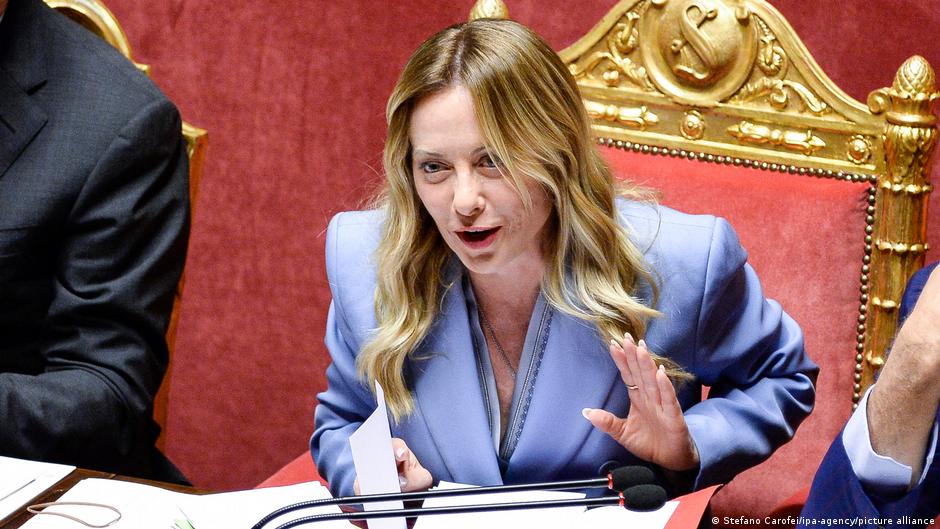
Italian Prime Minister Giorgia Meloni has called on European Union leaders to settle a fundamental question before negotiations over ending the war in Ukraine advance: who is authorized to speak for the bloc, and under what mandate?
In a letter to European Council President António Costa, cited by the dpa news agency on Thursday, November 5, Meloni criticized what she described as the “uncoordinated behavior” of EU leaders. Her intervention turns an apparent matter of diplomatic protocol into a broader test of Europe’s institutional capacity to defend its political and economic interests during negotiations with global consequences.
“I continue to insist that it be decided once and for all who exactly will sit at the negotiating table on behalf of the European Union and with what mandate,” Meloni wrote.
The Italian prime minister argued that a fragmented approach would help neither the EU’s relations with its allies nor its efforts to persuade those responsible for what she called a “senseless aggression” to stop. AFP quoted her as warning that “by presenting the image of a Europe acting in disorder, we serve only the interests of those who want to continue this war.”
A question of representation and economic power
Meloni’s criticism highlights a structural tension within the EU. The union has substantial collective economic weight, but authority over foreign policy remains distributed among national governments and EU institutions. That arrangement allows member states to retain diplomatic sovereignty, yet it can produce competing initiatives when decisions must be made quickly.
For peace negotiations, the distinction matters. A representative without an agreed mandate may have limited room to make commitments, while several national leaders pursuing separate contacts can leave allies and negotiating partners uncertain about which position is authoritative. The result can be a gap between Europe’s economic importance and its influence over the terms of a settlement.
The economic consequences extend beyond diplomatic standing. Any agreement addressing postwar security, de-escalation or reconstruction could affect sanctions policy, public spending, energy markets, trade routes and long-term investment across Europe. EU governments may ultimately carry a significant share of the financial and institutional burden associated with Ukraine’s recovery and security. Meloni’s demand therefore concerns not only who occupies a seat at the table, but also who can negotiate obligations that may later require support from national budgets.
Historically, coalitions have often found that economic scale does not automatically translate into negotiating power. Influence depends on whether members can establish common priorities and authorize a representative to defend them. The EU’s consensus-oriented structure was designed to balance national interests, but that same structure can slow the creation of a single position when member states differ over tactics, sequencing or direct engagement with Moscow.
A timetable for an EU decision
Meloni proposed that the representation issue be discussed at an informal European Council meeting in Dublin on November 13. That discussion, she said, would allow the European Council to take a formal decision at its Brussels summit on December 17-18 about who should represent the EU in negotiations on peace in Ukraine.
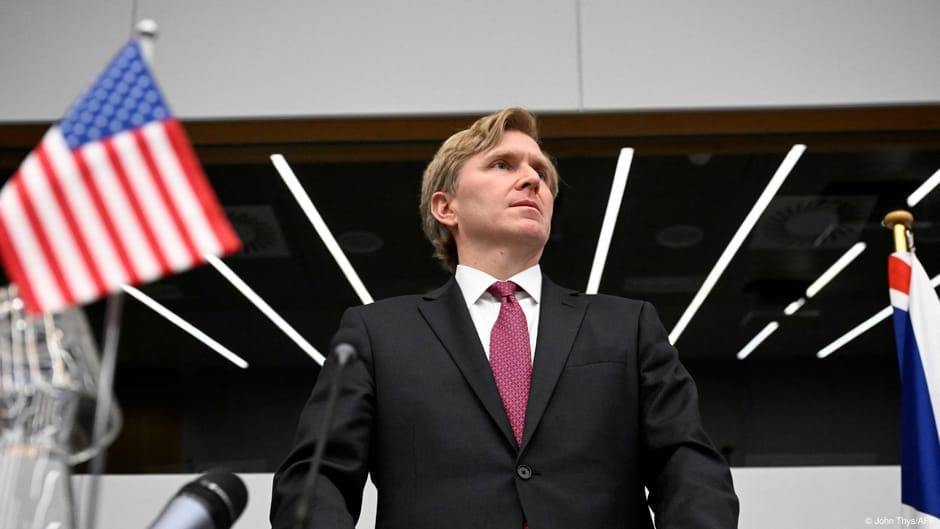
The timetable gives EU leaders a defined institutional route, but it also exposes the pressure created by negotiations already proceeding outside that framework. A new round of talks between Russia and Ukraine, mediated by the United States, is scheduled for November 10-11 in Abu Dhabi. US presidential special envoy Steve Witkoff said the meeting would focus on “postwar security, de-escalation, humanitarian initiatives and the next steps toward peace.”
Those talks are due to take place before the proposed Dublin discussion and more than a month before the Brussels summit at which Meloni wants a formal decision. The sequencing raises the possibility that important negotiating concepts could develop before the EU has settled who speaks for it collectively.
Separate initiatives and the cost of fragmentation
Meloni has previously criticized initiatives by individual European leaders that, in her view, dilute the EU’s common position on Russia’s war in Ukraine. Rome specifically criticized a telephone conversation involving Finnish President Alexander Stubb, Norwegian Prime Minister Jonas Gahr Støre and Russian President Vladimir Putin.
Separate diplomatic contacts can provide additional channels for communication, but they may also complicate coordination if their purpose and authority are not collectively understood. From an economic perspective, uncertainty over the European position can make it harder for governments and businesses to assess the direction of sanctions, security expenditure and eventual reconstruction policy.
The dispute also reflects a longer-running challenge for European integration: fiscal and commercial decisions are deeply interconnected across the union, while strategic diplomacy remains strongly influenced by national capitals. In routine policymaking, that division can be managed through lengthy consultation. During war and peace negotiations, delays and overlapping messages can carry greater costs.
Meloni’s proposal does not resolve the substantive differences among EU members, nor does it specify who should receive the mandate. Its significance lies in demanding that the institutional ambiguity be settled before Europe is asked to endorse or finance the consequences of an agreement. As the Abu Dhabi talks approach, the central issue is whether the EU can convert its economic exposure and political support for Ukraine into a coherent role in shaping the peace process.