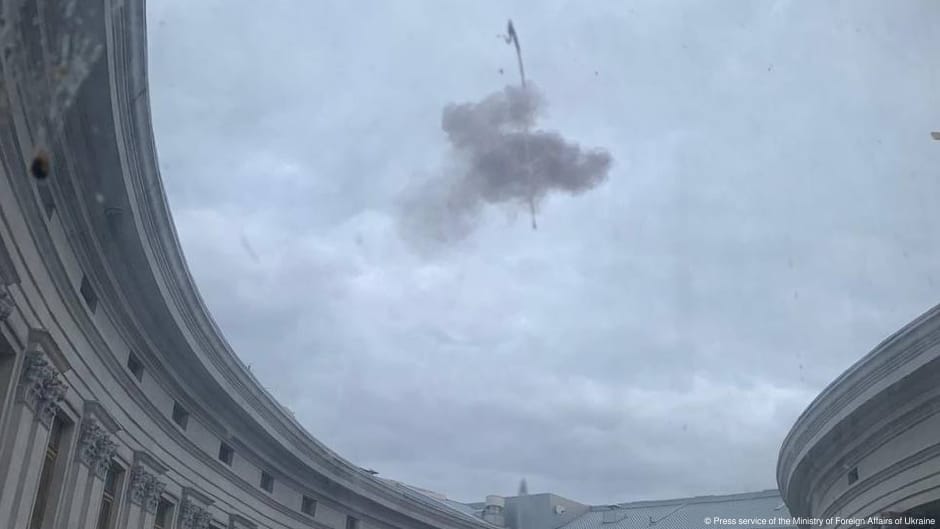
Missile Attack in Oryol May Have Hit Key Russian Optoelectronics Plant
Reported damage at the Proton factory highlights the economic vulnerability of specialized suppliers embedded in Russia’s weapons industry.
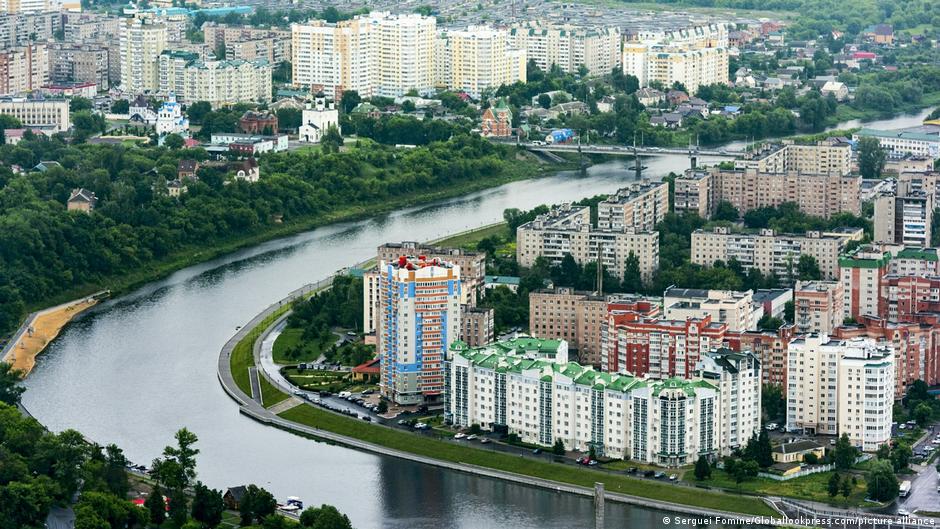
The Russian city of Oryol came under what regional authorities described as a massive missile attack during the night of Saturday, January 7, with reports indicating that a major fire may have broken out at the Proton optoelectronics plant.
Andrei Klychkov, governor of the Oryol region, said that production facilities belonging to an enterprise in the city’s Sovetsky district had been partially damaged. He did not identify the company or provide information about possible casualties. Emergency services were working at the site, according to the governor.
An open-source intelligence analysis by the publication ASTRA concluded that the strike had caused a large fire at Proton, one of Russia’s most important manufacturers of optoelectronic equipment. The plant is located in Oryol’s Sovetsky district, matching the area identified in Klychkov’s statement. The assessment has not been confirmed by the regional authorities.
A Specialized Link in the Defense Supply Chain
Proton’s significance lies less in the physical scale of a single factory than in its role as a specialized supplier. Optoelectronic components are used to detect, guide, track and process information across a range of military systems. Such production typically depends on precision equipment, trained personnel and tightly controlled manufacturing processes, making capacity more difficult to replace quickly than standardized industrial output.
Ukrainian OSINT channels Exile+ and Supernova+ have reported that Proton products are used in several Russian weapons systems, including the S-71 Kover air-launched cruise missile, the 9M723 Iskander-M ballistic missile and the Pantsir-S1 air-defense missile and gun system. These claims are based on open-source analysis and were not independently substantiated in the official account of the attack.
Damage to a specialized component producer can create effects well beyond the factory itself when downstream manufacturers have few alternative suppliers.
From an economic perspective, the reported incident illustrates the structural risks created by concentrated defense production. A large weapons complex is not sustained only by final assembly plants. It also relies on networks of companies producing sensors, electronics, optical systems and other high-value components. If one supplier occupies a critical position in that network, even partial disruption can affect delivery schedules elsewhere.
The immediate economic consequences remain unclear because neither the extent of the damage nor the duration of any production interruption has been established. A fire may affect machinery, inventories, clean production areas, power systems or internal logistics, but the available reports do not specify which assets were damaged. It is therefore too early to estimate the cost of repairs or the effect on output.
Industrial Resilience and Repeated Attacks
The Proton plant has reportedly been targeted by Ukrainian attacks on multiple previous occasions. Repeated strikes pose a different economic challenge from a single episode: companies must allocate resources not only to restoring production but also to physical protection, dispersed storage, backup power and potentially the relocation of sensitive operations.
Historically, states facing sustained pressure on military industry have attempted to disperse production and create redundant capacity. Such measures can improve resilience, but they also raise costs. Splitting production among several sites may require duplicate equipment, additional quality-control systems and more complex transport arrangements. For highly specialized manufacturing, relocation can also be constrained by the availability of skilled workers and suitable facilities.
Russia’s ability to absorb any disruption at Proton will consequently depend on factors not disclosed in the current reporting: the availability of inventories, the existence of alternative domestic suppliers, the possibility of substituting components and the speed with which damaged capacity can be restored. If downstream producers already hold sufficient stocks, the short-term effect could be limited. If supplies are scarce and Proton’s products are difficult to replace, the consequences could emerge later as bottlenecks in weapons manufacturing or maintenance.
The reported strike also points to a broader shift in the economic geography of the conflict. Oryol is a regional industrial center inside Russia, and attacks on manufacturing facilities there increase the costs associated with protecting production far from the immediate front. Air defense, emergency response, insurance, repairs and business-continuity measures all absorb resources that could otherwise support investment or output.
For now, the confirmed official account is limited to partial damage at an unnamed enterprise in the Sovetsky district and the deployment of rescue services. The identification of Proton and reports of a major fire rest on OSINT assessments. Until more detailed evidence emerges, the scale of the industrial impact remains uncertain, but the plant’s reported position in Russia’s defense supply chain makes the incident economically significant.