Moscow and Kyiv Agree to Bring European Partners Into Peace Talks
The expanded format could connect territorial negotiations with the broader security architecture and economic future of postwar Europe.
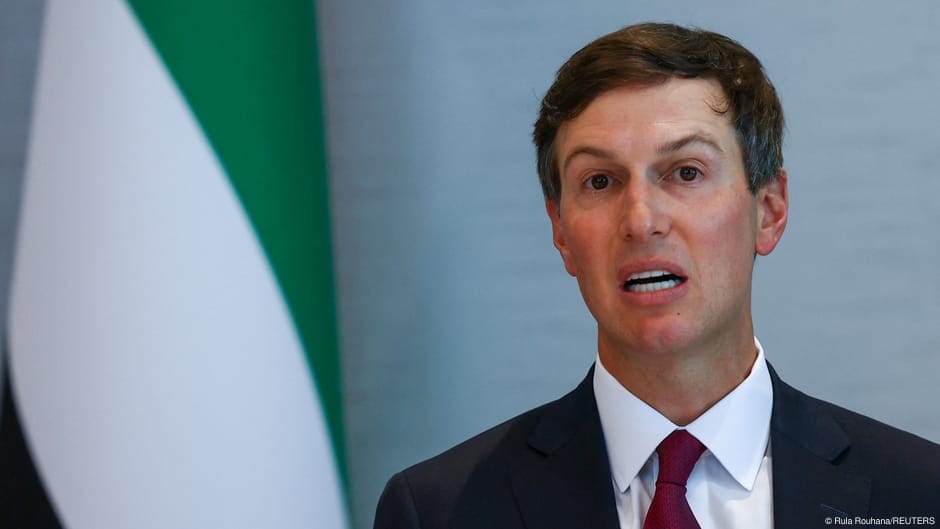
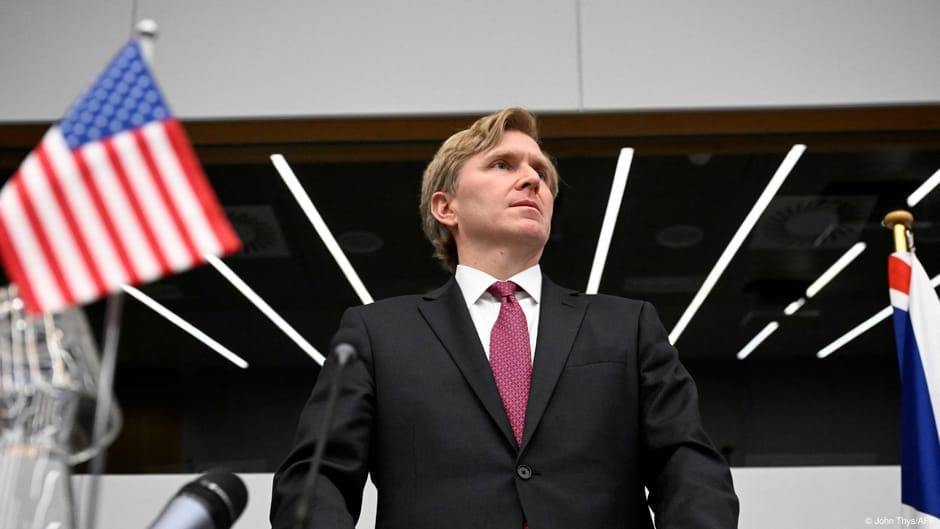
Moscow and Kyiv have agreed to involve European countries in the next round of negotiations on ending Russia’s war against Ukraine, according to Jared Kushner, a US presidential envoy and son-in-law of President Donald Trump. The decision followed three days of talks held in several formats from November 10 to 12.
Kushner said in a post on X early on Friday, November 13, that the diplomatic effort had produced significant progress in identifying the concerns of both Russia and Ukraine, examining possible solutions and establishing a path for further negotiations. The expanded format is intended to address not only territorial disputes between the two countries but also the wider structure of postwar European security.
Russian and Ukrainian delegations met in Abu Dhabi on November 10 and 11 with US mediation to discuss possible conditions for ending the war. Kushner and Steve Witkoff, another special envoy for the US president, subsequently travelled to Moscow for talks with Russian President Vladimir Putin.
On November 12, the American negotiators flew to Dublin, where they met Ukrainian President Volodymyr Zelensky. They later held consultations with national security advisers representing Ukraine, Germany, Italy, France, Ireland and Poland, as well as the European Union.
“Both sides have now agreed to broaden the next round of talks to include European partners,” Kushner said, adding that this would allow negotiators to consider postwar European security alongside territorial questions between Ukraine and Russia.
Security Negotiations Carry an Economic Dimension
The inclusion of European governments widens the talks beyond a bilateral settlement. Any durable arrangement would have consequences for defence expenditure, energy markets, trade routes, reconstruction finance and investment risk across the continent. Although Kushner disclosed no specific economic proposals, the negotiating format acknowledges that the costs and benefits of a settlement would extend far beyond Russia and Ukraine.
For Ukraine, security guarantees and economic recovery are closely connected. Investors generally require confidence that infrastructure, industrial assets and transport networks will not face renewed destruction. Reconstruction planning also depends on the terms of a settlement, the credibility of security arrangements and the role that European institutions and governments may be prepared to assume.
For European countries, the outcome could shape future military budgets and the allocation of public funds between defence and domestic priorities. It could also influence energy policy and the commercial geography of the region. These consequences help explain why European participation is structurally important even if the most immediate territorial questions remain matters for Moscow and Kyiv.
Past European settlements have often shown that ceasefire terms, security institutions and economic reconstruction cannot be treated as entirely separate tracks. The current discussions are not yet a final settlement, and Kushner did not announce agreed territorial or security provisions. Nevertheless, broadening the negotiations creates a forum in which the relationship between military stability and economic recovery can be addressed more directly.
Ukraine Retains a Voice in Wider Security Arrangements
Kushner said the US representatives had agreed with Zelensky that no broader European security agreements would be concluded without taking Ukraine’s security concerns into account. That commitment is significant because a continent-wide framework could otherwise create tension between the priorities of major powers and those of the country most directly affected by the war.
The sequence of meetings also illustrates the emerging structure of the mediation effort. US representatives have acted as intermediaries between the Russian and Ukrainian leaderships while consulting European governments and the EU. Bringing those participants into the next formal round could make negotiations more complex, but it may also improve the chances that any eventual commitments can be implemented and financed.
European participation could be especially relevant if future talks move from general principles to practical questions involving reconstruction support, border infrastructure, sanctions, trade access or long-term security spending. None of those issues was reported as settled during the three-day diplomatic push, and the announcement should therefore be understood as an expansion of the process rather than evidence of a completed agreement.
Large Prisoner Exchange Under Preparation
Kushner also announced preparations for what he described as the largest prisoner-of-war exchange of the conflict. He said the proposed operation could allow thousands of people to return home. No timetable, final number or operational details were provided in the source account.
A large exchange would represent a tangible humanitarian outcome even as negotiations over territory and European security remain unresolved. It could also serve as a limited confidence-building measure between the parties, demonstrating that agreements can be implemented in a narrowly defined area despite the broader conflict.
The latest diplomatic movement therefore has two distinct tracks: an immediate effort to arrange the return of prisoners and a longer-term attempt to design a negotiating framework broad enough to address territorial claims, Ukrainian security concerns and Europe’s postwar order. Whether those tracks produce a durable settlement will depend on details that have not yet been made public. Economically, however, the expansion of the talks matters because the eventual security framework will influence the scale, timing and credibility of any recovery across Ukraine and the wider region.