Julia Navalnaya Awarded European Prize by Bavarian SPD for Resistance Against Russian Authoritarianism
The Bavarian SPD faction honors Julia Navalnaya for her courageous opposition to Putin’s regime and her advocacy for human rights.
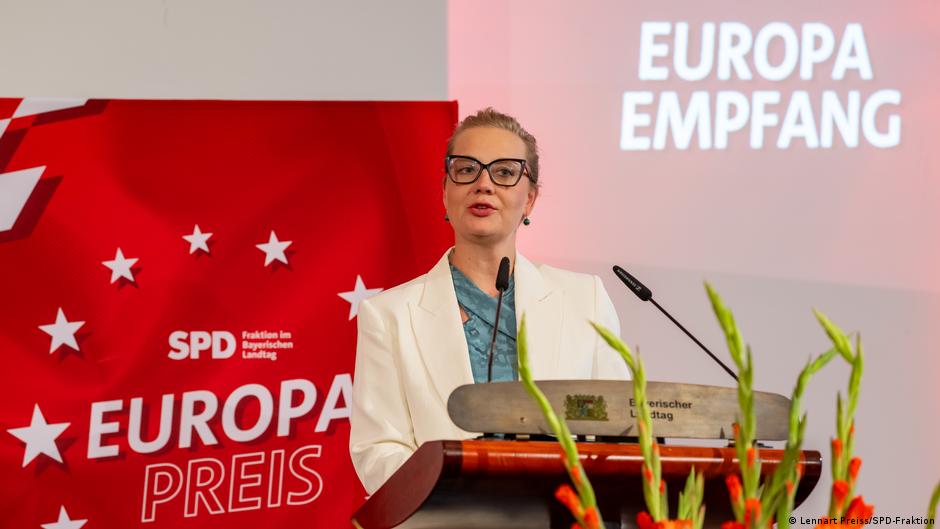
The Social Democratic Party (SPD) faction in the Bavarian Landtag has awarded Julia Navalnaya the European Prize in recognition of her steadfast resistance to the authoritarian Russian regime and her ongoing fight for human rights. The award ceremony took place in Munich on June 29, underscoring a broader European commitment to democratic values amid geopolitical tensions.
Symbolism and Political Significance
The Bavarian SPD faction's decision to honor Navalnaya is emblematic of the European Union’s broader response to Russia’s increasing authoritarianism under President Vladimir Putin. According to Holger Grießhammer, leader of the SPD faction in the Bavarian Landtag, Navalnaya's activism serves as a powerful example for all those who aspire to live freely and democratically in Europe with respect for human rights.
"Julia Navalnaya’s dedication exemplifies the courage needed to resist autocratic forces and defend fundamental freedoms," said Grießhammer.
Julia Navalnaya’s activism gained heightened significance after the violent death of her husband, opposition leader Alexei Navalny, in February 2024. Rather than retreating, she has intensified her opposition to the Kremlin’s authoritarian policies, embodying resilience in the face of repression.
At the ceremony, Navalnaya expressed her belief in the shared history and fundamental values that connect Russia and Europe. She emphasized that Russia’s future lies in embracing democracy, human rights, and the rule of law.
"I will continue to work towards a free and peaceful Russia, and I am thankful to Europe for defending these values and supporting those who protect them," she affirmed.
Historical Context and Economic Implications
The European Prize, awarded annually since 2018 by the SPD faction in Bavaria, recognizes individuals who have made outstanding contributions to promoting European ideals and the values of the European Union. This award can be viewed within the broader context of Europe’s historical struggle to uphold democratic governance and human rights in the face of authoritarian pressures.
The ongoing conflict between Russia and Western Europe has significant structural economic consequences. Sanctions and political tensions affect trade, energy security, and investment flows between the two regions. Navalnaya’s award highlights the political and moral dimensions of these economic disruptions, illustrating how governance models directly impact regional economic stability and cooperation.
The resilience demonstrated by figures like Navalnaya symbolizes the potential for political transformation that could eventually lead to greater economic integration and stability in Eastern Europe. Conversely, perpetuation of authoritarian regimes risks prolonged economic isolation and geopolitical fragmentation.
As Europe seeks to bolster democratic institutions and human rights, the recognition of Navalnaya’s efforts underscores the interplay between political activism and structural economic dynamics in the region.