Putin Endorses Gerhard Schröder as EU Negotiator in Ukraine Conflict Talks
Russian President Putin favors former German Chancellor Schröder as EU interlocutor amid evolving prospects for dialogue on Ukraine war resolution.
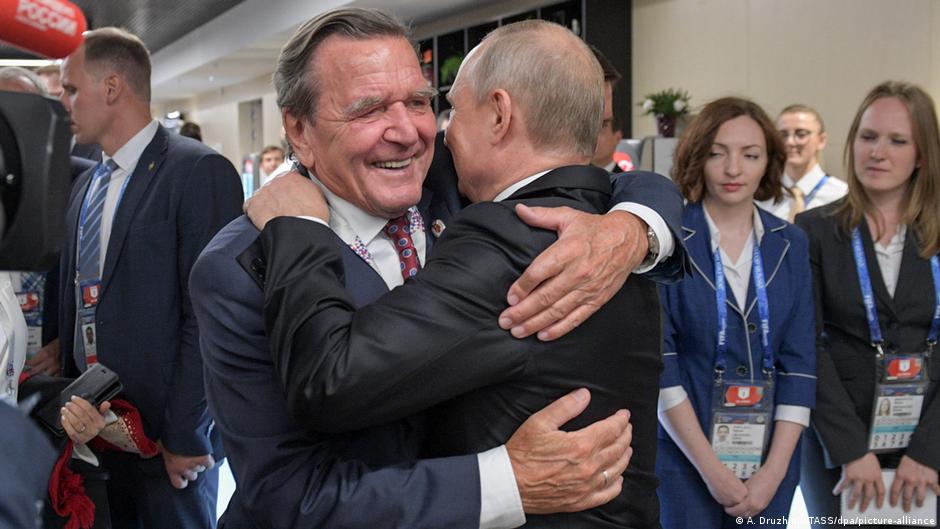
Amid ongoing conflict in Ukraine, Russian President Vladimir Putin expressed willingness for negotiations and identified former German Chancellor Gerhard Schröder as his preferred European Union representative in potential peace talks. This development signals Russia's strategic positioning as the war approaches a critical juncture.
Putin’s Proposal and the Role of Schröder
On May 9, 2026, during a press conference, Putin was asked whether there were Western European politicians with whom Russia could engage in dialogue. He responded by highlighting Gerhard Schröder as his favored candidate, citing Schröder’s close ties to Moscow and his historical role as a mediator in German-Russian relations.
“For me personally, the preferable European interlocutor is the former Chancellor of Germany, Mr. Schröder,” Putin stated, emphasizing the need for a negotiator without a history of antagonistic rhetoric toward Russia.
Putin’s insistence on a respectful counterpart stems from his assertion that Europe must select a negotiator who has not engaged in derogatory statements against Russia—a claim that contrasts with some of his own rhetoric since the invasion began.
Despite Russia’s oftentimes hostile language toward the West, including derogatory slurs aimed at European politicians in late 2025, Putin maintains that Russia has historically approached the European Union with respect. Nevertheless, he reaffirmed opposition to Finland's NATO membership, threatening symbolic and verbal reprimands for what he perceives as territorial ambitions against Russia.
Contextualizing Schröder’s Role and Russian Strategy
Gerhard Schröder’s involvement is notable given his post-chancellorship roles, including chairmanship of the Nord Stream pipeline operator and Rosneft’s board—positions that underscored his close business and political ties to Russia. German media often describe him as a Kremlin ally and an advocate for Russian interests within Germany. Throughout the war, Schröder has maintained a pro-Russian stance; in early 2026 he criticized the “demonization” of Russia and advocated for resuming Russian energy supplies to Europe.
Putin’s endorsement of Schröder can be interpreted as a strategic move to leverage a trusted intermediary with established credibility in both Moscow and parts of Europe. This choice also reflects broader geopolitical dynamics where Russia seeks to engage through figures perceived as sympathetic or less adversarial, potentially facilitating dialogue amid stalemate conditions.
Negotiation Prospects and Challenges
Though Putin expressed openness to a meeting with Ukrainian President Volodymyr Zelensky in a neutral country, he emphasized that any such engagement must rest on agreements with long-term historical viability. Officially, Russian-Ukrainian negotiations have not resumed, as confirmed by Russian Foreign Minister Sergey Lavrov in April 2026.
Putin also relayed that Slovak Prime Minister Robert Fico communicated Zelensky’s willingness for a leaders-level meeting. However, Ukraine has repeatedly dismissed Russian and Belarusian invitations for summit talks on their respective territories, signaling deep mistrust and ongoing tensions.
The complexities of the Ukraine conflict, intertwined with Europe's energy dependencies and political fractures, magnify the challenge of establishing credible negotiations. Russia’s selection of Schröder, a figure intertwined with Europe's energy infrastructure and known for his Kremlin ties, underscores the enduring economic and political undercurrents shaping the crisis.
Interestingly, Putin’s preference for Schröder parallels past Kremlin efforts to influence U.S. negotiation dynamics, as revealed in 2025 reporting on attempts to promote Steve Witkoff—a businessman with limited political adherence—as a favorable mediator in Washington.
Such maneuvers highlight a pattern in Russia’s diplomatic approach: favoring interlocutors with business backgrounds or personal loyalties that may bypass conventional diplomatic protocols, thus enabling Moscow to pursue its strategic interests under different guises.
Economic and Structural Implications
Schröder’s selection also reflects the structural economic dependencies that continue to link Russia with key European actors despite the conflict. Nord Stream and energy ties remain pivotal: they are both conduits of economic interdependence and geopolitical leverage. The war has accelerated Europe’s efforts to diversify energy sources, but the legacy of past engagements, such as Schröder’s involvement, complicates the reconstruction of trust and cooperation.
Ultimately, Putin’s public positioning suggests Moscow’s intent to shape the negotiation framework by embedding trusted figures who bridge the economic and political spheres. This strategy aims to recalibrate Europe-Russia relations amid a volatile geopolitical environment and a protracted conflict with profound economic consequences.