Republican Lawmaker Seeks Pentagon Chief’s Impeachment Over Iran War
Thomas Massie’s resolution challenges Pete Hegseth’s authority and revives a fundamental dispute over Congress’s power to authorize war.

Republican Representative Thomas Massie has introduced a resolution to impeach US Defense Secretary Pete Hegseth, accusing the Pentagon chief of exceeding his authority in connection with the war against Iran and other overseas military operations.
The proposal was submitted to Congress on Monday, November 9, according to the German news agency dpa. Its emergence creates an unusual intra-party confrontation: Massie, a Republican representing Kentucky, is seeking the removal of a senior official serving under Republican President Donald Trump.
The 34-page resolution contains eight articles of impeachment. Three concern the war with Iran, which Massie alleges Hegseth began without congressional authorization. The document also refers to combat operations in Yemen, reported US military strikes on vessels described as belonging to drug traffickers in the Caribbean, and the capture of Venezuelan President Nicolás Maduro.
“He abuses the powers of his office by disregarding congressional resolutions concerning the power to declare war, kidnapping foreign leaders and intimidating critics of the Trump administration by targeting them for exercising their right to free speech,” Massie said.
A constitutional dispute with economic consequences
At the center of the resolution is a longstanding institutional conflict over the division of war powers in the United States. Congress holds the authority to declare war, while the president serves as commander in chief. Successive administrations have nevertheless relied on executive authority, existing authorizations and narrower legal arguments to conduct military operations without a new formal declaration of war.
Massie’s challenge therefore extends beyond Hegseth’s personal conduct. It raises the question of whether elected legislators can impose effective limits on military commitments once an operation has begun. That issue carries structural economic implications because armed conflicts shape federal spending, borrowing needs, commodity markets, trade routes and investor expectations. A prolonged confrontation involving Iran can be especially consequential because uncertainty in the Middle East can affect energy supply expectations and transportation costs far beyond the immediate theater of war.
The references to Yemen, Caribbean interdictions and Maduro’s capture also broaden the dispute. Rather than treating the Iran war as an isolated decision, the resolution portrays a wider pattern in which military power is allegedly being used without sufficient legislative control. If Congress accepts that framing, the case could influence how future administrations calculate the political cost of acting first and seeking approval later.
If lawmakers reject it, the practical result may be further consolidation of executive discretion over foreign military operations. For businesses and markets, that would preserve a familiar but uncertain model: major geopolitical risks can emerge rapidly through executive decisions, while congressional scrutiny follows after financial and strategic commitments have already been made.
High procedural and political barriers
The House of Representatives is expected to consider Massie’s proposal this week. A simple majority in the lower chamber would be sufficient to impeach Hegseth and send the case to the Senate. Conviction and removal would then require a two-thirds Senate majority, a threshold dpa described as extremely difficult to reach even after Democrats gain control of the upper chamber following the midterm elections.
That arithmetic makes removal unlikely unless support expands substantially across party lines. The resolution may nonetheless matter even if it fails. Impeachment proceedings can force lawmakers to state publicly whether they regard the disputed operations as legitimate, potentially establishing a political record that affects future funding battles and oversight of the Pentagon.
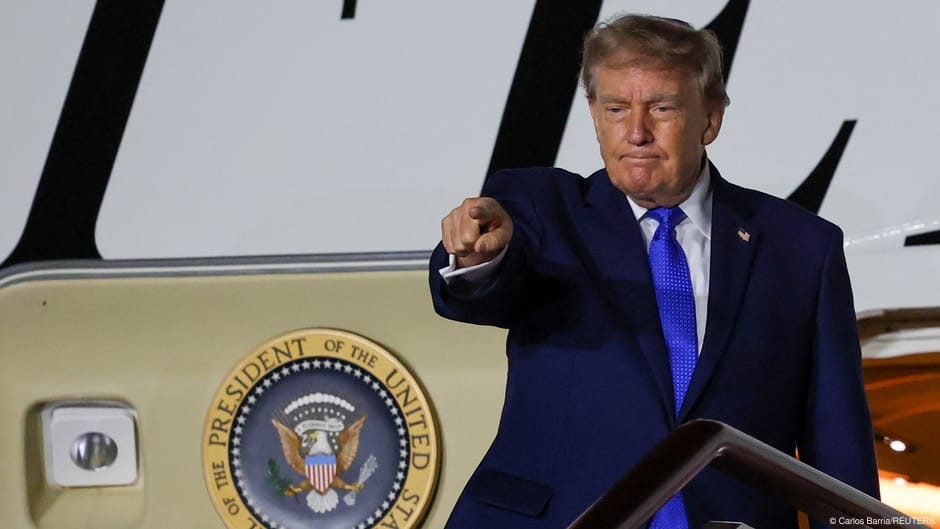
Trump defended Hegseth, saying the defense secretary had “done a very good job.” The president dismissed Massie as a “complete loser.” Hegseth said the impeachment effort did not concern him and announced that he would hold a Pentagon briefing on the subject on November 10.
The personal conflict between Trump and Massie adds another dimension to the institutional dispute. Massie played a key role in securing the release of documents connected to the late financier Jeffrey Epstein, who was convicted of sexual offenses. Trump initially opposed publication but later yielded to congressional demands. In Kentucky’s Republican primary, Trump has endorsed a challenger seeking Massie’s House seat.
That history means the impeachment proposal will be interpreted both as a constitutional challenge and as part of a struggle over discipline inside the Republican Party. Yet reducing it entirely to personal rivalry would overlook the larger stakes. Decisions about war redistribute public resources, expose the federal budget to open-ended obligations and can alter energy, shipping and security costs across the global economy.
The immediate vote will test Massie’s support in the House. The more durable question is whether Congress can translate its formal authority into practical control over military action. The answer will affect not only the balance among US institutions but also the predictability of the economic environment in which governments, companies and households respond to geopolitical shocks.