Russia Expands Kamenka Military Base Near Finland to Division Scale
The planned increase to 11,000 troops signals a lasting reallocation of Russian state resources toward its northwestern frontier.
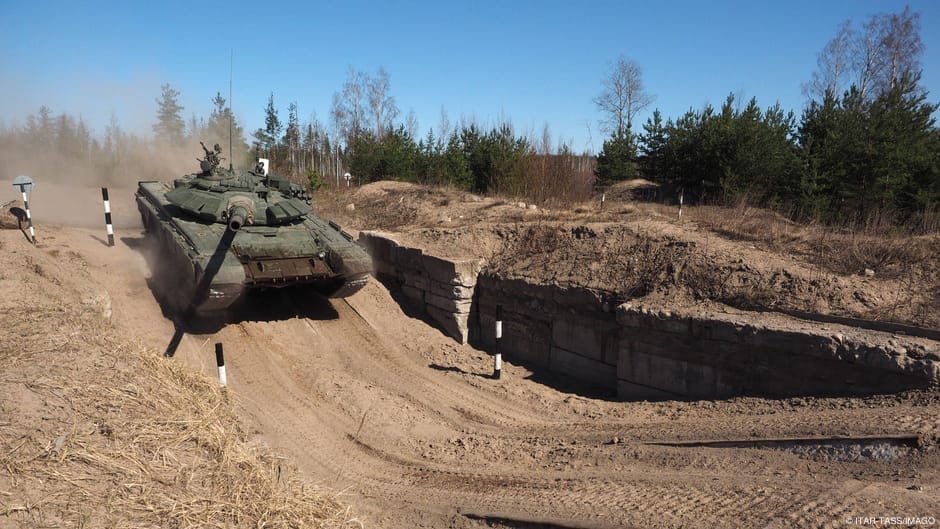
Russia is rapidly rebuilding the Kamenka military settlement in Karelia, about 60 kilometers from the Finnish border, as it continues forming a motorized rifle division expected to reach 11,000 personnel. The construction program, reported by Finland’s Yle media company after an analysis of satellite imagery, points to more than a short-term military deployment: it suggests a durable expansion of the economic and logistical infrastructure supporting Russia’s northwestern defense posture.
According to Yle, numerous buildings were demolished during the current year and construction of new facilities began. In the southern part of the settlement, several older vehicle hangars, maintenance buildings and other structures were removed. Two canteens and two barracks were also demolished. Another site west of Kamenka reportedly saw the removal of large vehicle hangars.
The works extend beyond strictly military facilities. Residential buildings occupied by service members’ families are also being modernized. Interfax reported that Gazprom connected 22 apartment buildings in Kamenka to the natural gas network in the autumn. The utility upgrade indicates that the expansion is being supported by permanent civilian infrastructure rather than temporary accommodation alone.
From brigade footprint to division economy
Yle reported that a brigade of approximately 4,400 troops had been stationed at Kamenka since the late 1990s. The settlement now hosts the 69th Motorized Rifle Division, whose formation is still under way and whose expected strength is 11,000 personnel. That planned increase would make the local military establishment roughly two and a half times the size of the former brigade in personnel terms.
“Kamenka hosts the most powerful formation of the Russian Ground Forces in the Finnish direction. The large military settlement and adjacent training areas are used by the 69th Motorized Rifle Division.”
For the surrounding economy, the transition from brigade to division scale carries structural consequences. A larger formation requires more housing, utilities, food services, maintenance capacity, training grounds and transport support. The demolition of obsolete buildings alongside the construction of replacements is therefore economically significant: it reflects not only additional spending, but a change in the type and expected longevity of the military presence.
In May, the Finnish newspaper Iltalehti reported that infrastructure at Kamenka was being expanded, including the construction of new firing ranges. Taken together with the new buildings and residential gas connections, the works show several layers of investment proceeding at once—combat training, equipment support and household services.
Yle said members of the division are fighting in Ukraine, including in the Kharkiv area. That creates a dual demand on the military system: personnel and equipment must support current operations while facilities in Karelia are enlarged for the division’s longer-term organization. Economically, simultaneous operational and construction requirements place competing claims on public procurement, building materials, transport capacity and skilled labor. The precise cost of the Kamenka program was not reported, so its fiscal scale cannot be quantified from the available information.
A wider military construction corridor
Yle estimated that about 8,000 people currently live in the Kamenka military settlement and the adjacent residential area. If the division reaches its planned strength, the relationship between the base and the surrounding settlement will change further. More troops do not translate mechanically into an equal increase in the resident population, but the target implies greater demand for services and supporting infrastructure.
Construction is also taking place at the neighboring military settlement of Kirillovskoye, known in Finnish as Perkjärvi, approximately eight kilometers east of Kamenka. According to Yle, one large building complex and two smaller hangars were constructed there last year. Journalists were unable to determine the complex’s exact purpose.
The proximity of the two sites matters economically because military investment can operate as a local network rather than as an isolated project. Kamenka’s barracks, housing and training facilities, combined with new capacity at Kirillovskoye, may create shared demand for roads, energy, maintenance and supply services. That interpretation remains an inference from the reported construction pattern, since the function of the new Kirillovskoye complex has not been established.
NATO enlargement reshapes spending priorities
The large-scale reconstruction was not unexpected. Russia had previously said it would strengthen its forces in response to Finland and Sweden joining NATO. Kamenka therefore illustrates how a geopolitical change can become embedded in physical capital: diplomatic realignment is followed by barracks, hangars, firing ranges, utility connections and residential modernization.
The historical parallel lies within Kamenka itself. For more than two decades, its military economy was organized around a brigade of about 4,400 personnel. The move toward an 11,000-strong division reverses that relatively stable footprint and establishes a larger fixed-cost base near Finland. Once housing, energy networks and training infrastructure are expanded, they can lock in operating and maintenance expenditures for years, even if immediate strategic conditions change.
For Karelia, such spending may support construction activity and demand for local services, but it also deepens dependence on state military expenditure. At the national level, the project represents a structural reallocation of resources toward defense infrastructure on Russia’s northwestern frontier. The reported works do not reveal the total budget or completion timetable, yet their breadth shows that the response to NATO enlargement is being translated into a permanent settlement system, not merely a change in troop designation.