Russian Drone Briefly Enters Poland as Civilian Risk Stays Response
Polish forces tracked the Russian drone and cleared its destruction but withheld fire after it turned east, citing risks to civilians.
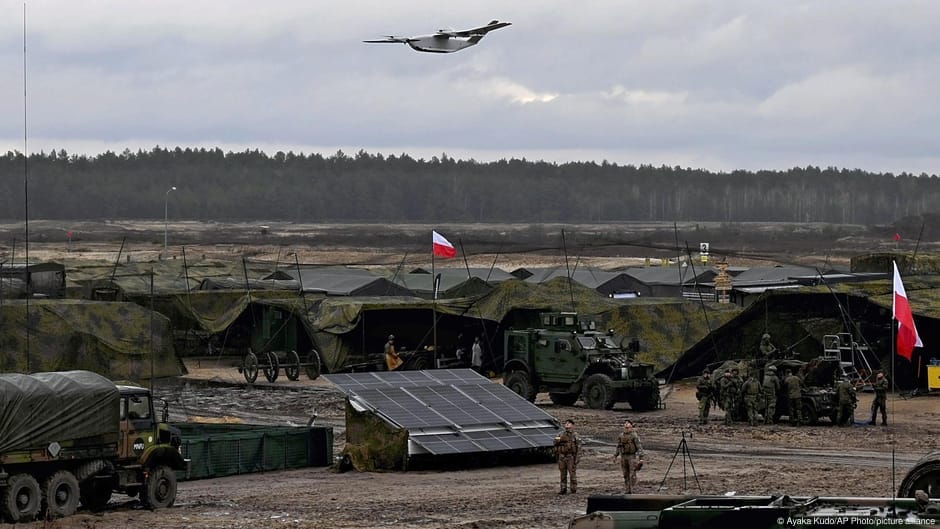
A Russian unmanned aerial vehicle briefly entered Polish airspace during an attack on targets in western Ukraine, confronting Warsaw with a calculation that is becoming increasingly important for economies along NATO’s eastern frontier: how to strengthen air defence without exposing civilians to the consequences of an interception.
Poland’s armed forces reported the incursion on the social media platform X during the night of Tuesday, November 24. According to the military, radar operators continuously monitored the drone while Russia was attacking sites in western Ukraine. Authorisation was granted to destroy the aircraft.
The drone subsequently changed course and headed east. Polish forces then decided not to use weapons, explaining that destroying the aircraft could have endangered civilians. The UAV left Polish airspace and continued eastward.
The decision illustrates the difficult trade-off between enforcing sovereign airspace and limiting the danger that falling wreckage or an interceptor could create on the ground.
Air defence carries an economic geography of risk
The episode underscores a structural problem for countries bordering an active war zone. Airspace protection is not simply a matter of detecting an object and launching a weapon. Authorities must consider the drone’s trajectory, the location of settlements and infrastructure, and the possible impact area of debris. A successful interception can still impose costs if wreckage falls in a populated district or damages transport, energy or commercial assets.
This makes the economics of defence more complicated than the price of radar systems, aircraft or missiles. Governments also bear the expense of maintaining surveillance, staffing command centres, issuing public warnings and keeping emergency services ready. Businesses and households may face disruption even when no object strikes its intended target. Repeated alerts can interrupt transport, production and public services, while uncertainty itself raises the value placed on redundancy and preparedness.
On the evening of November 23, authorities declared an air alert in Poland’s Lublin Voivodeship. Residents of border districts in the country’s southeast were asked to take shelter, according to the dpa news agency. The warning showed how military events across the Ukrainian border can quickly affect civilian routines inside Poland even when an intrusion is short-lived and no interception occurs.
From isolated incidents to sustained investment
The latest incursion followed another incident on November 20, when fragments of three Russian Kh-101 missiles fell in Poland. NATO subsequently announced that it was sending an AWACS reconnaissance aircraft to Poland to improve protection of the country’s airspace. The alliance decided to redeploy the aircraft after the missile-debris incident.
AWACS aircraft extend the surveillance picture available to military commanders, but their deployment also highlights the resource-intensive character of persistent air monitoring. As incidents accumulate, temporary precautions can evolve into durable commitments involving personnel, maintenance, training and coordination across allied forces. For public finances, that can mean recurring expenditure rather than a one-off emergency response.
Historically, states bordering major conflicts have often had to reorganise economic priorities around risks that originate beyond their territory. The instruments change—from fortified borders and civil-defence systems to radar networks and airborne surveillance—but the underlying fiscal choice remains familiar. Spending intended to prevent or contain external threats competes with other public priorities while also protecting the stability on which private investment depends.
Poland’s position gives the issue particular urgency. The country must protect NATO airspace while accounting for communities located close to Ukraine and beneath possible flight paths. The military’s decision not to fire after the drone turned east indicates that operational restraint can be part of defence policy, especially when the immediate threat is receding and the potential civilian cost of interception remains significant.
The broader consequence for border economies
For regional economies, the central question is whether such incidents remain exceptional or become a persistent feature of the security environment. A single short incursion may have limited direct economic impact. A pattern of incursions and alerts, however, can require greater investment in early warning, shelters, emergency communications and the resilience of critical infrastructure.
Those costs are not necessarily evidence of direct physical damage. Much of the burden comes from maintaining readiness for an event that may not occur. That resembles insurance: resources are committed in advance to reduce the potential losses from low-frequency but high-consequence events. The challenge for governments is to calibrate that protection without generating unnecessary disruption or accepting avoidable danger.
The November 24 episode therefore matters beyond the brief path of one drone. Polish forces detected the aircraft, tracked it continuously and received permission to destroy it, yet judged that firing after its eastward turn would create an unwarranted risk for civilians. Combined with the earlier discovery of Russian missile fragments and NATO’s AWACS deployment, the incident points to a longer-term shift in the economic and security demands placed on Poland’s eastern regions.