Russian Combined Strike on Zaporizhzhia Results in Civilian Casualties and Infrastructure Damage
Five dead and twenty wounded as Russian forces launch missile and aerial bomb attacks on Zaporizhzhia, impacting critical infrastructure and residential areas.
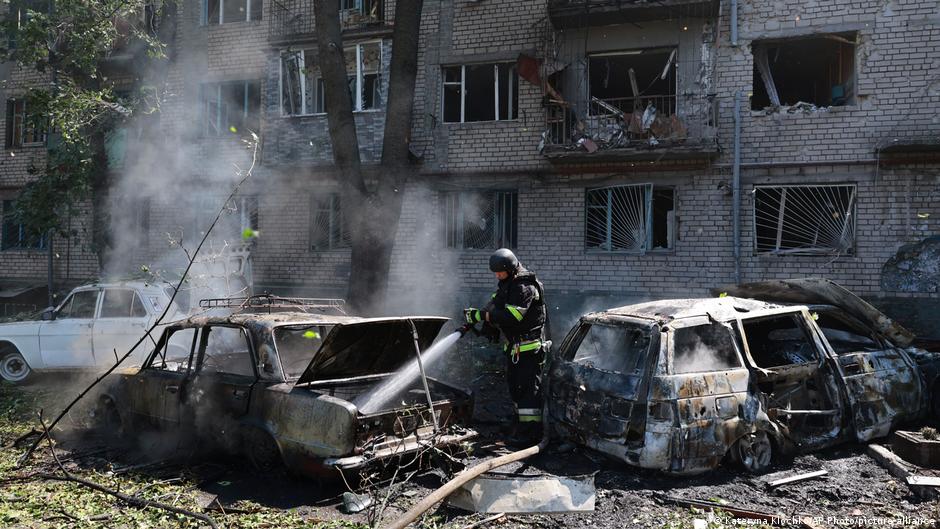
On the night of August 11, Russian armed forces executed a combined missile and aerial bombing strike on the city of Zaporizhzhia, Ukraine, resulting in significant civilian casualties and damage to key infrastructure. Ivan Fedorov, head of the Zaporizhzhia Regional Military Administration, confirmed five fatalities and twenty injuries following the attacks.
The Russian attacks targeted industrial facilities, residential buildings, non-residential structures, and a garage cooperative. The strikes caused widespread power outages and ignited fires across the city. Video footage released by Fedorov showed burning buildings and vehicles, underscoring the extent of the devastation.
Economic and Structural Implications of the Zaporizhzhia Attacks
Zaporizhzhia is a critical industrial hub in southeastern Ukraine, home to heavy industry and energy infrastructure. The recent strikes on its industrial sites risk disrupting manufacturing output and energy supplies that are integral not only locally but nationally. Damage to infrastructure, including residential and commercial properties, intensifies the humanitarian crisis and creates longer-term economic challenges for recovery and redevelopment.
"The combined missile and aerial bombing strike severely impacted Zaporizhzhia's industrial and residential infrastructure, signaling a strategic attempt to undermine Ukraine's economic resilience," said an analyst familiar with the region's economic landscape.
Moreover, the timing and scale of this attack reflect a broader strategic pattern observed in the conflict, where targeting industrial and energy assets serves to degrade Ukraine's economic potential and resilience. The knock-on effects include displacement of workers, interruptions in supply chains, and increased strain on municipal services tasked with emergency response and rebuilding.
In the capital city Kyiv, air raid alerts were repeatedly sounded during the same night amid fears of ballistic missile launches by Russian forces. Vitaliy Klitschko, Kyiv's mayor, reported at least one casualty and confirmed dispatching medical teams to affected districts. Similarly, in the Poltava region, remnants of Russian unmanned aerial vehicles (UAVs) fell on residential buildings, though no injuries were reported.
The escalation in attacks using precision-guided aerial bombs and UAVs points to an intensification of hostilities aimed at undermining civilian morale and economic infrastructure. The recent history of strikes on Zaporizhzhia includes the daytime use of guided aerial bombs and subsequent UAV attacks, resulting in at least 26 injuries previously documented in the region.
As these attacks continue, the economic consequences will likely manifest in disrupted industrial production, increased reconstruction costs, and weakened regional economic stability. The targeting of critical infrastructure in cities like Zaporizhzhia signals a strategic calculus that weighs short-term military gains against long-term economic degradation, complicating Ukraine's path to recovery and resilience.