Russian Ship Register Expands as Sanctions Pressure Shadow Fleet
A CREA analysis says 107 vessels entered Russia’s flag registry as open registries tightened access for ships carrying sanctioned cargo.
Russia’s ship registry has expanded sharply as sanctions pressure changes the operating calculus for the so-called shadow fleet that carries Russian energy exports. According to an analysis by the Centre for Research on Energy and Clean Air, published on Friday, September 25, the register of vessels sailing under the Russian flag grew by 36% between January 2025 and June 2026.
Over that period, 107 vessels were added to the list. The largest monthly increase came in December 2025, when 25 new entries were recorded. CREA links the acceleration to a shift among open registries that are becoming less willing to permit sanctioned cargo to be carried on shadow vessels.
The change points to a structural consequence of sanctions policy that goes beyond individual cargoes or specific companies. As flag states, maritime databases and enforcement systems tighten, the shadow fleet is being pushed out of some of the legal and administrative grey zones that helped it operate. The result is not necessarily disappearance. Instead, vessels face a narrower set of options: sail under false or unrecognized flags and risk detention, or move into the Russian ship registry.
Open Registries Tighten the Space for Evasion
CREA noted that Barbados and Palau have fully cleared their registries of sanctioned vessels. Panama, one of the largest flag states in global shipping, reduced the number of such vessels by almost two-thirds compared with its peak level in May 2025. The world’s largest ship registries have also launched a shared database, RISC, designed to combat reflagging and other forms of sanctions circumvention.
That administrative tightening matters because modern shipping depends not only on hulls, crews and cargo buyers, but also on documentation, insurance, port access and flag-state recognition. Open registries have long served global trade by allowing shipowners to separate commercial operations from national ownership. In the sanctions era, that flexibility has also allowed vessels to move between jurisdictions in search of regulatory tolerance.
CREA’s analysis suggests that tolerance is narrowing. By June 2026, 46 vessels that had previously sailed under the flags of the Comoros or Gambia had been registered in Russia. Other vessels shifted to the flags of Sierra Leone and Equatorial Guinea, while some continued operating without a recognized flag.
The economics of this shift are clear. A recognized flag can help preserve access to ports, counterparties and transactional infrastructure. But when reputable registries refuse sanctioned or high-risk vessels, Russia’s own registry becomes a fallback mechanism. That fallback may sustain flows of oil and fuel, but it also concentrates operational and reputational risk inside the Russian flag system.
A Fleet Built Around Sanctions Exposure
The composition of the newly registered vessels underlines the sanctions-driven nature of the change. Of the 107 vessels that entered the Russian register, 93 had previously been subject to sanctions, and 90 were under restrictions from more than one jurisdiction. CREA also found that vessels carrying Russian oil after the first sanctions were introduced changed flag three times more often than before. Sixteen of those vessels also carried Iranian or Venezuelan oil.
That pattern draws a historical parallel with earlier sanctions regimes, in which energy exporters under restrictions relied on complicated ownership structures, frequent name changes, ship-to-ship transfers and permissive registries. What appears different in the Russian case is the scale of integration with global energy markets. Russian oil and fuel remain commercially significant, and the shadow fleet is not a marginal workaround but part of a broader system for sustaining exports under constraint.
After moving to the Russian flag, vessels continued carrying Russian fuel around the world. CREA said oil worth 5.2 billion euros went primarily to China. Ship-to-ship transfer schemes in Egypt and the Red Sea were also used. Such transfers can complicate tracking and enforcement by changing the physical custody of cargo away from the original loading port.
For importers, especially those focused on price and supply security, these flows may provide discounted or politically insulated energy. For regulators, they create a moving target. Sanctions do not simply suppress trade; they redirect it through higher-friction channels, raising transaction costs and operational risks while preserving incentives for buyers and sellers to keep cargoes moving.
The Cost of Risk Shifting
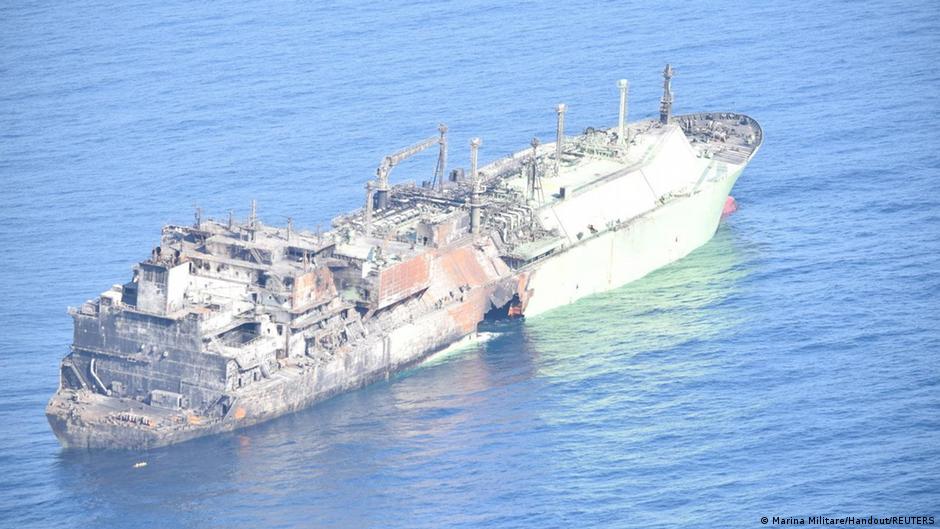
The fire aboard the Russian-flagged liquefied natural gas carrier Arctic Metagaz in the Mediterranean in March illustrated the wider economic and public-risk consequences of this system. Libya, Malta and Italy were forced to manage the crisis on their own.
“The Arctic Metagaz incident showed the Russian flag for what it really is: a shield for dangerous vessels that provides no support in the event of a disaster and leaves coastal states with the task of managing risks and dealing with the consequences,” analyst Luke Wickenden said.
The Arctic Metagaz is one of roughly ten LNG carriers used to transport sanctioned liquefied natural gas from Russia’s Arctic LNG 2 terminal to the port of Beihai on China’s southern coast. In February 2026, the vessel left the port of Murmansk after loading and was likely heading toward Egypt’s Suez port, according to gCaptain. Since 2024, the ship has been under sanctions from the United States and the United Kingdom.
The incident highlights a core economic externality of the shadow fleet: risk is often borne by coastal states, ports and maritime authorities that are not parties to the original commercial transaction. When vessels operate under weak oversight, disputed insurance arrangements or politically constrained flags, accident response can become fragmented and costly. The immediate crisis may be maritime, but the underlying issue is economic governance.
For Russia, the expansion of its registry provides a route to keep sanctioned energy logistics functioning. For the global maritime system, it marks a hardening divide between mainstream registries seeking to protect access to Western financial and insurance systems and a riskier fleet serving sanctioned trade. The CREA figures show that sanctions pressure is reshaping the institutional geography of shipping, not merely redirecting individual tankers.
The longer-term consequence may be a more bifurcated maritime economy. One side will be built around transparent registries, compliance databases and access to regulated finance. The other will rely on national shelter, opaque transfers and higher operational risk. Russia’s expanding flag registry is therefore not just a statistical anomaly. It is evidence of how sanctions, enforcement and energy demand are remaking the infrastructure of global trade.