Zelenskyy Tells UN Putin Is ‘Patient Zero’ for Global War Risk
Ukraine’s president framed Russia’s war as a widening economic and security contagion, tying oil revenues, energy attacks and attrition to global instability.
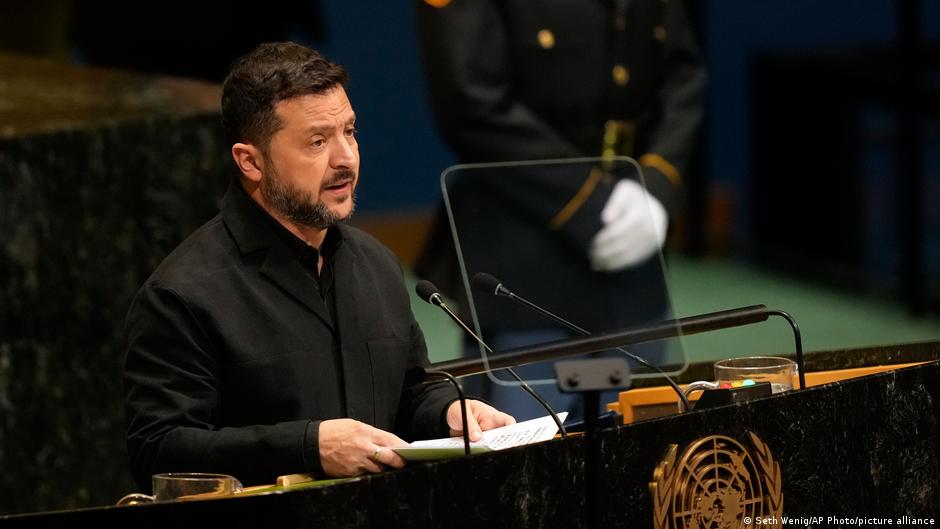
Ukrainian President Volodymyr Zelenskyy used his address to the United Nations General Assembly in New York on Wednesday, September 23, to recast Russia’s war not only as a military confrontation in Ukraine, but as a systemic threat with global economic consequences. Russian President Vladimir Putin, he said, is the “patient zero” from whom the idea of war is spreading around the world.
Wherever that idea spreads, Zelenskyy argued, it brings “only pain, instability, new risks and, of course, new crises.” His formulation was deliberately broader than the battlefield. It placed Russia’s invasion within a wider chain of costs: disrupted energy markets, rising security spending, pressure on public budgets, and the normalization of force as a tool of statecraft.
“He must not be allowed to act and must not be given the opportunity to spread this evil further,” Zelenskyy said, referring to Putin.
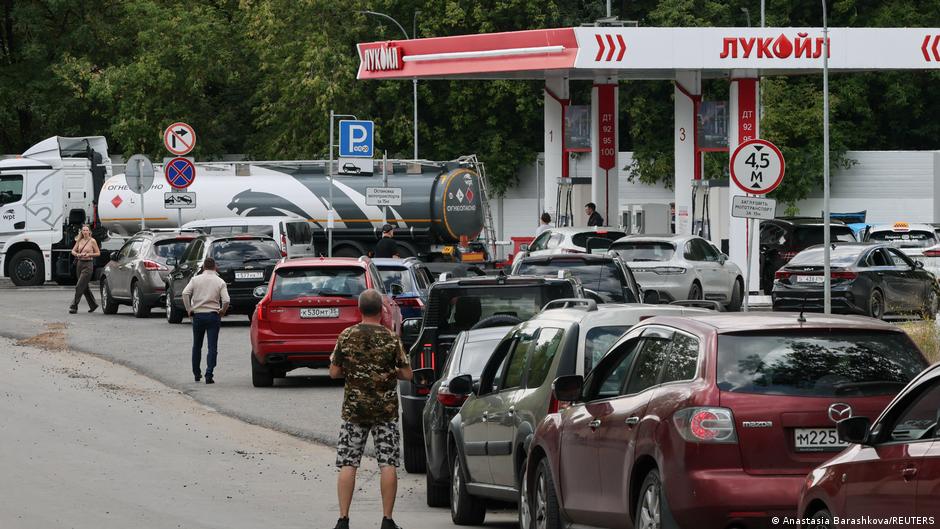
For an economics audience, the most consequential part of the speech was Zelenskyy’s emphasis on Russia’s oil industry. He said that, for the first time in Russia’s history, the sector that Moscow has long treated as a source of national pride is operating “on its last legs.” He described that as a humiliating defeat for a country with a permanent seat on the UN Security Council and a political identity closely tied to oil exports.
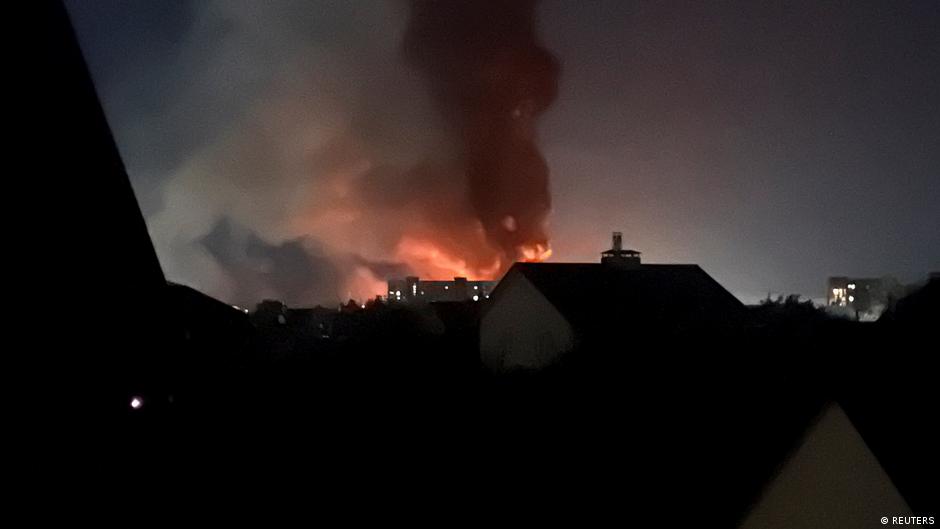
But Zelenskyy also made clear that Ukraine’s objective is not oil as a commodity, nor gasoline, diesel fuel, refineries or ports as ends in themselves. The target, he said, is Russia’s capacity to finance and prolong the war. That distinction matters. It frames energy infrastructure not as a symbolic prize, but as the fiscal machinery behind a long war of attrition.
Oil Revenue and the Economics of Attrition
Russia’s wartime economy depends heavily on its ability to convert commodity exports into budget revenue, industrial output and military resilience. Zelenskyy’s argument at the UN was that the war can be shortened only if that financial cycle is weakened. In that sense, his remarks echoed a long historical pattern: major wars are fought not only by armies, but by tax systems, shipping routes, fuel supply, industrial capacity and the state’s ability to keep absorbing losses.
The Ukrainian leader’s language also pointed to a structural tension inside Russia’s war model. A country that has projected power through energy exports now faces a conflict in which energy revenues, refining capacity and logistics have become strategic vulnerabilities. If Russia continues attacking Ukraine’s power grid and heating infrastructure, Zelenskyy warned, Kyiv would try to ensure that Russia’s “General Frost” changes sides this winter, an allusion to possible retaliatory strikes.
That warning tied the coming winter to a familiar economic pressure point. Energy systems are not merely military targets; they are the operating base of civilian life and industrial production. Attacks on power and heating can raise humanitarian costs, weaken productivity, disrupt logistics and impose large reconstruction burdens. At the same time, retaliatory pressure on Russia’s energy system would test Moscow’s ability to shield the revenue base that funds its military campaign.
Zelenskyy also highlighted the human cost of Russia’s advance. From January through August, he said, Russian forces lost 248,964 people on the battlefield in Ukraine. “Putin pays 248 people for every kilometer. Does anyone still consider him rational?” he asked. He added that citizens of 47 other countries are fighting on the side of the Russian army and are also dying on the battlefield.
Those figures, as presented by Ukraine’s president, were intended to challenge the assumption that Russia can indefinitely convert manpower into territorial gains. Economically, high casualty rates carry compounding effects: recruitment payments, compensation to families, labor market distortions, medical costs, demographic strain and the diversion of working-age people from civilian production. Even where authoritarian systems suppress political accountability, the economic arithmetic of attrition accumulates.
A Warning on Artificial Intelligence
Zelenskyy’s speech also looked beyond the current phase of the war. He warned that as soon as next year there is a real possibility that decisions on the battlefield could begin to be made by artificial intelligence, and not only by humans. “We need peace before we reach that point,” he said.
That warning widens the economic frame further. Wars often accelerate technologies that later reshape civilian markets, regulation and state capacity. Artificial intelligence in battlefield decision-making would raise not only military and ethical questions, but also industrial ones: which countries control the relevant models, sensors, chips, data systems and autonomous platforms; how quickly defense procurement adapts; and whether escalation risks become harder to price or contain.
The timing of Zelenskyy’s remarks underscored the urgency. According to an analysis by AFP, during the first 18 days of September there were more Russian strikes than in any full month since the start of the war in Ukraine, with the exception of March 2022. That suggests not de-escalation, but intensified pressure on Ukraine as the conflict moves toward another winter.
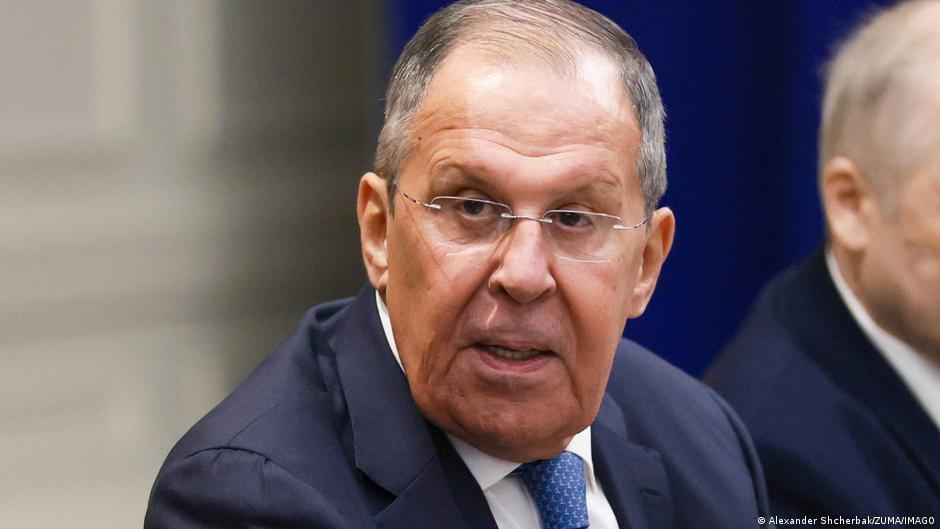
Russia’s diplomatic posture at the UN offered little sign of a pause. Russian Foreign Minister Sergey Lavrov told the UN Security Council that there would be no “break” in hostilities. Taken together, the statements from Kyiv and Moscow indicate that the war remains locked in a costly cycle: Russia signaling persistence, Ukraine seeking to weaken the economic base of that persistence, and both sides preparing for the next technological and energy phase of the conflict.
For global markets and policymakers, Zelenskyy’s address was therefore more than a wartime appeal. It was an argument that the war’s fiscal, energy and technological consequences are no longer containable within Ukraine’s borders. If Putin is, in Zelenskyy’s phrase, the “patient zero” of a spreading idea of war, then the policy response he is demanding is also systemic: constrain the financing, reduce the incentives for escalation, and prevent the conflict from setting precedents that other states can copy.