Spain’s Transport Minister Resigns After Toledo Rail Disaster
Óscar Puente’s departure intensifies scrutiny of rail safety, public investment and political accountability after a deadly year on Spain’s network.
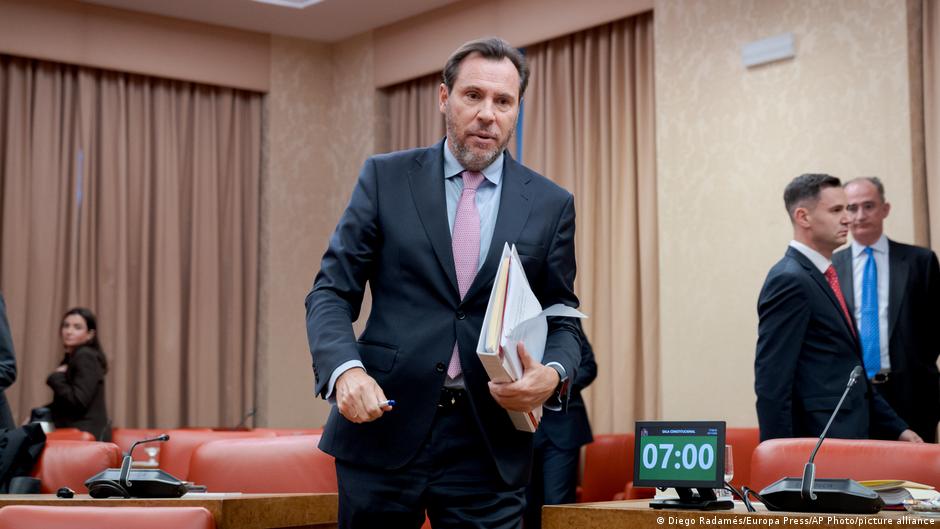
Spain’s transport minister, Óscar Puente, has resigned following the railway disaster near Toledo that killed 69 people, turning a transport safety crisis into a wider test of political accountability and the state’s management of critical infrastructure.
Puente announced his departure on Tuesday evening, November 3, while appearing before a parliamentary commission in Madrid. He also said he would not stand in the country’s early parliamentary elections. The announcement came almost a week after the collision near the town of Urda and followed sustained demands for his resignation from every opposition party.
“A minister cannot remain in office after two disasters of this magnitude in less than one year. It is a question of political dignity, responsibility and political sensitivity,” Puente said.
The resignation was unexpected because both Puente and Prime Minister Pedro Sánchez had repeatedly ruled out such a step, according to the dpa news agency. The reversal suggests that the political cost of remaining in office had become greater than the disruption associated with changing leadership during an investigation and an election campaign.
A deadly collision on a strategic corridor
The latest disaster occurred at 8:53 a.m. on October 28 near Urda, in Toledo province, on the Madrid-Seville high-speed line. Passenger train AVE 2080 struck the rear carriage of Iryo 6076, which was stationary on the tracks. Sixty-nine people were killed and more than 50 were injured.
Investigators are focusing on the failure of the automatic train protection system and on possible errors in instructions issued by the traffic control center. That focus distinguishes the Urda inquiry from the investigation into another major crash earlier in the year near Adamuz, where damage to the railway track is being considered as one possible cause.
The Adamuz disaster occurred on January 18 on the Madrid-Málaga high-speed route and involved two trains. It killed 46 people and injured another 150 to varying degrees. Altogether, Spain has recorded seven railway accidents involving passenger injuries since the beginning of 2026.
The concentration of incidents raises an economic question extending beyond the immediate technical causes: whether the institutions responsible for Spain’s railways have sufficient capacity to maintain infrastructure, supervise operations and respond to risks across an extensive network. A single accident may be traced to an isolated defect or error. A sequence of passenger incidents creates pressure to examine maintenance practices, safety systems, staffing, procurement and coordination among infrastructure managers, operators and dispatch centers.
The economics of safety and public confidence
Hours before Puente announced his resignation, the Spanish government approved measures intended to improve railway safety. At its weekly cabinet meeting, it also authorized a €30 million assistance package for survivors and the families of those killed.
That package addresses the immediate human and financial consequences, but the larger economic burden is likely to be shaped by the preventive response. Enhanced inspections, replacement of vulnerable equipment, changes to automated protection systems and tighter operating procedures can require sustained expenditure rather than a one-off allocation. The central policy challenge is to distinguish urgent corrective action from measures that deliver durable reductions in risk.
Rail safety also has consequences for confidence in public services. High-speed lines connect major cities and support labor mobility, domestic tourism and business travel. When passengers begin to question the reliability of a network, the economic effects can extend to travel decisions, operating costs and the credibility of infrastructure policy. Even without a lasting fall in demand, disruption caused by inspections or revised procedures can impose costs on operators and travelers.
There is a further institutional issue. Modern railway systems distribute responsibility across political leaders, technical regulators, infrastructure organizations, train operators and control centers. That structure can improve specialization, but it can also make accountability harder to assign after a failure. Puente’s resignation establishes political responsibility at ministerial level, yet it does not determine the technical or legal causes of either disaster.
Political accountability versus structural reform
Ministerial resignations after major transport disasters have historically served as signals that governments accept responsibility for failures under their authority. Their practical value, however, depends on whether leadership change is accompanied by institutional reform. A resignation can restore some public confidence, but it cannot by itself repair tracks, strengthen automated safeguards or improve decisions inside a dispatch center.
For Spain, the immediate priority is to establish why a stationary Iryo train remained exposed to collision and why the AVE service was not stopped. The findings will determine whether the central weakness lay in equipment, operating rules, human decisions or a combination of factors. They will also shape the scale and direction of future investment.
The political timing complicates that process. Puente’s withdrawal from the early parliamentary elections ensures that the rail disasters will remain part of the campaign debate, while responsibility for implementing the government’s new safety measures will pass to a successor. Continuity will matter: investigations and infrastructure programs typically extend beyond a minister’s tenure.
The lasting economic significance of the Toledo catastrophe will therefore depend less on the resignation itself than on whether Spain converts the crisis into a credible program of risk reduction. The tests will be technical transparency, stable funding and the ability to apply lessons from both Urda and Adamuz across the wider railway system.