Support for Germany’s CDU/CSU Falls to 2021 Levels Amid Rising Far-Right Influence
Conservative bloc’s backing declines to 20% while far-right AfD leads polls, reflecting shifting voter loyalties ahead of key state elections
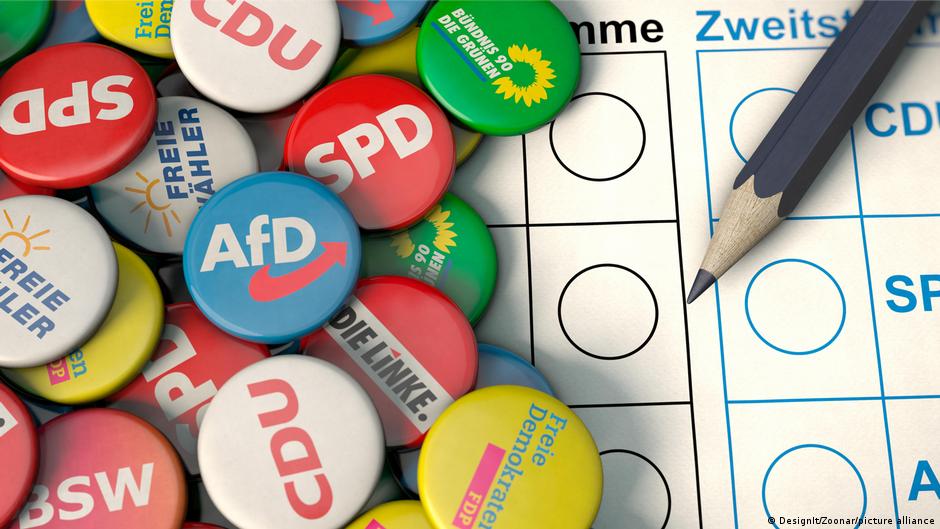
Support for Germany’s conservative Christian Democratic Union and Christian Social Union (CDU/CSU) has dropped to 20%, its lowest level in five years, according to recent polling by the INSA institute. The far-right Alternative for Germany (AfD) remains the leading party with 28% support, signaling a significant realignment within the German political landscape as the country approaches critical state elections.
Changing Political Dynamics and Voter Volatility
The CDU/CSU, long a pillar of Germany’s postwar political order, now finds itself at a nadir reminiscent of support levels seen in 2021. The decline is notable given the bloc’s role in the current governing coalition. Meanwhile, the AfD, known for its anti-immigration stance and nationalist rhetoric, holds a commanding lead in the polls. Environmentalist Green Party support remains steady at 13%, while the Social Democratic Party (SPD) and the Left Party each maintain around 12% support.
“Polls capture voter sentiment at a given moment but the erosion of traditional party loyalties and late decision-making by voters add layers of unpredictability,” experts observe.
If federal elections were held imminently, the liberal Free Democratic Party (FDP) would just clear the 5% threshold necessary for Bundestag representation, while the left-populist Sahra Wagenknecht-led "Union" bloc would remain below the 5% barrier.
The upcoming elections in September for the federal states of Saxony-Anhalt, Mecklenburg-Vorpommern, and Berlin are particularly significant. In Saxony-Anhalt, the AfD is poised to potentially form a state government for the first time, underscoring the party’s growing regional influence. These contests serve as bellwethers for broader national trends and may foreshadow further shifts in Germany’s political equilibrium.
Implications for German Politics and Governance
These developments highlight a broader trend of political fragmentation and increasing volatility within the German electorate. Traditional party loyalties, which historically anchored German voters, are weakening. This erosion has been accelerated by multiple factors, including dissatisfaction with mainstream parties, socio-economic changes, and polarized debates over immigration, climate policy, and economic challenges.
Moreover, the trend toward last-minute decision-making by voters complicates the predictive power of opinion polls. The fluidity of voter preferences means that poll snapshots may not reliably forecast election outcomes, especially at the regional level where local issues and candidate profiles can strongly influence results.
The rise of the AfD and the relative decline of the CDU/CSU carry significant structural consequences. Should the AfD gain governing power in one or more states, it would mark a historic shift, challenging the postwar consensus and potentially altering policy directions on migration, European integration, and social cohesion.
From an economic perspective, political instability and the ascent of nationalist forces may complicate Germany’s role as the EU’s economic engine. Policy uncertainty could affect investment decisions, regulatory approaches, and Germany’s commitments to transnational economic frameworks. Additionally, internal political fragmentation might hamper coherent responses to economic challenges such as energy transition, inflation pressures, and demographic shifts.
As Germany navigates this period of political flux, analysts emphasize the importance of understanding these trends not merely as short-term fluctuations but as indicators of deeper structural transformations within the country’s political economy.