Tencent and Kaspi.kz Leadership Acquire Significant Shares, Signaling Strategic Expansion
Tencent joins Kaspi.kz’s major shareholders alongside management and US institutional investors, highlighting confidence in the fintech’s growth trajectory.
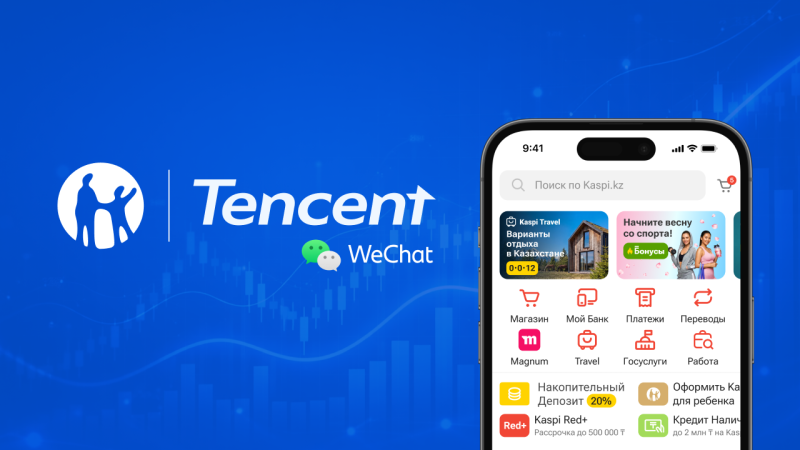
Kazakh fintech giant Kaspi.kz announced a major transaction involving Tencent Holdings, its co-founder and CEO Mikhail Lomtadze, key management, and long-term institutional investors from the United States. Together, these parties have acquired approximately six million American Depositary Shares (ADS) of Kaspi.kz from Baring Fintech Venture Funds, marking a significant reshaping of the company’s ownership structure.
Tencent’s Entry: Strategic Significance and Implications
Tencent, China’s largest technology conglomerate and the creator of the globally renowned super app WeChat with over 1.3 billion active users, has now become one of Kaspi.kz’s largest shareholders. Kaspi.kz’s CEO Mikhail Lomtadze expressed enthusiasm about welcoming Tencent, emphasizing the alignment of vision and strategic potential this partnership embodies.
“Tencent’s investment underscores their confidence in Kaspi.kz’s business model and long-term strategy,” stated Lomtadze, highlighting the management team’s simultaneous reinvestment as a strong vote of confidence.
Tencent’s portfolio extends beyond fintech and social platforms, holding notable stakes in global entertainment and gaming companies such as Universal Music Group (around 10%), VK (7.4%), Activision Blizzard, Ubisoft, Paradox Interactive (each approximately 5%), and Warner Music Group (1.6%). This diverse investment background suggests potential synergies and cross-sector opportunities for Kaspi.kz, especially as digital economies increasingly integrate fintech, entertainment, and e-commerce.
Kaspi.kz’s Growth Context and Market Position
Kaspi.kz has established itself as a major player in Central Asia’s digital economy, delivering a super app ecosystem that combines payments, e-commerce, an online supermarket, fintech services, travel, classifieds, government, and other functionalities. It serves over 25 million customers and 900,000 partners across Kazakhstan and Turkey, where it holds an 86% stake in Hepsiburada, a leading Turkish e-commerce platform.
This transaction occurs amid the broader global trend of fintech consolidation and the rise of super apps that embed multiple services into unified platforms. Tencent’s backing may accelerate Kaspi.kz's innovation trajectory, enabling the company to leverage Tencent’s operational experience and technological resources.
Institutional Confidence and Long-Term Vision
Beyond Tencent, the deal included participation from Spice Expeditions, an international fintech investment firm, and prominent U.S. university endowment funds such as Washington University and the University of Wisconsin Foundation’s WISIMCO. Their involvement underscores a growing international institutional confidence in Kazakh digital finance.
Kaspi.kz’s CEO reiterated that management’s personal investments in the transaction reflect a strong conviction in the company’s future prospects and validated business model. This alignment between leadership and investors is critical for navigating emerging market fintech landscapes, which often face regulatory, infrastructural, and competitive challenges.
Economic and Structural Implications
Kaspi.kz’s development mirrors historical patterns observed in digital financial ecosystems where local leaders partner with global technology giants to scale and diversify. The entrance of Tencent signals a possible strategic shift towards deeper integration of Kazakh fintech into global digital networks. This may spur increased capital inflows, innovation diffusion, and competitive dynamics within Central Asia’s financial services sector.
Moreover, Kaspi.kz’s super app model exemplifies the structural evolution of fintech platforms into multi-service hubs, suggesting a future where financial inclusion, e-commerce, and digital governance are increasingly interconnected. For Kazakhstan, this could mean accelerated digital transformation, enhanced consumer access to services, and improved economic resilience.
However, the influence of a major Chinese technology player also implies geopolitical and regulatory considerations, given the strategic sensitivities around data, technology transfer, and market control in post-Soviet economies.
Based on reporting by Deutsche Welle.