US and Iran Exchange Military Strikes Amid Tensions Over Strait of Hormuz Shipping Security
After Iran’s drone attack on a commercial vessel, US airstrikes targeted Iranian missile and drone depots, escalating regional security risks and impacting global oil markets.
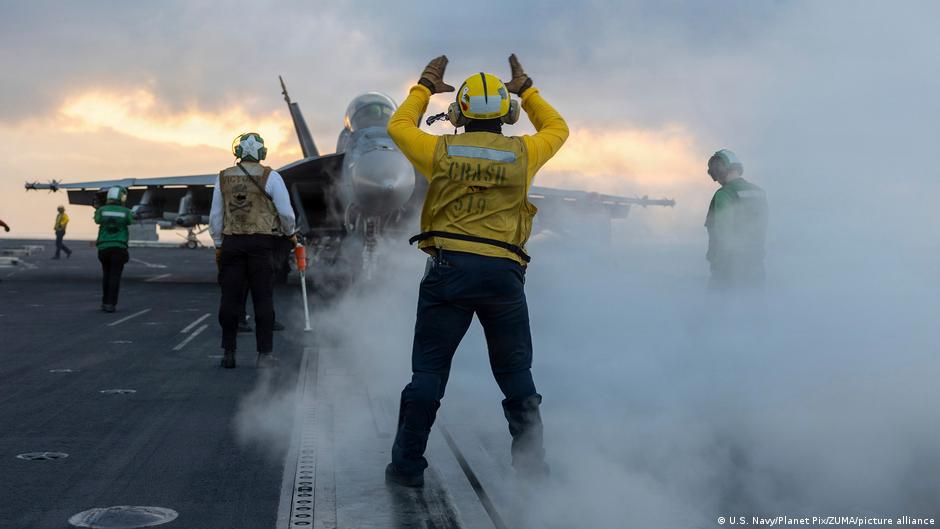
On June 26, 2024, the US Central Command (CENTCOM) announced targeted airstrikes against Iranian military facilities in response to an Iranian drone attack on the Singapore-flagged cargo ship Ever Lovely transiting the Strait of Hormuz. This incident marks a significant escalation in the fragile ceasefire environment established by the June 17 framework agreement between the United States and Iran, which sought to stabilize navigation through this geostrategically critical waterway.
Strategic Context and Immediate Developments
The Strait of Hormuz, a narrow passage connecting the Persian Gulf to the Gulf of Oman and the Arabian Sea, is a vital artery for global energy supplies, with an estimated 20% of the world’s petroleum passing through it. On June 25, Iran deployed a kamikaze drone to attack the Ever Lovely as it exited the strait along the Omani coast. CENTCOM cited this attack as a "clear violation of the ceasefire regime," prompting retaliatory strikes on Iranian missile and drone storage sites along with coastal radar installations.
In a swift countermeasure, Iran’s Islamic Revolutionary Guard Corps (IRGC) launched missile attacks on US military bases in the Middle East. The IRGC justified these actions by asserting that the US undermined Iran’s maritime control rights guaranteed under the ceasefire framework, which they claim legitimizes their authority over vessels transiting the strait. Tehran warned of "a more extensive response" should the US conduct further military provocations.
"The US, through various provocations, attempted to breach this commitment, to which a necessary response was delivered," declared the IRGC, highlighting the persistent contestation over maritime sovereignty in the region.
Economic and Geopolitical Implications
This episode has profound implications beyond immediate military confrontations. Firstly, the incident has disrupted operations coordinated by the International Maritime Organization (IMO) aimed at evacuating hundreds of vessels and over 11,000 mariners trapped in the Persian Gulf due to ongoing US-Israel tensions with Iran. The suspended evacuation exacerbates logistical bottlenecks, raising operational and insurance costs for maritime trade.
Moreover, the unrest has rekindled volatility in global oil markets. The Strait of Hormuz’s stability is crucial for energy security; any threat to free passage risks supply disruptions and price spikes. Following the attack, crude prices experienced upward pressure, reflecting market fears of prolonged instability.
Historically, the Strait has been a flashpoint for US-Iranian confrontation, notably during the Tanker Wars of the 1980s when both sides targeted commercial shipping to assert influence. The current flare-up echoes these tensions, underscoring the enduring challenge of balancing regional sovereignty claims against global economic imperatives.
US President Donald Trump condemned Iran's actions as a "stupid" breach of the ceasefire, emphasizing the use of at least four drones against ships transiting the strait. His remarks signal Washington’s determination to maintain freedom of navigation while deterring Iranian coercion through calibrated military pressure.
Structural Economic Consequences
Beyond immediate security concerns, the incident reveals deeper structural vulnerabilities in global energy supply chains. Dependence on chokepoints like the Strait of Hormuz exposes the international economy to geopolitical risks that can prompt sudden supply shocks. These disruptions ripple through commodity markets, inflation indices, and national economic planning.
Furthermore, the crisis highlights the limitations of diplomatic frameworks lacking robust enforcement mechanisms. The June 17 ceasefire agreement, while a positive step toward de-escalation, has yet to reconcile competing claims of maritime control or deter asymmetric tactics such as drone attacks. For global investors and policymakers, the episode underscores the necessity of diversified energy routes and enhanced conflict resolution protocols in high-risk areas.
In sum, the US-Iran exchange of strikes following the attack on Ever Lovely exemplifies the complex interplay between military actions, international law, and economic stability in a geopolitically sensitive region. The developments serve as a cautionary tale of how localized conflicts in strategic corridors can have outsized impacts on global markets and diplomatic relations.