German Authorities Grant Asylum to Russian Anti-War Activist After Prolonged Legal Struggle
Ilya Shkolny, an outspoken critic of the Russian regime, secures asylum in Germany following years of repeated rejections and legal challenges.
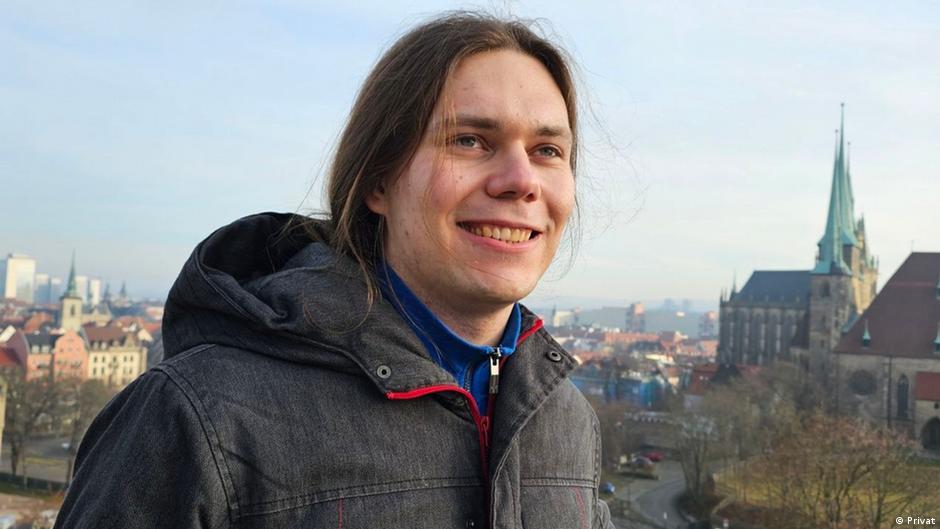
German authorities have finally granted asylum to Ilya Shkolny, a Russian anti-war activist who narrowly avoided deportation back to Russia in early 2026. This decision follows a protracted three-year legal battle marked by multiple rejections and appeals, highlighting the complex interplay between migration policies and political dissent in authoritarian contexts.
Protracted Asylum Struggle Amid Rising Political Repression
Shkolny's case sheds light on the evolving nature of political asylum claims in Europe, especially involving Russian nationals opposing the Kremlin's policies. A former volunteer in Alexei Navalny’s campaign (2017-2018), an active participant in the "Smart Voting" initiative in 2021, and a member of the Libertarian Party’s Moscow committee, Shkolny faced intensified risks following Russia’s full-scale invasion of Ukraine. His refusal to return to Russia stemmed from fears of conscription and political persecution.
Initially, Shkolny entered Germany on a 90-day visa designed for binational couples, intending to wed his German partner. However, his attempts to obtain asylum were twice denied by the Federal Office for Migration and Refugees (BAMF). The agency contended that the threat of military conscription alone did not suffice as grounds for protection and deemed the political risks linked to his activism insufficiently grave. Subsequent appeals emphasizing worsened repression—including new punitive laws, electronic summons to conscription, and harsher penalties—were also dismissed for lacking “new circumstances.”
Following these setbacks, Shkolny confronted additional administrative hurdles. His application for a residence permit based on marriage was also rejected, partly because the immigration office questioned the authenticity of the marriage due to the couple living separately, and partly due to BAMF’s assessment that he could safely return to Russia to obtain a visa before re-entering Germany.
“The German migration authorities initially underestimated the political and personal risks faced by activists like Shkolny, reflecting a broader challenge in asylum adjudication involving politically sensitive cases from Russia.”
Support from civil society played a crucial role in Shkolny’s eventual success. The human rights project InTransit intervened when he was detained in a deportation center in Hof, Bavaria, in March 2026. Members of the Bundestag, university students, and faculty from the University of Bayreuth also advocated on his behalf, alongside an online petition garnering nearly 2,500 signatures.
Broader Implications for Migration Policy and Russian Dissidents
Shkolny’s case illustrates the structural dilemmas faced by European asylum systems dealing with applicants fleeing authoritarian regimes. It highlights the tension between formal criteria—such as the perceived immediacy of threats—and the complex realities of political repression, which often unfolds gradually but with profound consequences for dissidents.
The German authorities’ eventual reversal signals a growing awareness of Russia’s deteriorating human rights environment and the evolving nature of political persecution beyond direct imprisonment or immediate physical danger. It also underscores the importance of coordinated advocacy between legal defenders, politicians, and academic communities in influencing migration decisions.
From a historical perspective, Shkolny’s ordeal recalls earlier waves of Russian political emigration, albeit in a legal landscape that has become more restrictive and bureaucratically complex. The case also adds to the discourse on how European states balance migration control with protections for political refugees amid geopolitical tensions.
In sum, the granting of asylum to Ilya Shkolny is not just a personal victory but a significant precedent in the ongoing negotiation of European migration policy and human rights safeguards in the era of authoritarian resurgence and international conflict.