U.S. Charges Russians Over Alleged Terror Financing Network
Prosecutors say RIS Network funded attacks on Ukraine's allies and plotted killings of Russian dissidents abroad.
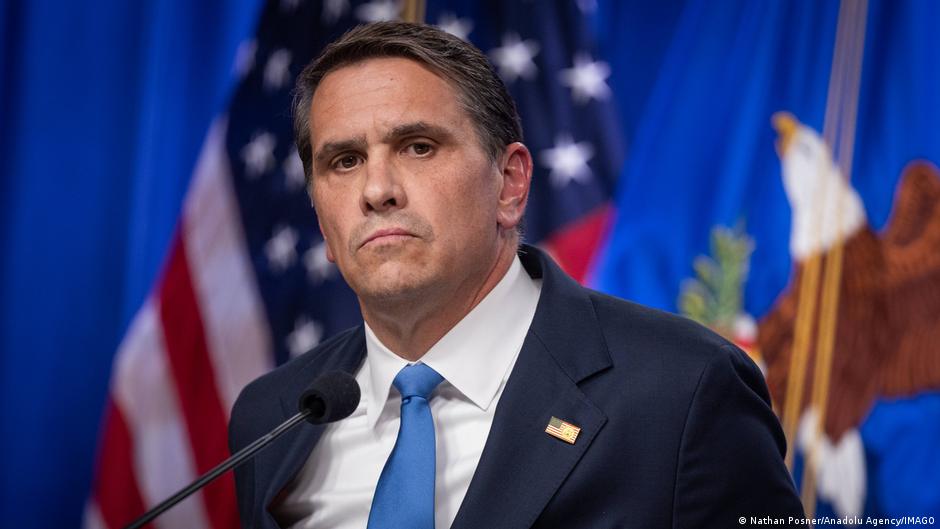
U.S. prosecutors have charged several Russian citizens in the Southern District of New York with suspected financing of terrorism and conspiring to carry out contract killings around the world, including on U.S. soil. The case, disclosed in a Justice Department press release on Tuesday, September 15, centers on what U.S. authorities describe as a global assassination network operating on behalf of Russian intelligence services.
According to the U.S. Attorney General's Office, the network, known as RIS Network, allegedly financed terrorist attacks against countries allied with Ukraine and prepared killings of Russian dissidents. Two of the named figures, Yuri and Kirill Khrameev, are alleged to have worked for RIS Network under instructions from Russian state security structures.
The indictment, as summarized by the Justice Department, alleges that the defendants paid individuals in the United States and other countries to conduct preliminary surveillance and carry out targeted killings. Prosecutors also allege that they instructed associates to commit and attempt terrorist attacks against civilian and military infrastructure in European countries that support Ukraine or are perceived as supporting it. The FBI took part in the investigation.
A Transnational Security Case With Economic Implications
Although the charges are criminal and national-security focused, the case also points to a wider economic problem: the cost imposed on open economies when geopolitical confrontation moves into clandestine finance, infrastructure sabotage and cross-border coercion. If prosecutors' allegations are proven, RIS Network would represent not merely an intelligence instrument but a mechanism for converting state objectives into payments, recruitment and operational activity across jurisdictions.
That structure matters for economies because it places pressure on financial surveillance systems, law-enforcement budgets, insurance pricing, infrastructure security and sanctions enforcement. Alleged payments for surveillance, assassination planning and attacks on infrastructure are not isolated criminal expenditures; they are flows that must move through, around or beneath formal financial channels. The more such networks operate internationally, the more governments and banks are forced to treat apparently ordinary transactions, travel patterns and business relationships as potential national-security risks.
The Justice Department says RIS Network is a division of the Russian state apparatus responsible for attacks abroad, including killings. According to U.S. authorities, the network has focused on Russian dissidents and defectors and, more recently, on countries considered allies of Ukraine. That alleged shift is economically significant because it ties political violence to the broader war economy surrounding Russia's invasion of Ukraine: the contest is not only over territory and military supply chains, but also over the resilience of European infrastructure, the security of diaspora communities and the financial systems used to sustain covert operations.
U.S. prosecutors allege the defendants tried to recruit U.S. citizens and foreign nationals to carry out killings on behalf of the Kremlin.
Assistant Attorney General for National Security John Eisenberg said the defendants attempted to recruit Americans and foreign nationals for killings commissioned by the Kremlin. ABC News, citing U.S. Attorney General Todd Blanche, reported that the charges also concern attempts to kill an unnamed Russian dissident whom the defendants believed to be in Washington, D.C.
The Named Defendants
U.S. authorities identify three of the accused as senior figures within RIS Network. Yuri Khrameev, also known by the nickname Colonel Yuri, is described as a former colonel in Russian special services who participated in recruiting people to carry out murders of Russian dissidents. His son, Kirill Khrameev, is described by U.S. prosecutors as an officer of the Federal Security Service, or FSB.
Another defendant is Oemis Romagoza Durruti, a Cuban citizen living in Russia, who is suspected of coordinating attacks by the network. Also named among those suspected of recruiting people for network assignments are Cuban citizen Yaidel Delgado Suarez, known by the nickname Viking, and Venezuelan citizen Angel Eduardo Castro.
The terrorism-financing charge carries a potential sentence of up to 20 years in prison for the five named defendants. Yuri Khrameev, Suarez and Castro are also charged with conspiracy to commit murder-for-hire, an offense carrying a potential sentence of up to 10 years. The defendants are currently wanted by U.S. authorities.
The case fits a longer historical pattern in which states and state-linked structures are accused of outsourcing coercive activity through intermediaries, deniable networks or transnational criminal-style logistics. During the Cold War, ideological and intelligence conflicts often relied on covert funding, cutouts and third-country operatives. In the current period, however, these activities intersect with much denser global financial infrastructure, faster communications and more integrated supply chains. That makes the economic consequences broader: a suspected plot against one dissident or one infrastructure target can ripple through compliance regimes, diplomatic relations, investor assessments and the cost of securing public assets.
For European countries that support Ukraine, the allegations highlight a structural vulnerability. Civilian and military infrastructure now carries both strategic and economic value: ports, railways, logistics hubs, energy systems and communications networks are essential to national output and to the delivery of aid. Threats against such infrastructure can raise security spending and introduce uncertainty into transport, energy and insurance markets, even before any physical damage occurs.
For the United States, the case adds another layer to the economic architecture of confrontation with Russia. Sanctions, export controls and asset freezes are only part of the response. Prosecuting alleged terror-financing and murder-for-hire networks signals that U.S. authorities are also treating clandestine payments and recruitment as financial-security threats. Banks, money transmitters and international businesses may face more scrutiny where transactions touch high-risk jurisdictions, politically exposed networks or individuals linked to security services.
None of the charges by itself proves guilt; the allegations will have to be tested through the legal process. But the indictment as described by U.S. authorities underscores how the conflict around Ukraine continues to expand beyond the battlefield. The alleged activity spans intelligence, finance, migration, infrastructure and diaspora politics. For policymakers and markets alike, that convergence is becoming one of the defining economic features of the war era.