US Conducts Targeted Strikes on Iranian Military and Infrastructure Amid Rising Tensions
The recent US military actions against Iran and Tehran's retaliatory strikes mark a significant escalation with profound regional economic and strategic implications.
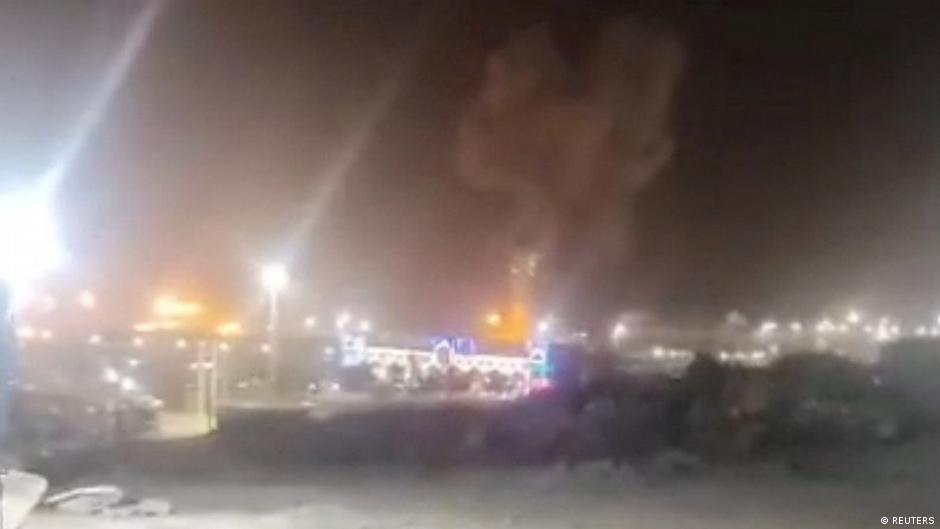
On July 16, the United States military executed two waves of strikes targeting Iranian military and infrastructure sites, alongside an attack on a tanker in the Persian Gulf. These operations triggered retaliatory attacks by Iran on US bases in Bahrain and Kuwait, escalating tensions in an already volatile region. The complex interplay of military actions and economic pressures underscores the broader strategic contest between the US and Iran, with significant consequences for regional stability and global energy markets.
Details and Scope of the US Strikes
The US Central Command (CENTCOM) reported that the first wave of airstrikes targeted locations in the port area of Sirik on the coast of the strategic Strait of Hormuz. This included three air raids on the major port of Bandar Abbas, a critical maritime hub. Additionally, near Qeshm Island, a facility producing fishmeal was partially damaged, signaling a reach beyond purely military targets to infrastructure components.
Iranian state agencies further reported that the strikes extended to Ahvaz in Khuzestan Province, as well as explosions heard in Rasak and the port of Kenarak in Sistan and Baluchistan Province. These provinces are vital in Iran’s oil export and trade logistics, highlighting the intent to disrupt Iranian economic lifelines.
The second phase of strikes targeted Iranian command centers, air defense systems, missile and drone installations, and coastal observation posts. According to CENTCOM, these actions aimed to diminish Iran’s capacity to threaten commercial shipping crews, particularly in the strategically crucial Persian Gulf.
Notably, no civilian casualties have been reported thus far, but the strikes demonstrate a calibration designed to degrade Iran’s military capabilities while minimizing broader humanitarian fallout.
Also targeted was an uncrewed oil tanker, the M/T Belma, flying the flag of Curaçao, attempting to breach the maritime blockade by entering an Iranian port. The US military disabled the vessel by firing Hellfire missiles at its smokestack after ignoring warnings, reinforcing the US commitment to enforcing maritime controls implemented since July 14.
Iranian Retaliation and Regional Economic Impact
In response, Iranian forces launched attacks on US military bases in Bahrain and Kuwait. Reports from Iranian media indicate at least ten explosions at the US Navy’s Fifth Fleet headquarters in Bahrain, with additional blasts recorded at the US base in Kuwait. These retaliatory strikes coincide with partial airspace closures by Saudi Arabia and Jordan, highlighting the volatility permeating regional air and maritime logistics.
Iranian air defense units affiliated with the Islamic Revolutionary Guard Corps (IRGC) claimed to have downed an MQ-9 American drone, underscoring the heightened kinetic exchanges and risks of miscalculation.
"This process will be very difficult, with many pauses and resumptions," stated US Vice President JD Vance, reflecting the complex and protracted nature of US-Iran relations amid ongoing economic and military pressures.
Vance emphasized that the US is employing a dual strategy: sustained economic sanctions combined with diplomatic engagement with more pragmatic Iranian factions. This nuanced approach aims to balance pressure with dialogue, yet the recent military escalations complicate prospects for de-escalation.
Economic and Strategic Implications
The US strikes and Iran’s retaliation reveal deepening fractures in a region critical to global energy supplies. The Strait of Hormuz alone facilitates the transit of approximately 20% of the world’s traded petroleum. Disruptions here not only threaten regional economies but also reverberate through global markets, potentially raising fuel prices and increasing volatility.
The targeting of ports and infrastructure critical to Iran’s export economy could exacerbate Tehran’s economic isolation, compounding the effects of existing sanctions. However, such actions risk provoking further military escalation and destabilization, which could deter commercial shipping and investment in the Gulf region.
Historically, interventions in this strategic maritime corridor have triggered cycles of retaliation and counter-retaliation, often with extended economic fallout. The current developments echo past conflicts such as the Tanker War of the 1980s, where naval confrontations disrupted oil supplies and escalated regional tensions.
In the broader geopolitical context, these events underscore the challenges of balancing military pressure with diplomatic channels to resolve protracted conflicts and safeguard economic interests. The US approach, combining blockades and targeted strikes with negotiations, reflects an attempt to apply maximum leverage without triggering full-scale war.
As Vice President Vance noted, the path ahead is uncertain and fraught with complexities. How the US and Iran navigate this perilous juncture will significantly influence not only their bilateral relations but also the economic stability of the wider Middle East and global energy markets.