US Court Rejects Trump Bid to Halt Certification of Alaska Senate Vote
The ruling limits federal intervention in a pivotal Senate race and underscores the economic importance of electoral certainty.

A US federal court has rejected an attempt by President Donald Trump’s administration to prevent certification of Alaska’s Senate election results if incumbent Republican Senator Dan Sullivan loses, ruling that the Justice Department lacked the necessary legal basis to bring the case.
The dispute arose from the candidacy of Daniel J. Sullivan Jr., a retired teacher who shares the senator’s surname. The administration argued that his presence on the ballot could confuse voters and potentially change the result in a contest regarded as crucial to the struggle for control of the US Senate.
The Justice Department asked the court to block official certification if Democrat Mary Peltola wins. It also sought an inquiry into whether voters who selected the second Sullivan had actually intended to support the incumbent senator.
In a 20-page ruling issued on Sunday, November 1, US District Judge Sharon Gleason concluded that federal authorities had not offered a practical way to conduct such an investigation without violating ballot secrecy. That problem went beyond procedure: determining the private intentions of individual voters after ballots have been cast would challenge one of the institutional safeguards on which electoral legitimacy depends.
Certification Risk and the Economics of Political Uncertainty
Although the litigation concerns election law, its broader economic significance lies in the relationship between orderly political transitions and confidence in public institutions. Certification converts votes into an official result, allowing governments, legislators, businesses and households to plan around a defined political outcome. Attempts to delay that process can prolong uncertainty over who will exercise legislative power.
That uncertainty matters especially when control of a chamber of Congress is at stake. The Senate influences the passage of legislation and the wider direction of federal policy. A close race capable of affecting control of the upper chamber therefore carries consequences beyond Alaska, even when the immediate legal dispute is focused on one ballot and two candidates with the same surname.
For investors and companies, the most important issue is not necessarily which party wins but whether established rules produce a timely and broadly accepted result. Predictable institutions reduce the risk surrounding long-term decisions. By contrast, unresolved election disputes can complicate expectations about future lawmaking and encourage businesses to delay commitments until the political balance becomes clearer.
The court’s reasoning reflects a longstanding structural tension in democratic systems: authorities may seek to investigate possible voter confusion, but the secret ballot prevents officials from reconstructing how particular citizens understood their choices. Ballot secrecy protects voters from pressure and retaliation, yet it also limits the remedies available after an election. Once votes have been cast anonymously, courts cannot easily separate mistake from deliberate preference.
The ruling found that the government had presented no workable mechanism for examining voter intent without breaching the secrecy of the ballot.
A Disputed Candidacy in a Strategic Senate Race
The lawsuit followed a report by The New York Times alleging that political consultants connected to Peltola may have been involved in recruiting the similarly named candidate. Peltola denies the allegation. Reuters said it was unable to verify the newspaper’s reporting independently.
Those claims supplied the political context for the administration’s case, but the ruling turned on legal authority and the feasibility of the requested remedy. Even if confusion were suspected, the government still needed to demonstrate both a valid basis for federal intervention and a method that a court could implement without undermining protected voting procedures.
After the decision, the Justice Department said it intended to appeal. The announcement keeps open the possibility of further litigation close to Election Day, although the federal court’s rejection means the administration did not secure the requested restriction on certification at this stage.
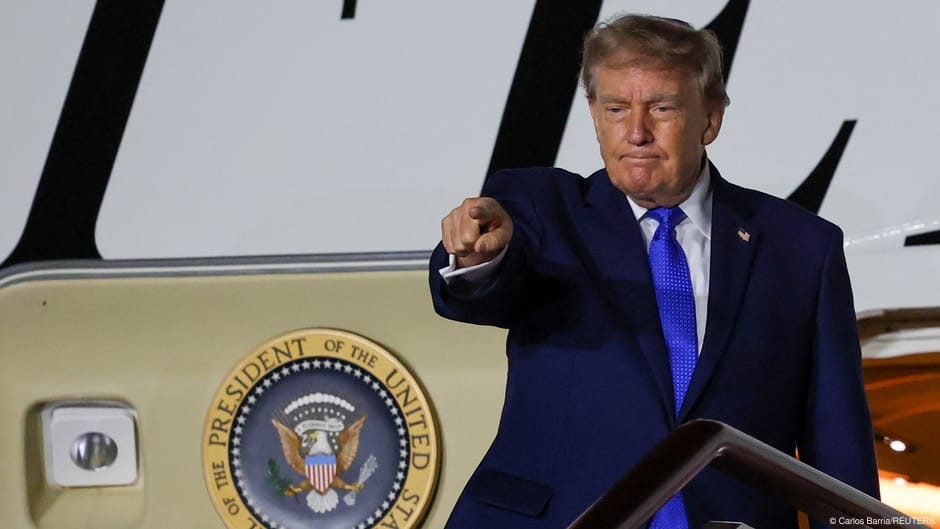
Trump responded on Truth Social by writing that the “fake Daniel J. Sullivan Jr. disappeared,” while again criticizing his political opponents. His intervention reinforced the national stakes surrounding a contest that might otherwise have appeared to be a regional dispute.
Institutional Constraints as Economic Infrastructure
The case illustrates why courts and election procedures function as a form of economic infrastructure. Markets depend not only on physical assets and financial institutions but also on rules that define political authority. Courts provide a mechanism for resolving disputes, while certification deadlines help prevent temporary uncertainty from becoming an extended institutional vacuum.
Historical election controversies have repeatedly exposed the trade-off between investigating irregularities and reaching finality. Every system needs channels for legitimate challenges, but it also needs a point at which results become authoritative. Without that balance, repeated litigation can weaken confidence in both the outcome and the rules governing it.
In the Alaska case, the proposed inquiry into subjective voter intent posed a particularly difficult limit. A vote for a candidate whose name resembles another candidate’s cannot automatically be treated as an error. Any attempt to reinterpret such ballots would require assumptions about individual choices that the secret ballot is designed to keep private.
The US midterm elections for the House of Representatives and Senate are scheduled for November 3. Alaska’s contest is considered one of the key races in the battle for the upper chamber. The outcome may consequently influence the balance of congressional power, while the legal fight will test how far federal authorities can go when claims of ballot confusion collide with voting secrecy and the need for a definitive result.