Uzbek-Afghan Business Forum Secures $300 Million in Trade Agreements Amid Regional Integration Efforts
A business forum in Herat facilitates $300 million in contracts between Uzbek and Afghan entrepreneurs, enhancing trade and economic ties.
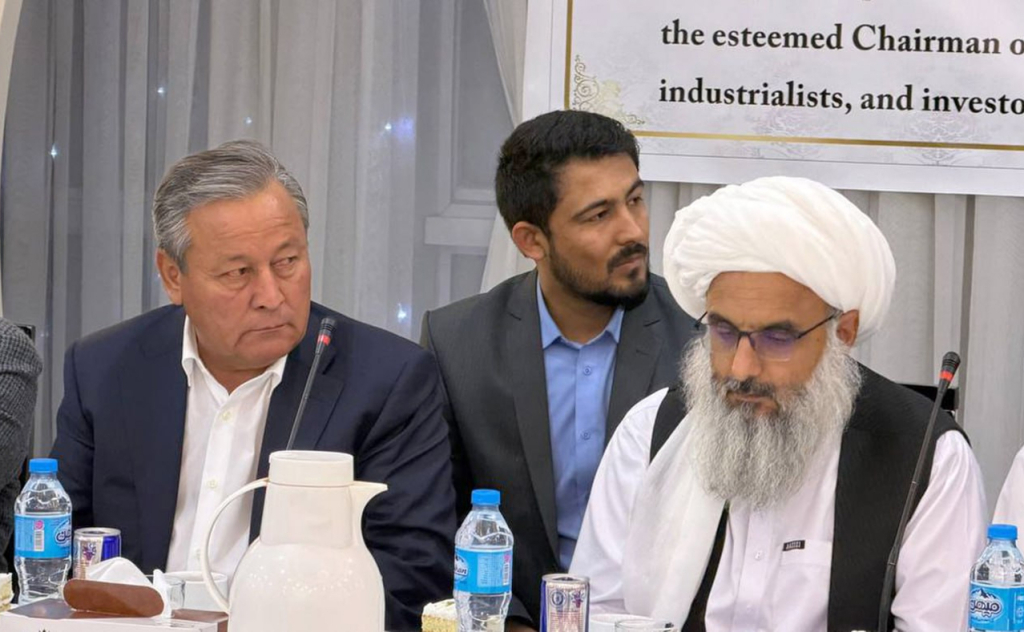
In a significant step toward regional economic integration, Uzbek and Afghan entrepreneurs recently concluded business agreements valued at $300 million during a forum held in Herat, Afghanistan. The event marked the inauguration of the Andijon Trade House in Herat, a new commercial hub aimed at expanding bilateral trade and investment opportunities.
Strengthening Trade Networks and Economic Cooperation
The business forum was attended by a delegation of 110 Uzbek entrepreneurs led by Shuhrat Abdurahmonov, Governor of Andijon Region, alongside Davron Vahobov, Chairman of the Uzbekistan Chamber of Commerce and Industry. The delegation’s visit underscored a strategic commitment to deepen economic ties between Uzbekistan and Afghanistan, focusing on practical measures to stimulate trade flows and investment.
"Such cooperation platforms open wide doors for entrepreneurs," emphasized Nur Ahmad Islomjar, Governor of Herat Province, highlighting the mutual benefits of enhanced trade relations.
Discussions during the forum addressed key structural issues such as visa facilitation, improving bilateral payment mechanisms, simplifying pharmaceutical exchanges, and expanding logistics for agricultural products and cement. These targeted areas reveal an understanding of the infrastructural challenges impacting trade and the need for streamlined processes to promote cross-border commerce.
The newly inaugurated Andijon Trade House offers a showcase for over 200 product types across 10 categories, positioning itself not only as a marketplace but also as a platform for forging new partnerships and attracting investment projects. This initiative echoes broader regional economic integration trends, where Central Asian states seek to leverage geographic proximity and complementary economic profiles.
Historical and Economic Significance
The developments in Herat resonate with historical trade patterns that have linked Central Asia and Afghanistan. Historically, these corridors have been vital for the exchange of goods and culture, yet recent decades saw disruptions due to geopolitical instability. The current efforts reflect a renewed focus on reviving these traditional routes, with modern infrastructure and institutional support underpinning this revival.
Moreover, the $300 million in contracts signal not just immediate commercial gains but also the potential for long-term structural economic change. Enhanced trade can stimulate local industries, create employment, and foster technology transfer, contributing to economic diversification and resilience in both countries.
The visit aligns with recent diplomatic engagements, such as the April 2026 negotiations led by Abdulla Azizov, Director of the Pharmaceutical Development Agency of Uzbekistan, in Kabul. These talks and subsequent forums, including the first Central Asian-Afghan consultation held in Afghanistan since 2021, indicate a strategic pivot toward embedding Afghanistan more deeply within Central Asian economic frameworks.
Uzbekistan’s proactive stance in initiating and sustaining these dialogues illustrates its role as a regional economic leader aiming to stabilize and develop trade routes impaired by past conflicts. The focus on pharmaceuticals, agriculture, and construction materials reflects critical sectors capable of driving growth and meeting domestic needs in both nations.
Challenges and Outlook
While the agreements represent progress, challenges remain. Visa regimes and financial transaction mechanisms require harmonization to ensure fluid trade. Security concerns in Afghanistan continue to pose risks to sustained economic activity. However, institutional support and continuous dialogue present pathways to overcoming these obstacles.
In the broader context, the Uzbekistan-Afghanistan partnership is a microcosm of Central Asia’s economic aspirations, emphasizing regional connectivity, economic diversification, and integration into global value chains. This cooperation may serve as a model for similar initiatives in adjacent regions facing comparable structural challenges.