Yemen Mobilization Call Highlights Economic Risks Around Red Sea Trade
Rashad al-Alimi’s appeal for national mobilization comes as Houthi advances threaten strategic waterways and Gulf energy exports.
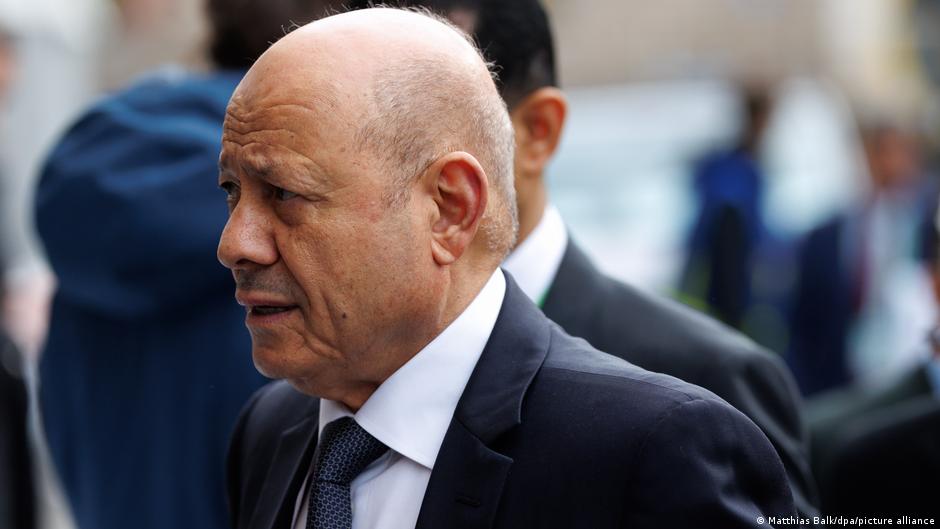
Yemen’s internationally backed leadership is trying to turn a worsening military position into a broader national mobilization, with consequences that extend far beyond the country’s fragmented battlefield. Rashad al-Alimi, chairman of Yemen’s Presidential Leadership Council, called on citizens to help defend the country and join government forces as the conflict with the Iran-aligned Houthi movement escalates.
In an address to Yemenis on Friday, September 25, al-Alimi urged the population to contribute to the defense effort and reinforce the ranks of government troops. He also promised clemency for rebels who leave the Houthi side and join the government, saying they would be pardoned under an imminent amnesty.
Al-Alimi’s message combined a call to arms with a political offer: mobilization for government forces and amnesty for those who defect from the Houthis.
The appeal came after several weeks in which Houthi forces struck government troops and continued advancing despite support for Yemen’s army from Saudi military aviation. Government forces have continued to retreat, underscoring the limits of outside air support in a conflict defined by fractured authority, difficult terrain and competing regional interests.
Control of Waterways Becomes an Economic Lever
The latest phase of the war matters not only because of territorial control inside Yemen, but because of where that territory lies. In recent months, the Houthis have captured the entire Red Sea coast and areas adjacent to the Bab el-Mandeb Strait. The strait has taken on heightened strategic importance since the start of the war by the United States and Israel against Iran, according to the source account, and is being used as an alternative trade route that partly offsets disruptions in oil supplies caused by the blockade of the Strait of Hormuz.
That geography changes the economic meaning of the battlefield. The Red Sea and Bab el-Mandeb are not peripheral zones; they are arteries for maritime commerce and energy shipments. When armed groups gain leverage over such passages, military advances can translate into pressure on freight, insurance, oil logistics and electricity prices. The Houthis’ gains have therefore deepened concern that Iran and its allies have consolidated control over key regional waterways.
The consequences are already being framed in global market terms. Rebel attacks threaten international trade routes and contribute to higher electricity prices. They also affect oil exports from Saudi Arabia and other Gulf states to the world market. For energy-importing economies, any pressure on Gulf exports is not just a regional security issue but a transmission channel into inflation, industrial costs and household energy bills.
A War With Historical Echoes
Yemen’s conflict has long been one of the Middle East’s most destabilizing wars, but the current escalation recalls earlier moments when local conflicts around chokepoints became global economic problems. Strategic waterways such as Hormuz and Bab el-Mandeb can magnify the market effect of otherwise localized fighting. Control over a port, coast or missile launch area can influence the pricing of commodities thousands of miles away.
Since 2014, Yemen has been engulfed in civil war, resulting in the country’s de facto division among three rival sides. The Iran-aligned Houthis seized northern and western provinces, including the capital, Sanaa, where around 70% of the population lives. That demographic concentration has given the movement a powerful base, while the government and its allies have struggled to restore unified authority.
Reuters has reported, according to the source, that the Houthi advance is being directed by Iran’s Islamic Revolutionary Guard Corps. Sources in Tehran say Iran is seeking to open a new front in its confrontation with the United States. If accurate, that would place Yemen even more firmly inside the regional struggle between Iran and its adversaries, raising the risk that economic infrastructure becomes both a target and a bargaining tool.
The regional dimension intensified in early September, when the Houthis announced an expansion of military operations in the Middle East and struck four cities in southern Saudi Arabia. More than 70 people were injured in the large-scale shelling, and fires broke out at oil facilities. Saudi Arabia responded with more than 60 airstrikes on several Houthi-controlled provinces.
On September 19, the Saudi-led Coalition to Restore Legitimacy in Yemen said Yemeni rebels had tried for the first time to strike the kingdom’s capital, Riyadh, with a ballistic missile. That allegation, if followed by further attempts, would mark a serious escalation in the threat envelope facing Saudi political and economic centers.
The Structural Cost of Fragmentation
Al-Alimi’s mobilization call should be read against the structural weakness of a state divided for more than a decade. Civil wars do not only destroy infrastructure; they rearrange economic authority. Tax collection, port revenues, customs control, fuel distribution and security guarantees become fragmented among competing armed actors. In Yemen, that fragmentation has now intersected with the strategic geography of the Red Sea.
The amnesty offer reflects the government’s need to weaken the Houthis from within while expanding its own manpower. But it also reveals the depth of the state-building challenge. A government that must ask citizens to mobilize and rebels to defect is operating in a landscape where formal institutions alone are insufficient to command loyalty.
For Gulf exporters and global energy markets, the question is whether the conflict remains a contained civil war or becomes a sustained pressure point on maritime trade. The capture of coastal territory, the proximity to Bab el-Mandeb and the reported role of the IRGC all point toward a conflict whose economic effects may be disproportionate to Yemen’s own share of global output.
In that sense, Yemen’s latest escalation is not only a security story. It is a test of how fragile trade routes, proxy warfare and energy dependence interact in a region where control of narrow waterways can shape the price of power, transport and oil across the global economy.