Zelensky Sees Democratic Congress as Route to Broader US Support
Ukraine’s president expects Democratic control of Congress to strengthen financial and military assistance while renewing transatlantic ties.
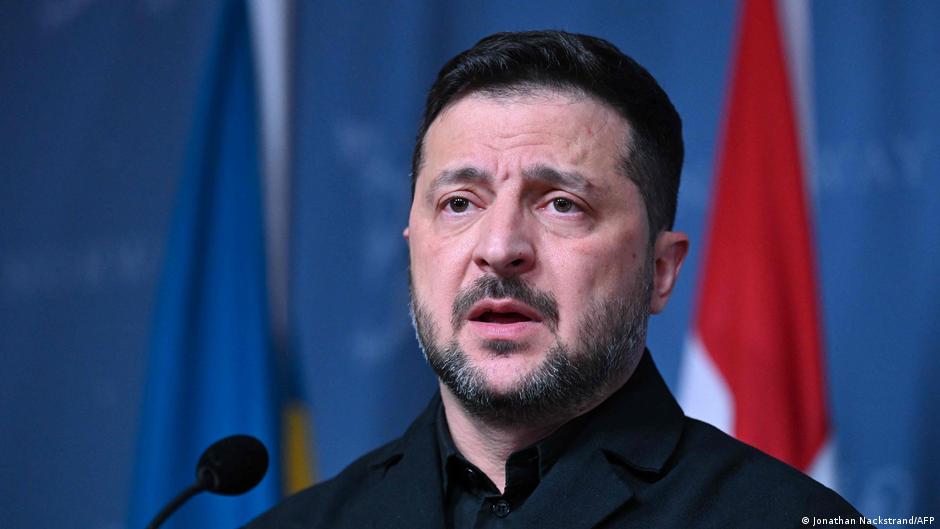
Ukrainian President Volodymyr Zelensky said he hopes the Democratic Party’s victory in the US midterm elections will lead Washington to provide Kyiv with greater military and financial support.
Speaking in an interview with German broadcaster ZDF on Wednesday, November 4, Zelensky linked the election result to the prospects for closer cooperation between the United States and Europe. Democrats secured majorities in both the Senate and the House of Representatives, according to the Ukrainian president’s account of the political shift.
Zelensky said Democrats support the “renewal of ties between the United States and Europe,” presenting stronger transatlantic coordination as a potential source of additional assistance for Ukraine. His remarks place congressional policy at the center of Kyiv’s expectations, particularly because lawmakers influence federal spending and the authorization of military aid.
“If the US Congress supports substantial financial assistance and weapons supplies to Ukraine, just as European countries are doing and demonstrating today, that will be a positive factor.”
Zelensky added that such backing could influence Russian President Vladimir Putin. The argument reflects Kyiv’s view that sustained external support does more than meet immediate military and budgetary needs: it also changes the economic and strategic calculations facing Moscow.
Congressional Support and the Economics of Sustained Assistance
For Ukraine, foreign assistance has both a battlefield function and a broader macroeconomic role. Weapons deliveries affect the country’s capacity to defend territory, while financial support helps the government maintain essential operations under the pressure of war. Predictable commitments can therefore matter as much as headline funding totals, allowing authorities to plan expenditures and reducing uncertainty over future financing.
The composition of Congress is important because long-term support requires repeated political decisions. A legislature willing to approve substantial aid can provide continuity beyond individual announcements by the executive branch. That continuity may also reassure European governments that Washington intends to remain engaged, making it easier to coordinate assistance across the Atlantic and distribute the financial burden among allies.
Historically, periods of closer US-European cooperation have often been built around shared security challenges and backed by economic commitments. Zelensky’s emphasis on renewed ties echoes that pattern. In the Ukrainian case, the immediate question is whether political alignment can be converted into durable appropriations, reliable arms deliveries and a coordinated approach among Western governments.
The potential consequences extend beyond Ukraine’s public finances. A credible commitment of support can affect investor expectations, reconstruction planning and perceptions of geopolitical risk across Europe. Conversely, uncertainty over future aid may complicate budgeting in Kyiv and increase pressure on European countries to fill any financing or military-supply gaps.
Zelensky’s comparison with Europe is therefore significant. By calling on Congress to act “just as” European countries are doing, he framed American assistance as part of a collective effort rather than a separate bilateral arrangement. That framing also highlights a structural issue for the alliance: whether its members can sustain coordinated support while managing their own fiscal constraints and domestic political pressures.
Humanitarian Diplomacy Alongside Military Aid
On the same day, the official website of the Ukrainian president published a decree awarding US first lady Melania Trump the Order of Princess Olga, First Class. The national decoration recognized her role in securing an agreement for a temporary ceasefire in the Russian-occupied city of Oleshky, known in Russian as Alyoshki, in Ukraine’s Kherson region.
The decree cited Melania Trump’s “significant personal contribution” to humanitarian support for Ukraine, as well as her active work in human rights protection and charitable activity. She had previously spoken repeatedly in support of Ukrainian children.
The award adds a humanitarian dimension to Zelensky’s appeal for stronger US engagement. While congressional decisions determine the scale and continuity of financial and military assistance, humanitarian initiatives can create narrower openings for relief and reinforce political attention to the civilian consequences of the conflict.
Taken together, the interview and the decree show Kyiv pursuing support through several channels at once: legislative majorities, transatlantic coordination, military supplies, fiscal assistance and high-profile humanitarian diplomacy. The central economic question is whether these separate forms of engagement can become a stable framework rather than a series of temporary measures.
For Ukraine, the answer will shape not only its immediate capacity to resist Russia but also the conditions under which it can maintain public services and prepare for recovery. For the United States and Europe, it will test whether renewed political ties can support a prolonged and costly commitment with consequences for defense budgets, fiscal priorities and the wider security architecture.